

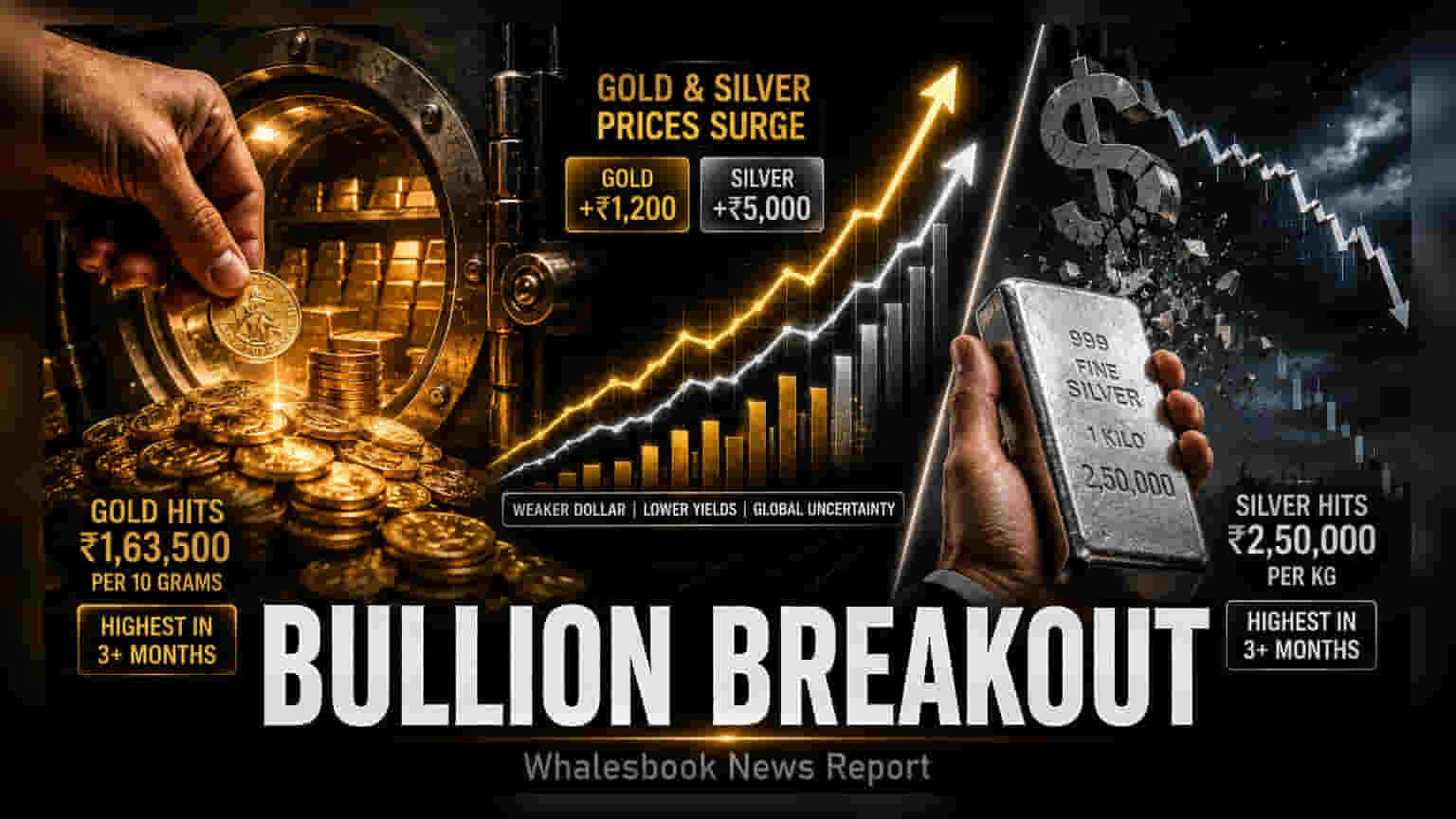
Gold prices reached Rs 1,63,500 per 10 grams and silver surged to Rs 2,50,000 per kilogram on August 21, 2026. This jump reflects a weaker US dollar and shifting US bond policies. The rally impacts various sectors, including jewellery retailers and gold finance companies, as higher prices can affect consumer demand and the value of collateral held against loans.
Precious metals saw a sharp jump in domestic markets on Friday, August 21, 2026, as gold and silver reached their highest levels in over three months. Gold of 99.9% purity rose by Rs 1,200 to hit Rs 1,63,500 per 10 grams. Silver prices saw a steeper increase, rising by Rs 5,000 to touch Rs 2,50,000 per kilogram. This movement brings both metals close to price levels not seen since early May 2026.
Why Prices Are Rising
The primary driver for this surge is a weaker US dollar and lower interest rates on US government bonds, known as Treasury yields. When the dollar weakens and bond interest rates fall, gold becomes more attractive to investors looking for a safe place to park their money. The move was further supported by the US Treasury Department's decision to expand its bond-buying program. This policy, aimed at managing borrowing costs, has put downward pressure on the US dollar, making gold cheaper for holders of other currencies and pushing prices higher globally.
Impact on Gold Finance Companies
For investors in companies that offer gold-backed loans, this price rally is a double-edged sword. On one hand, higher gold prices increase the value of the collateral—the gold jewellery—that these companies hold against loans. This lowers the risk of default for the lender. On the other hand, if prices stay at these record highs, some consumers may hesitate to take new loans or may choose to sell their gold rather than pledge it. Investors often monitor how these companies adjust their loan-to-value ratios, which determine how much money they lend against the market price of gold.
Jewellery Retailers and Consumer Demand
Companies in the jewellery sector face a different challenge. While they benefit from the appreciation of their existing stock, sustained high prices often lead to a drop in consumer demand. When gold becomes significantly more expensive, retail buying, especially for non-essential jewellery or investment coins, tends to slow down. Investors in these companies often watch for signs of volume growth—how much physical jewellery is actually being sold—versus just the value of the inventory, to see if the business is growing or if higher prices are hurting sales.
Geopolitical Risks and Market Volatility
Market sentiment is also being influenced by rising geopolitical uncertainty, particularly regarding potential new sanctions on Iran. Such events often cause investors to move money into gold as a 'safe haven' asset, which further drives up prices. While this can lead to quick gains, it also creates significant volatility. Prices can drop just as quickly if the geopolitical situation stabilizes or if economic data from the US suggests that interest rates will stay higher for longer than expected.
Moving forward, the key factor for investors to track is US economic data, such as inflation and jobs reports. These figures will influence decisions by the US Federal Reserve on interest rates, which in turn will dictate the direction of the US dollar and, consequently, the price of gold and silver in the weeks ahead.