

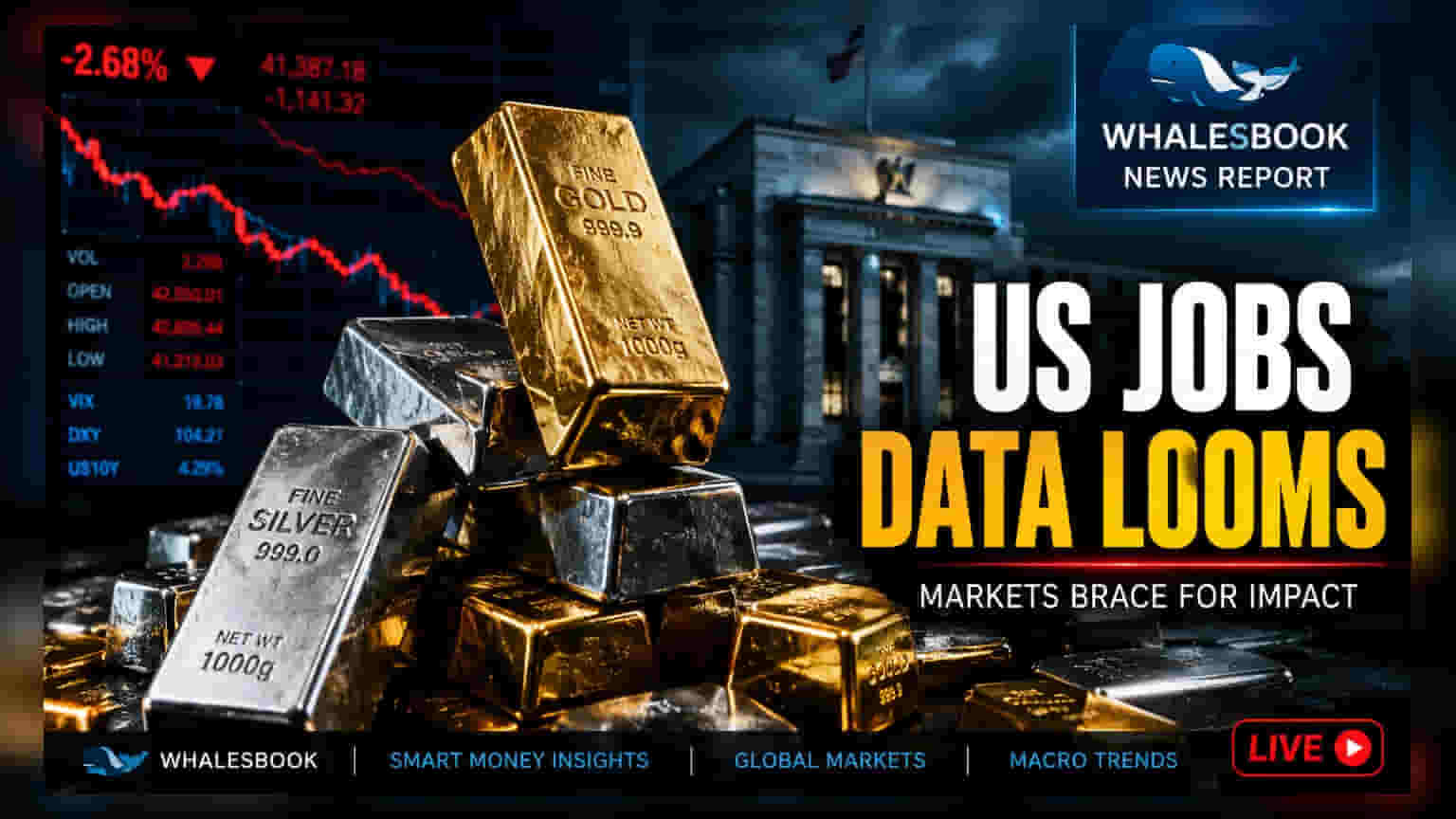
Gold and silver prices eased on Thursday as investors wait for key US employment data. With markets concerned about economic health, the upcoming non-farm payrolls report is expected to shape the Federal Reserve’s next interest rate decisions, which influences global bullion trends.
What Happened
Gold and silver prices saw a minor decline on Thursday as investors exercised caution ahead of significant United States employment data. Gold on the COMEX exchange traded at $4,065.30 per ounce, marking a 0.42% decrease. Silver also recorded a dip, trading at $59.345 per ounce after an intraday high of $60.625. These movements come as markets prepare for the non-farm payrolls report, which provides essential clues about the health of the US economy.
The US Jobs Data Connection
Investors are paying close attention to the upcoming labor market report because it influences the Federal Reserve's monetary policy. Earlier this week, private sector data showed that US companies added 98,000 jobs in June, which was lower than the expected 118,000. This softer growth supported precious metal prices, as signs of a slowing economy often prompt investors to seek the perceived safety of gold. A lower-than-expected jobs number today could reinforce concerns about an economic slowdown, while a strong number might pressure bullion prices by strengthening the case for higher interest rates.
The Interest Rate Factor
Market participants are currently factoring in about a 64% probability of a rate hike by the US Federal Reserve in September, according to CME FedWatch estimates. Gold and silver do not provide interest payments, so they often face price pressure when interest rates rise. Investors compare the returns on non-yielding assets like gold against interest-bearing investments. As expectations for tighter monetary policy fluctuate, precious metal prices often respond quickly to these changes in sentiment.
Impact on Oil and Inflation
Gold prices have also been influenced by the crude oil market. Recently, a drop in oil prices—partly linked to easing tensions regarding indirect talks between Iran and the US—has helped reduce immediate concerns about energy supply disruptions. Lower oil prices can cool inflationary pressures in the broader economy. If inflation remains contained, it may reduce the need for the Federal Reserve to implement aggressive interest rate hikes, which indirectly supports the case for precious metals.
What This Means for Indian Investors
For Indian investors, global price movements in gold and silver are significant because India imports a large portion of its precious metal requirements. Domestic prices on exchanges like the MCX often mirror trends in the international COMEX market. When global prices fluctuate due to US economic data, Indian retail investors and traders often see immediate effects in the prices of gold and silver futures and physical bullion. Volatility in global markets typically leads to price adjustments in the Indian market as well.
What To Watch Next
The most important monitorable for investors is the official non-farm payrolls and unemployment data released later today. Investors will also look for any subsequent commentary from Federal Reserve officials regarding the path of interest rates. Beyond these data points, continued trends in crude oil pricing and broader inflation metrics will remain important factors in determining the short-term direction of precious metal prices.