 Whalesbook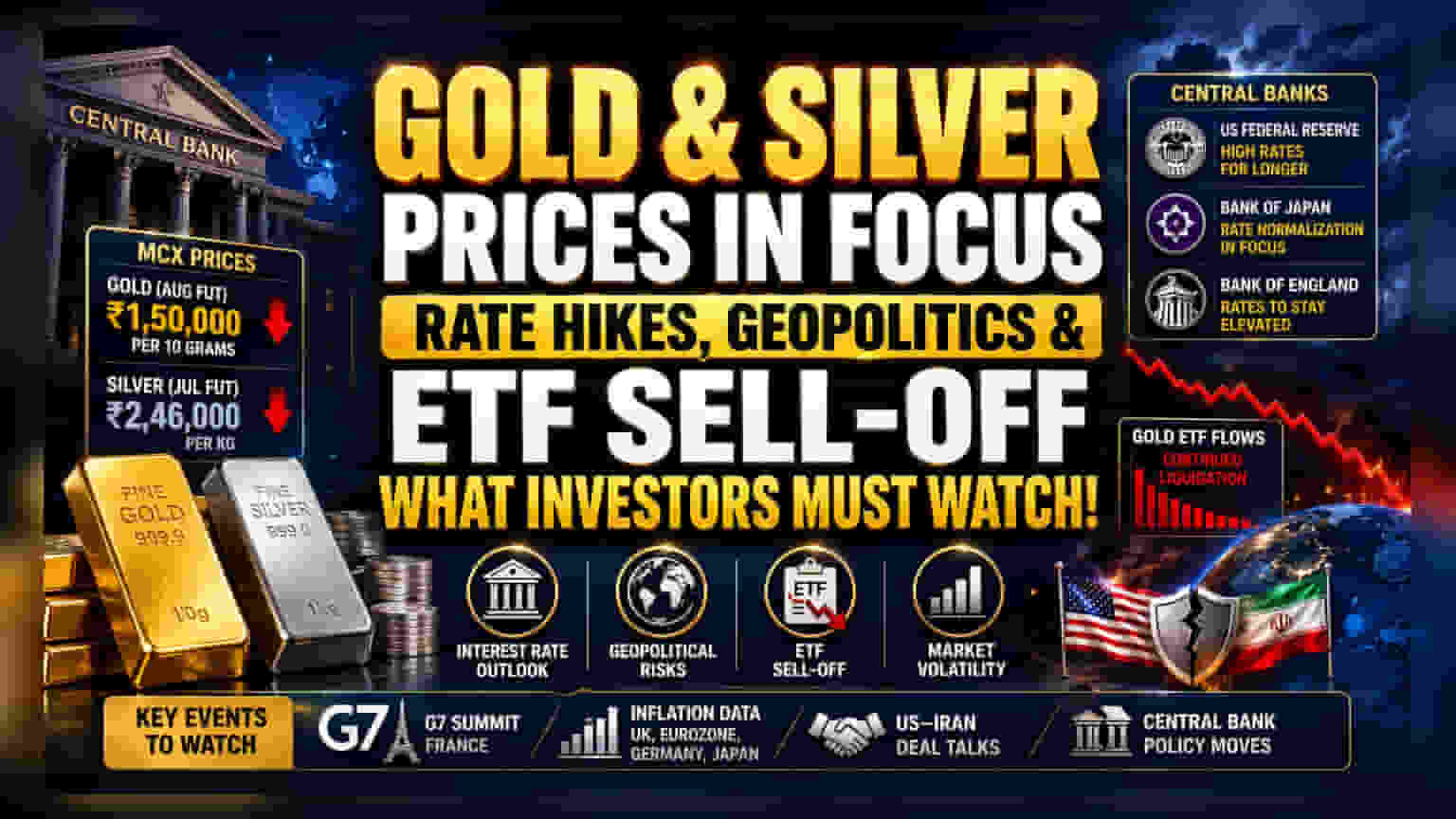


Gold and silver prices are facing pressure as investors weigh central bank interest rate decisions and uncertainty surrounding US-Iran negotiations. With domestic MCX futures seeing a recent decline and institutional investors selling off exchange-traded funds, the market is bracing for a period of volatility. Investors are now looking to upcoming global central bank meetings and international summits for further direction.
What Happened
Bullion markets are currently experiencing a period of uncertainty, driven by a mix of central bank policy updates and shifting geopolitical dynamics. Gold and silver prices have faced downward pressure recently, with domestic markets reflecting this trend. On the Multi Commodity Exchange (MCX), gold futures for August delivery settled at approximately Rs 1,50,000 per 10 grams following a weekly decline. Similarly, silver futures for July delivery saw a drop, closing near Rs 2,46,000 per kilogram.
Internationally, Comex gold futures have also moved lower, with investors carefully watching the interest rate strategies of the US Federal Reserve, the Bank of Japan, and the Bank of England. While there was a slight recovery in gold prices late in the week, the overall trend remains cautious.
Understanding the Central Bank Impact
The relationship between interest rates and precious metals is a key factor for investors to understand. Gold does not pay interest or dividends. When central banks signal that interest rates will remain high or continue to rise, the appeal of holding gold often decreases because investors can earn better returns from interest-bearing assets like bonds. Expectations that interest rates may remain elevated through the first half of 2027 have contributed to the recent selling pressure on gold and silver.
Geopolitical Uncertainty and Price Swings
Geopolitics often creates a two-sided effect on gold, which is traditionally viewed as a safe-haven asset. Developments regarding a potential US-Iran agreement are currently a major driver of market volatility. A finalized deal could potentially boost risk assets, which might lead some investors to shift money away from safe havens like gold. Conversely, any escalation in tensions usually supports gold prices as investors seek protection. Because the outcome of these negotiations remains unclear, traders are experiencing significant price swings.
The ETF Sentiment Signal
Institutional investor behavior provides another layer of context. There has been a trend of liquidation—or selling off—from gold exchange-traded funds (ETFs). When large institutional investors consistently sell their holdings, it suggests a lack of confidence in near-term price gains. This collective movement by ETF investors often reinforces the downward pressure on prices, regardless of short-term movements in the physical market.
What Investors Should Monitor Next
Investors are likely to focus on several key events in the coming days and weeks. The outcomes of the upcoming G7 Summit in France are a primary point of interest, as discussions regarding conflicts in Iran and Ukraine could provide clues about future market stability. Additionally, market participants will be tracking inflation data from major economies, including the UK, Eurozone, Germany, and Japan, as these figures often influence how central banks adjust their interest rate policies. Keeping an eye on the official status of the US-Iran negotiations will also be essential for understanding potential shifts in risk sentiment.