

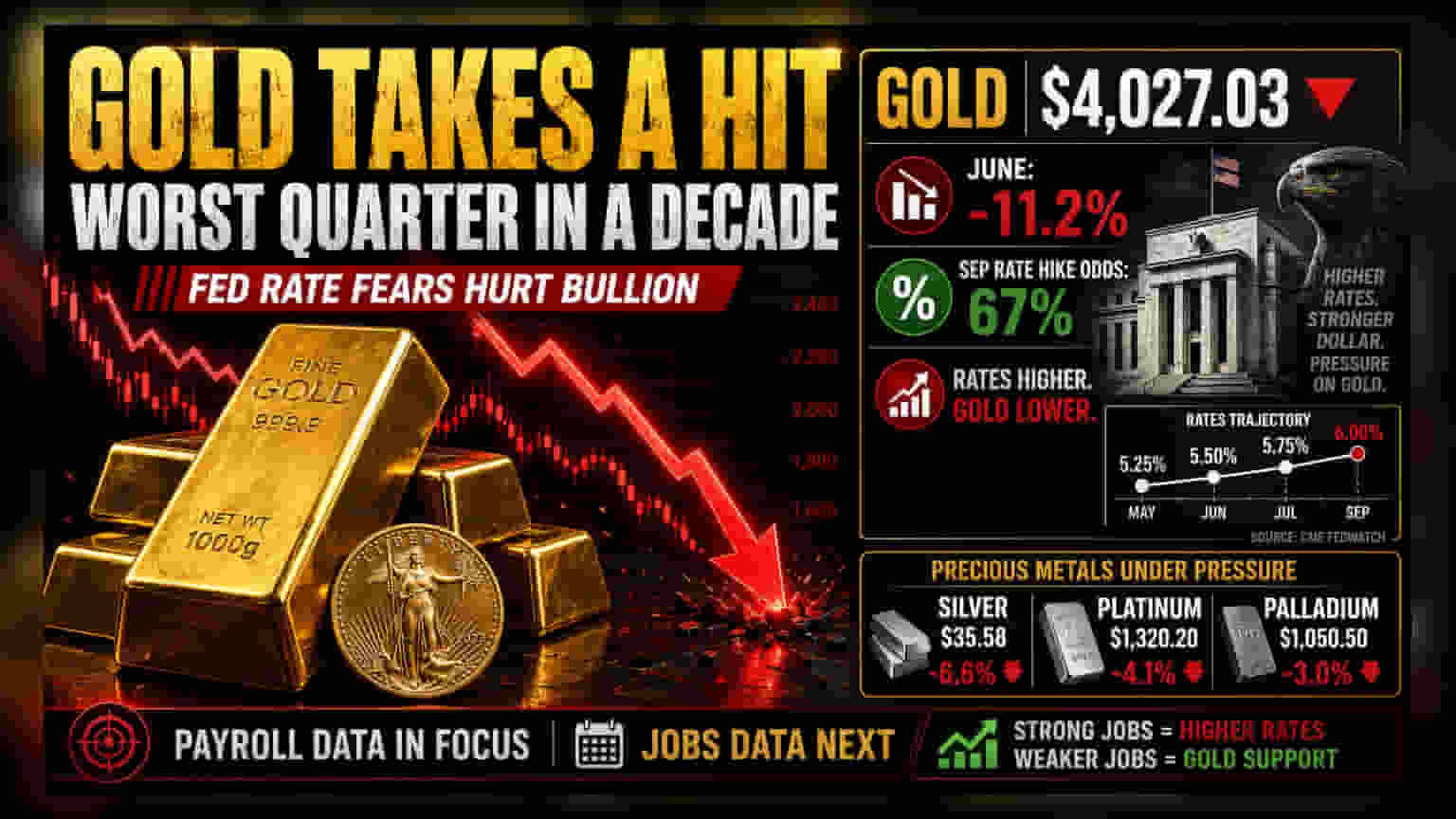
Gold prices are on track for their steepest quarterly decline since 2013, pressured by expectations of further U.S. Federal Reserve interest rate hikes. This broad-based weakness has also impacted silver, platinum, and palladium. Investors are moving away from non-yielding assets as inflation remains a concern, increasing the appeal of interest-bearing investments.
What Happened
Gold prices have faced a significant downturn this quarter, marking their worst performance in a decade. While there was a slight uptick on Tuesday, with spot gold rising 0.3% to $4,027.03 per ounce, it failed to recover from a sharp 11.2% decline throughout June. This downward pressure is driven largely by expectations that the U.S. Federal Reserve will continue its aggressive cycle of interest rate hikes to combat persistent inflation. The market is currently pricing in a high probability of another rate hike in September, with traders assigning a roughly 67% chance based on recent data from the CME FedWatch Tool.
Why Gold Is Losing Appeal
Gold is often called a non-yielding asset, meaning it does not generate interest or dividends like a bank deposit or a bond. When the U.S. Federal Reserve raises interest rates, other investment options that pay interest become more attractive to investors. This shift in the investment landscape reduces the appeal of gold, which requires storage and insurance costs without providing regular income. As rates rise, the cost of holding gold increases, leading investors to reallocate their capital toward assets that benefit from a high-interest-rate environment.
The Impact Across Precious Metals
This decline is not isolated to gold. The broader precious metals sector is seeing similar pressure. Silver, which saw a 1.9% rise to $59.42 per ounce on Tuesday, is still heading toward its worst quarterly performance since early 2020. Other metals have also struggled, with platinum falling 1.6% to $1,549.47 and palladium declining 0.6% to $1,206.17. This indicates that the current market sentiment is affecting the entire basket of precious metals, rather than just gold alone.
Inflation and Geopolitical Factors
Traditionally, gold is considered a hedge against inflation. However, the current economic climate is challenging this historical role. Although inflation remains well above the Federal Reserve's 2% target, the focus has shifted entirely toward monetary policy. Additionally, market unease regarding geopolitical stability, particularly conflicts in the Middle East, has created an environment of uncertainty. While geopolitical tension usually supports gold, the dominant influence of the Fed's interest rate stance is currently outweighing these factors.
What Investors Should Track
For investors, the immediate future will depend on how the U.S. economy performs. Key monitorables include upcoming economic reports, specifically ADP employment figures and nonfarm payroll data. These releases provide insight into the strength of the U.S. labor market. If the economy shows signs of resilience, it may strengthen the case for further rate hikes by the Federal Reserve, which could continue to keep pressure on gold and other precious metal prices.