

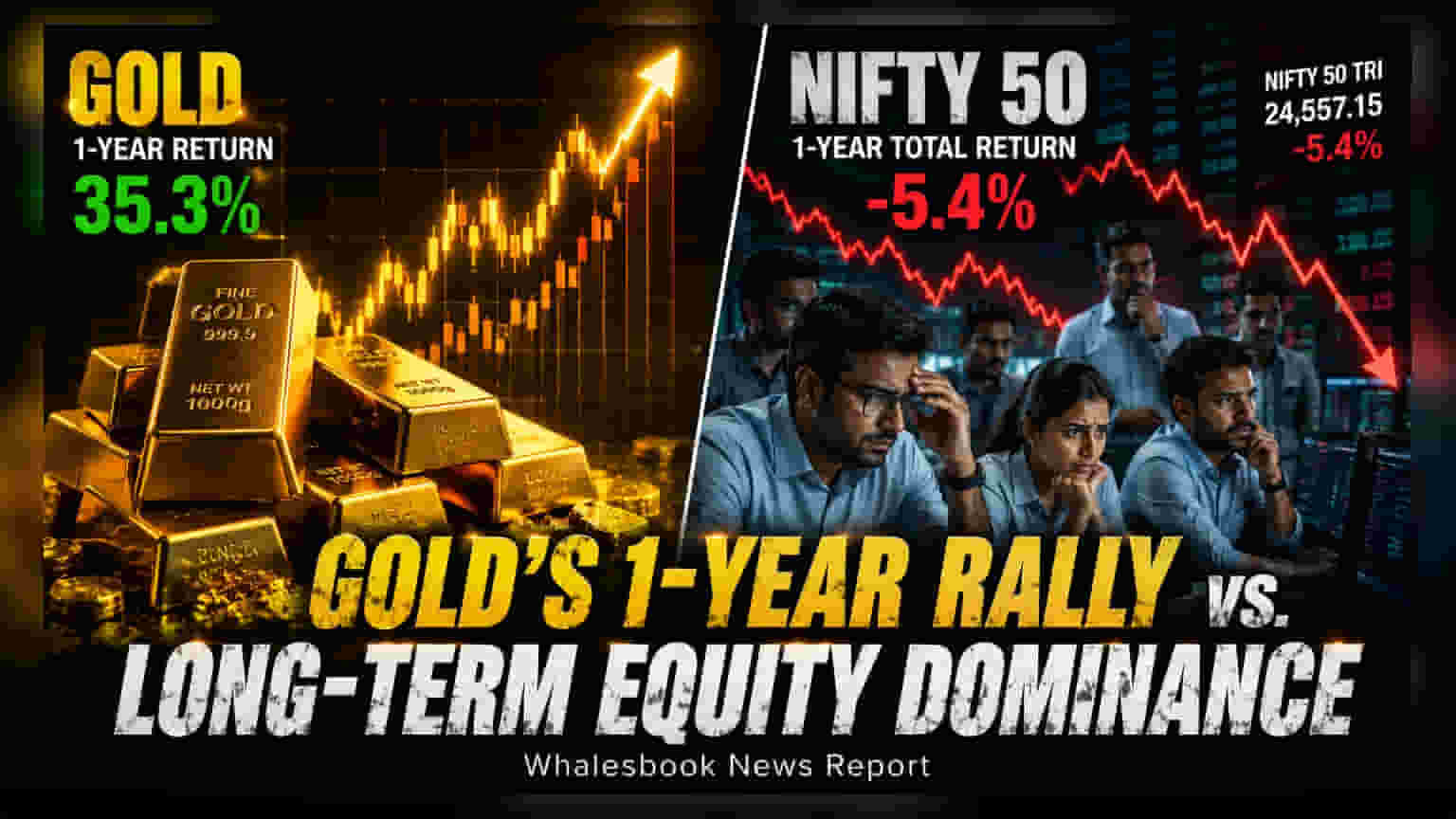
Gold prices have jumped 35.3% over the past year, significantly outperforming the Nifty 50 Total Return Index, which fell 5.4%. While this trend favors gold, historical data from the last two decades confirms that equities remain the primary engine for long-term wealth creation. Investors should remember that asset classes often cycle through leadership periods, making a mix of both gold and stocks essential for a balanced portfolio.
The past year has highlighted a sharp divergence between gold and Indian equities. While gold has delivered a strong return of 35.3% over the last 12 months, the Nifty 50 Total Return Index—which tracks stock performance including dividends—has declined by 5.4%. This performance gap has naturally caught the attention of investors looking for returns in a challenging market environment.
However, a look at longer time horizons offers a clearer picture of how these assets function. Historical data stretching back over 10, 15, and 20 years shows that equities have generally outperformed gold. On average, gold has historically trailed equities by about 2 percentage points annually. While a 2% difference might seem small in a single year, the effect of compounding over two decades creates a substantial difference in total wealth accumulation.
It is important for investors to understand the distinct roles these assets play. Equities are typically treated as growth engines meant to build wealth over long periods. In contrast, gold is often used as a defensive asset or a hedge. When equity markets face pressure, gold prices often move in the opposite direction or stay stable, providing a buffer that protects the overall portfolio from deep losses.
Financial data confirms that asset class leadership is cyclical, meaning one type of investment does not stay at the top forever. The recent rally in gold occurred during a year when equity markets struggled, illustrating exactly why a diversified portfolio is useful. Relying heavily on an asset class simply because it performed well in the last year can be risky, as market leadership often shifts back and forth.
For investors, the key monitorable is not just recent returns, but how these assets fit into a long-term plan. Decisions based on short-term market movements can lead to missed opportunities in wealth-building assets like stocks or an imbalance in risk exposure. Monitoring one’s asset allocation and maintaining a mix of both stocks and gold remains a standard practice for managing risk and capturing growth over the long run.