

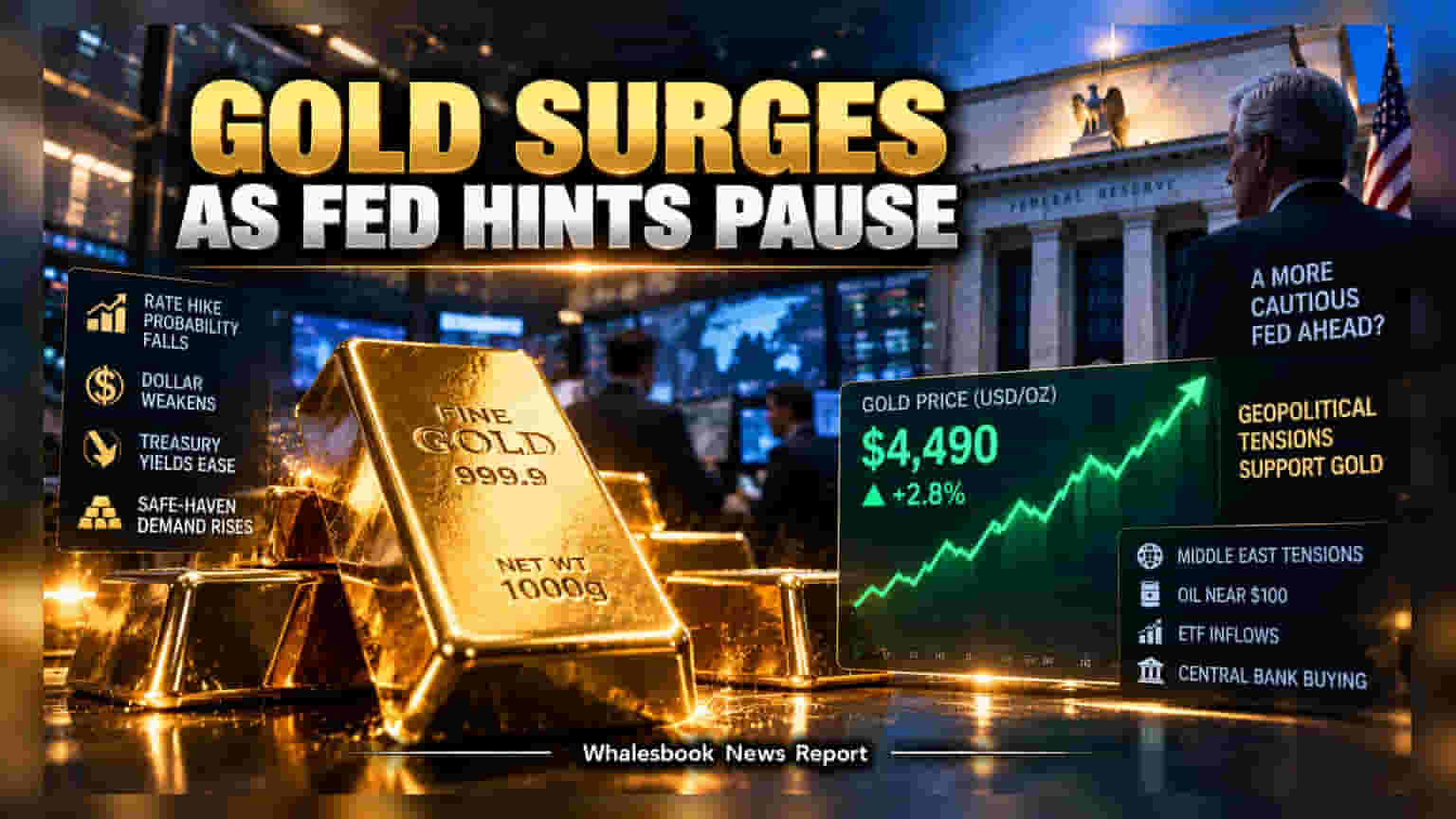
Gold prices have rebounded to $4,490 per ounce as Federal Reserve officials signal a shift toward patience amid signs of cooling inflation. While geopolitical tensions and rising oil prices offer support as safe-haven drivers, they also introduce inflationary risks. Investors are now awaiting the upcoming US consumer price index data on September 11 to gauge the next direction for interest rates.
Gold prices have clawed back significant losses, trading near $4,490 an ounce as market sentiment shifts regarding potential Federal Reserve policy changes. The yellow metal's recovery follows comments from key Fed officials, including Governor Christopher Waller, who signaled that the central bank might keep interest rates unchanged if upcoming inflation data confirms a cooling trend. This shift in rhetoric has reduced the probability of an aggressive rate hike for the September meeting, prompting a retreat in the US Dollar and Treasury yields, which typically helps gold prices.
Geopolitical Friction and Energy Costs
While the prospect of less aggressive monetary policy helps gold, the ongoing conflict in the Middle East introduces a complex set of risks. Brent crude oil prices are approaching $100 per barrel, driven by supply concerns linked to regional instability. For investors, this creates a two-way dynamic. Energy price spikes often push inflation higher, which could pressure the Federal Reserve to reconsider its patient approach. At the same time, geopolitical uncertainty often drives demand for gold as a safe-haven asset, which helps keep a floor under prices despite the potential for renewed inflationary pressure.
Institutional Confidence and Central Bank Flows
Beyond immediate price swings, structural demand for gold remains visible. Market data shows that gold-backed exchange-traded funds (ETFs) have attracted net inflows of roughly 93 tons since late July, reflecting renewed interest from larger capital allocators. Additionally, central bank buying continues to act as a stabilizer for the market. Movements by major institutions, such as the recent relocation of gold reserves by the Dutch Central Bank to London, emphasize a global shift toward securing physical assets in preparation for potential economic shocks.
The immediate future of gold prices hinges on the upcoming US consumer price index data due on September 11. This release will be a primary factor in determining whether the Federal Reserve maintains its current, more cautious stance or shifts back to a more aggressive path. Investors are monitoring these reports to understand the potential impact on both inflation and the central bank's next interest rate decision, as this will largely dictate the price trend for precious metals in the coming months.