

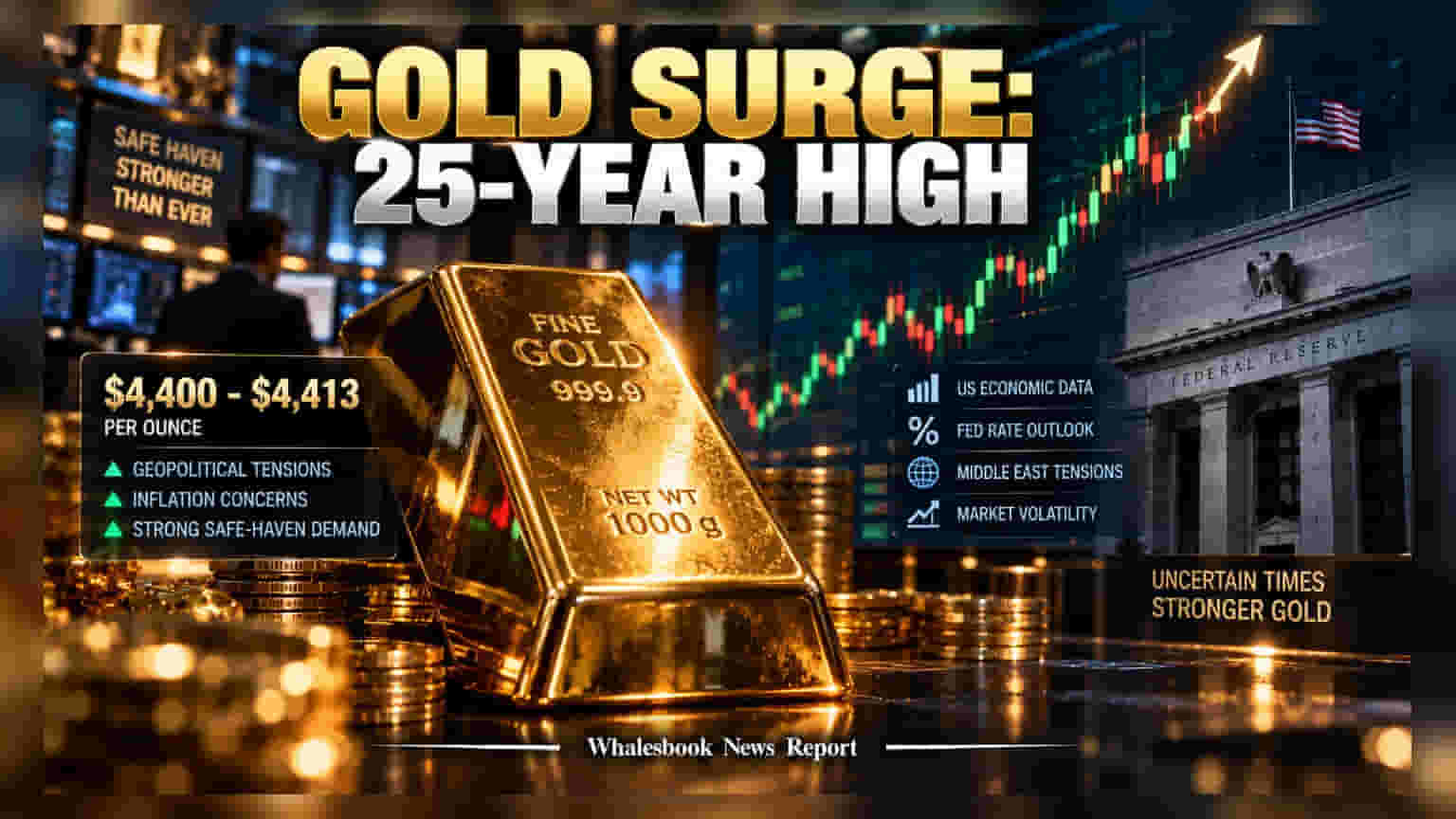
Gold is trading between $4,400 and $4,413 per ounce as investors weigh strong US labor data against ongoing geopolitical risks. Market attention is now turning to the Federal Reserve’s September 16 policy meeting, where officials may consider further interest rate hikes. This tension between rising borrowing costs and safe-haven demand is driving increased volatility in the precious metals market.
Gold prices are currently hovering between $4,400 and $4,413 per ounce as investors navigate a complex economic landscape. The precious metal is facing conflicting pressures, with strong US economic data pushing back against the recent bullish sentiment seen in the commodities sector. As market participants prepare for the upcoming Federal Reserve meeting, the focus has shifted toward how high interest rates may go and how long they might stay there.
Federal Reserve Policy and Interest Rate Outlook
The most significant driver for gold right now is the expectation surrounding the Federal Reserve's monetary policy. Recent US nonfarm payroll data, which showed a strong labor market, has increased the probability of the central bank raising interest rates at its September 16, 2026, meeting. Fed Chair Kevin Warsh has recently emphasized a hawkish stance, noting that the bank needs to see consistent progress in bringing inflation down to the 2% target before it can pause or reverse its rate-hike cycle.
For gold investors, this is a critical pivot point. Gold does not pay interest or dividends. When interest rates rise, other assets—like government bonds—become more attractive because they offer a guaranteed return. As a result, the opportunity cost of holding gold increases, which can create downward pressure on the price of the metal.
Geopolitical Risks and Market Volatility
While the prospect of higher interest rates weighs on gold, geopolitical instability provides a counter-narrative. Tensions in the Strait of Hormuz and broader instability in the Middle East have pushed crude oil prices toward the $100-per-barrel threshold. When energy prices rise sharply, they often fuel inflation concerns, which historically encourages investors to buy gold as a hedge against the loss of purchasing power.
This tug-of-war between economic data and safe-haven demand is creating a volatile trading environment. Institutional investors are closely monitoring these shifts, leading to significant price fluctuations. While conflicts can drive demand for gold as a safe store of value, the associated energy price spikes also complicate the Federal Reserve’s inflation fight, potentially forcing the central bank to keep interest rates higher for longer.
Investor Monitorables
Looking ahead, the market will be hyper-sensitive to incoming economic data. The most important monitorable for investors will be the upcoming Consumer Price Index (CPI) report. A higher-than-expected inflation reading could solidify the case for a Fed rate hike, potentially adding pressure to gold prices. Conversely, if economic growth begins to soften, the market may re-evaluate the Fed's stance. Investors should also watch for any official commentary from Fed officials following the September 16 meeting, as their guidance on future policy steps will be essential in determining the next direction for the metal.