

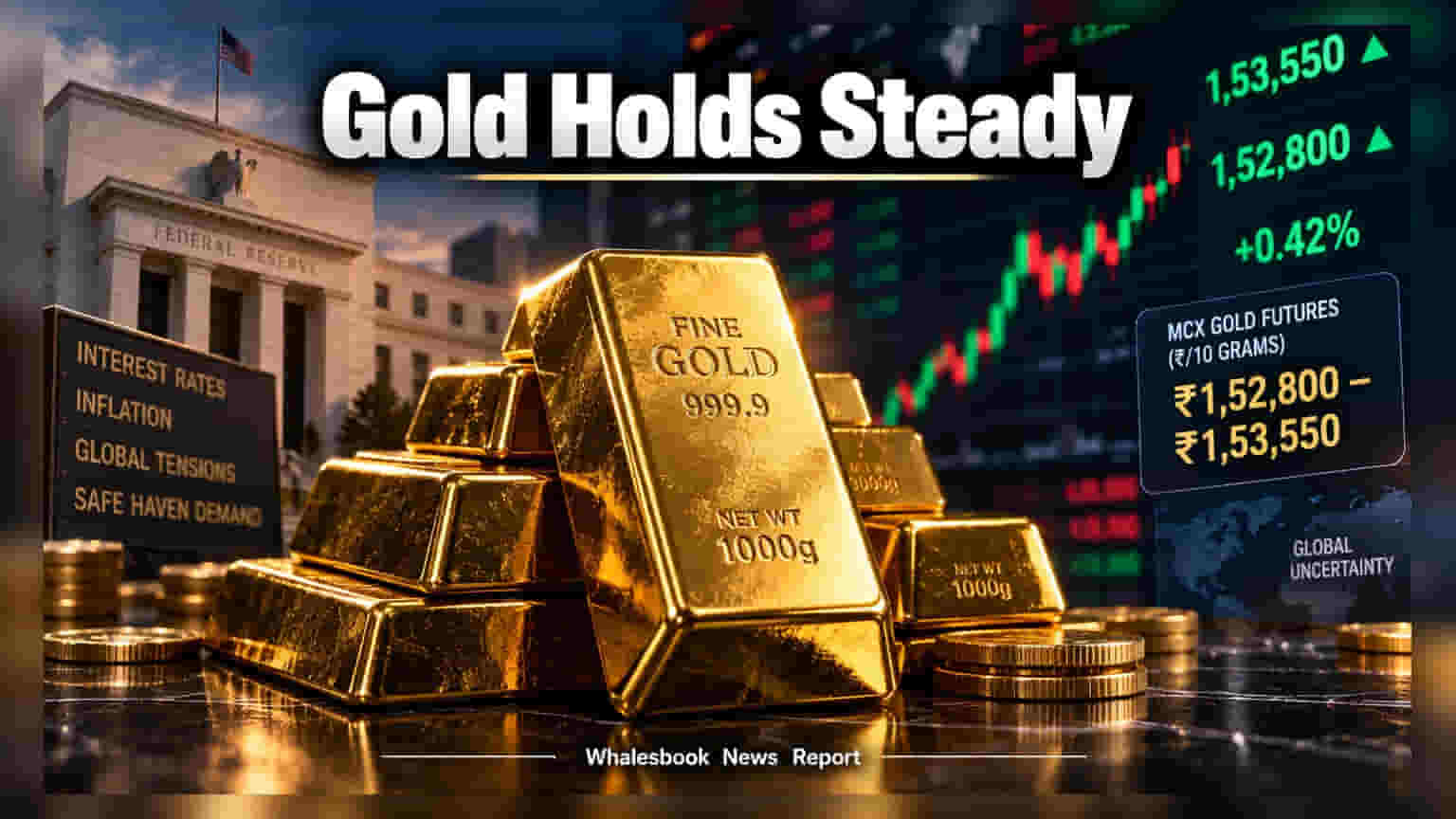
Domestic gold futures are holding firm around ₹1,53,000 per 10 grams as investors await signals on US interest rates. While strong US job growth is raising fears of rate hikes, geopolitical tensions continue to provide a floor for prices. Investors are now focused on upcoming US inflation reports for further clarity.
Domestic gold futures on the Multi Commodity Exchange (MCX) are trading in a steady range between ₹1,52,800 and ₹1,53,550 per 10 grams as of September 8, 2026. While the metal is sitting near record highs, the market remains cautious as traders assess the path of US monetary policy.
The main driver behind this market uncertainty is the Federal Reserve’s upcoming decision on interest rates. Recent data showed that the US economy added 162,000 jobs in August, a figure that beat market expectations. This stronger-than-expected labor market has led many to believe the Federal Reserve may keep interest rates higher for longer to control inflation. Markets are currently pricing in a roughly 60% probability of a rate hike in the near term.
For investors, the relationship between interest rates and gold is a key factor. Gold does not pay regular interest or dividends. When US interest rates rise, government bonds often become more attractive because they offer better guaranteed returns. This shift can sometimes pull investment money away from gold and toward bonds. Additionally, when interest rate expectations rise, the US dollar often gains strength, making gold more expensive for buyers holding other currencies.
Despite these pressures, gold prices have not seen a major drop, largely due to ongoing geopolitical tensions in West Asia. Many investors use gold as a safe-haven asset, meaning they buy it when they are worried about global instability or conflict. This demand serves as a protective floor for the price, preventing it from falling sharply even when economic factors suggest it might be under pressure.
Moving forward, the primary focus for the market will be the upcoming releases of the US Producer Price Index (PPI) and Consumer Price Index (CPI). These reports measure inflation and will provide the Federal Reserve with the data needed to decide its next policy move. Any significant difference between these numbers and market forecasts could cause sharp movements in gold prices, as traders adjust their expectations for future interest rates.