

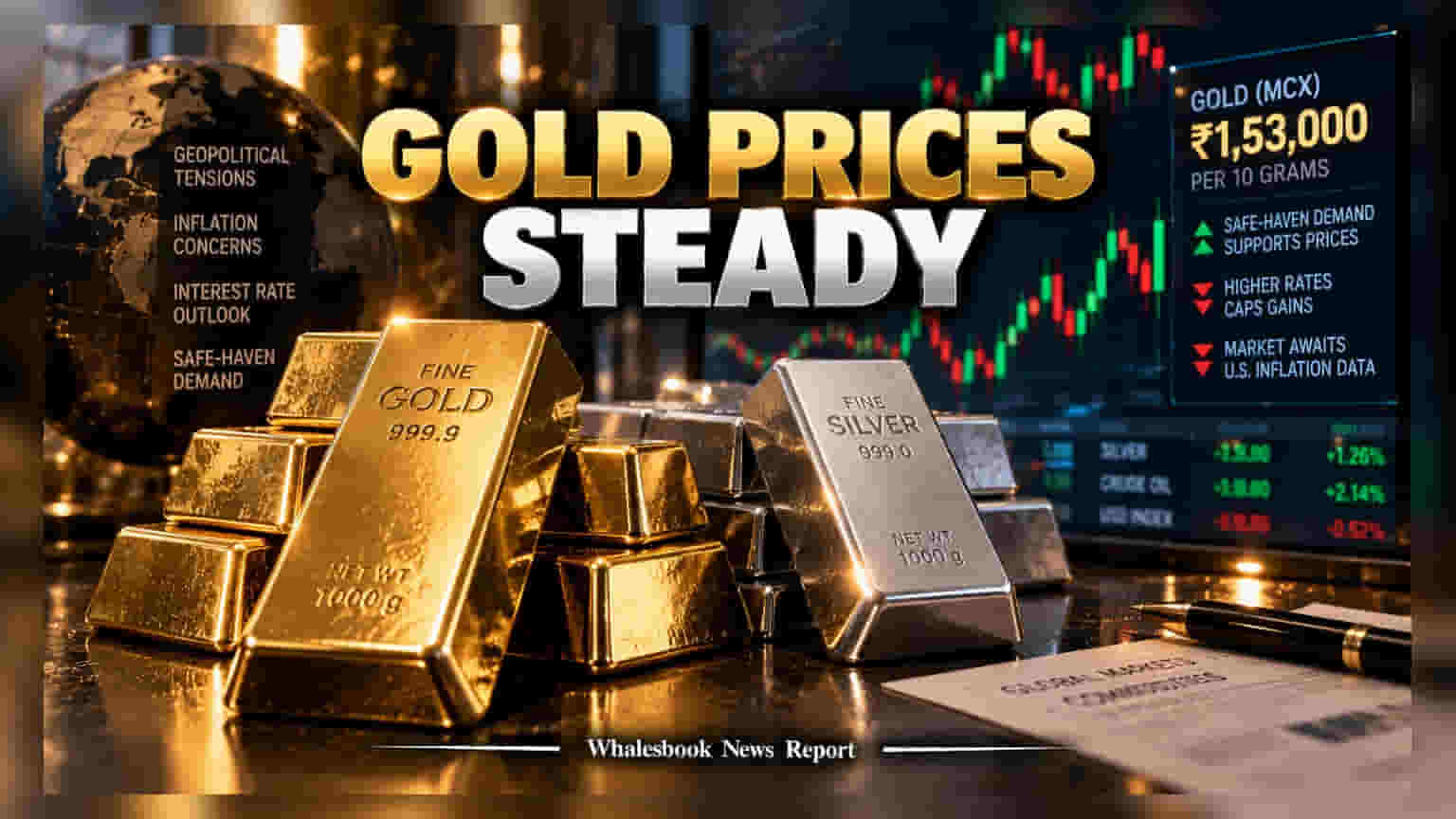
Gold prices are holding near record highs of approximately ₹1,53,000 per 10 grams on the MCX. While rising tensions in the Middle East are boosting demand for gold as a safe investment, the metal is facing pressure from expectations of a possible US interest rate hike. Investors are now focused on upcoming US inflation reports and the Federal Reserve meeting for further direction.
Gold prices are currently navigating a complex period of conflicting signals, keeping the precious metal steady near record levels. On the Multi Commodity Exchange, October gold futures are trading around ₹1,53,000 per 10 grams. This resilience in domestic prices is primarily driven by safe-haven demand as geopolitical tensions in the Middle East escalate.
Investors typically turn to gold during times of conflict or uncertainty, viewing it as a reliable store of value when other assets might become volatile. The current standoff between the United States and Iran has led to significant unrest, which is keeping buying interest alive for bullion. However, this support is being challenged by shifts in the global energy market.
Crude oil benchmarks have surpassed the $100 per barrel threshold. This spike in energy costs is a major concern because it raises fears of higher inflation globally. When inflation remains stubbornly high, it often influences the decisions of central banks. In this case, higher inflation expectations are leading many to believe that the US Federal Reserve may choose to raise interest rates to cool down the economy.
This creates a difficult environment for gold. Unlike stocks or bonds, gold does not pay any interest or dividends. When interest rates go up, the cost of holding non-yielding assets like gold effectively increases, which can discourage investors and put pressure on prices. The market is currently pricing in about a 60% chance of a rate hike at the upcoming Federal Reserve meeting, scheduled for September 15 and 16.
Looking ahead, investors are paying close attention to upcoming economic data from the United States. Key reports on inflation, specifically the Consumer Price Index and Producer Price Index, are due for release on September 11. These numbers will provide a clearer picture of how high inflation is running and could heavily influence the Federal Reserve's final decision on interest rates.
For investors, the near-term outlook for gold depends on the balance between these two forces. If geopolitical tensions worsen, the safe-haven appeal could continue to support prices. Conversely, if US inflation data comes in stronger than expected, it might solidify the case for a rate hike, which would act as a headwind for gold. The trend of the US dollar index also remains a monitorable factor, as a stronger dollar typically makes gold more expensive for holders of other currencies, potentially dampening demand.