 Whalesbook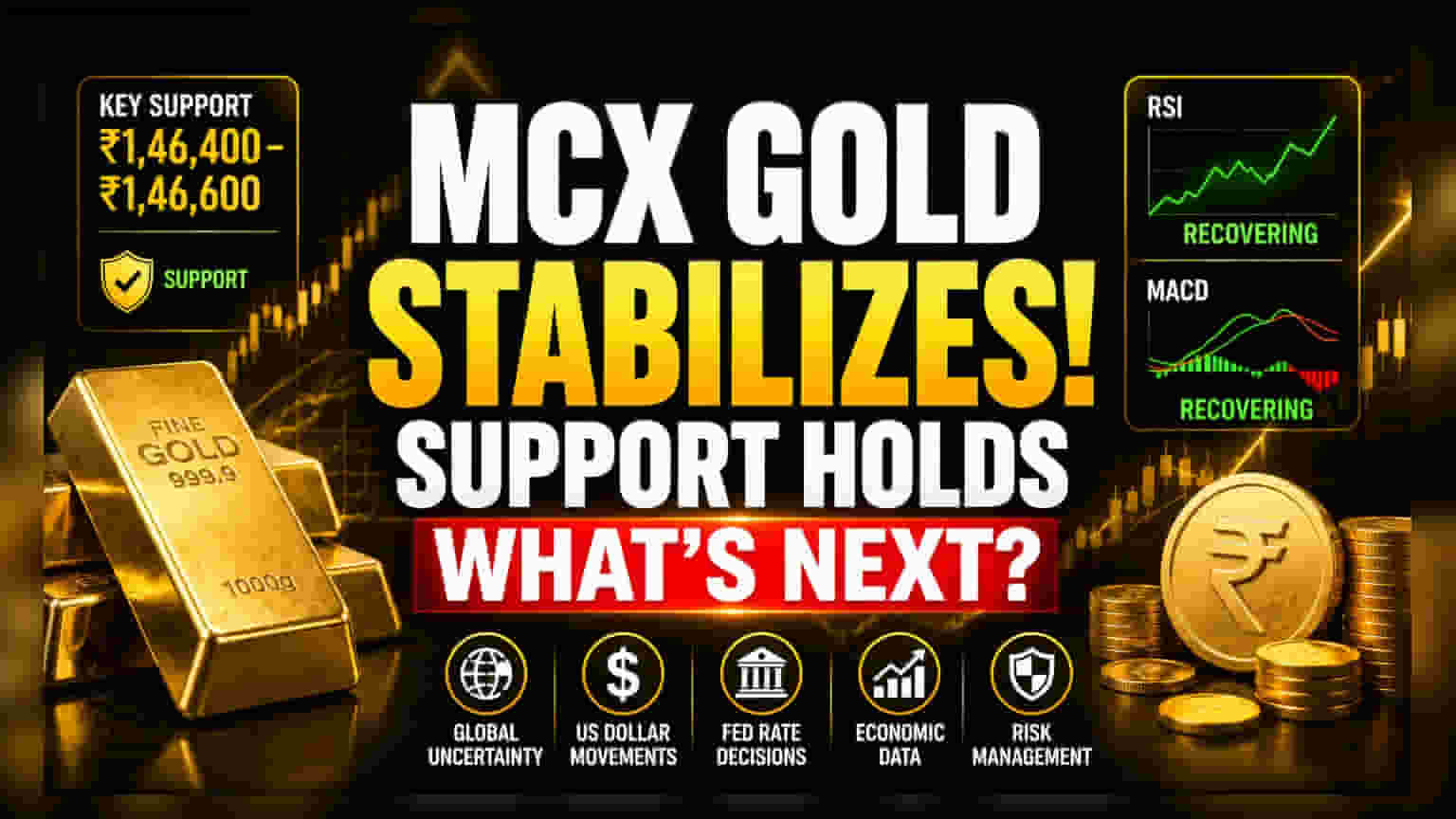
Gold futures on the Multi Commodity Exchange (MCX) are showing early signs of recovery after a recent decline. Investors are keeping a close eye on support levels as market sentiment shifts toward a potential stabilization phase.
What Happened
Gold futures trading on the Multi Commodity Exchange (MCX) have recently displayed signs of stability following a period of downward pressure. After facing a correction, the prices have formed a short-term base, drawing attention from market participants who are closely observing price movements to determine the next trend. The current price action indicates that sellers may be losing some control, with buyers beginning to re-enter the market at lower levels.
Why Key Price Levels Matter
For investors and traders, price levels function as psychological floors and ceilings. When an asset hits a 'support' level, it often signals a point where many market participants believe the price is attractive enough to buy, which can help prevent further declines. Conversely, 'resistance' levels are points where sellers might become more active, potentially capping the upside. In the current MCX gold market, there is significant attention on the price range of ₹1,46,400 to ₹1,46,600 as a potential floor. If the price consistently holds above this range, some market watchers view it as a signal of resilience.
Market Indicators and Sentiment
To understand the direction of the trend, many market participants look at technical indicators like the Relative Strength Index (RSI) and the MACD (Moving Average Convergence Divergence). These tools help in identifying whether an asset is overbought or oversold. Recent observations suggest that some of these indicators have begun to recover from lower, potentially 'oversold' regions. This shift often implies that the intensity of the selling pressure is cooling off, allowing for a more balanced market sentiment.
Broader Economic Factors
It is important to remember that gold prices in India are heavily influenced by global events. Investors should be aware that the price of gold is not determined in a vacuum. It is deeply connected to the strength of the US Dollar, decisions made by the US Federal Reserve regarding interest rates, and global geopolitical stability. When the dollar weakens or global uncertainty rises, gold is often viewed as a safer store of value, which can provide a lift to prices. Conversely, a stronger dollar or higher interest rates can put pressure on gold.
Risks and Market Volatility
While the current stabilization provides a momentary breather, investors should remain cautious. Commodity markets are inherently volatile, and price movements can change rapidly based on fresh economic data or unexpected global news. A failure to hold the established support levels could lead to further testing of lower price ranges. Relying solely on technical chart patterns carries risks, as these do not account for sudden shifts in global macroeconomics or policy changes that can override short-term trends.
What Investors Should Track Next
Moving forward, the primary factor for market participants will be the sustainability of the current price levels. Investors may want to monitor daily closing prices to see if the asset maintains its footing above the identified support zones. Additionally, any new commentary from global central banks or significant economic reports from major economies will likely influence trading activity. For those looking at the broader picture, watching the movement of the US Dollar Index and treasury yields will provide context on why gold is moving in a particular direction.

