

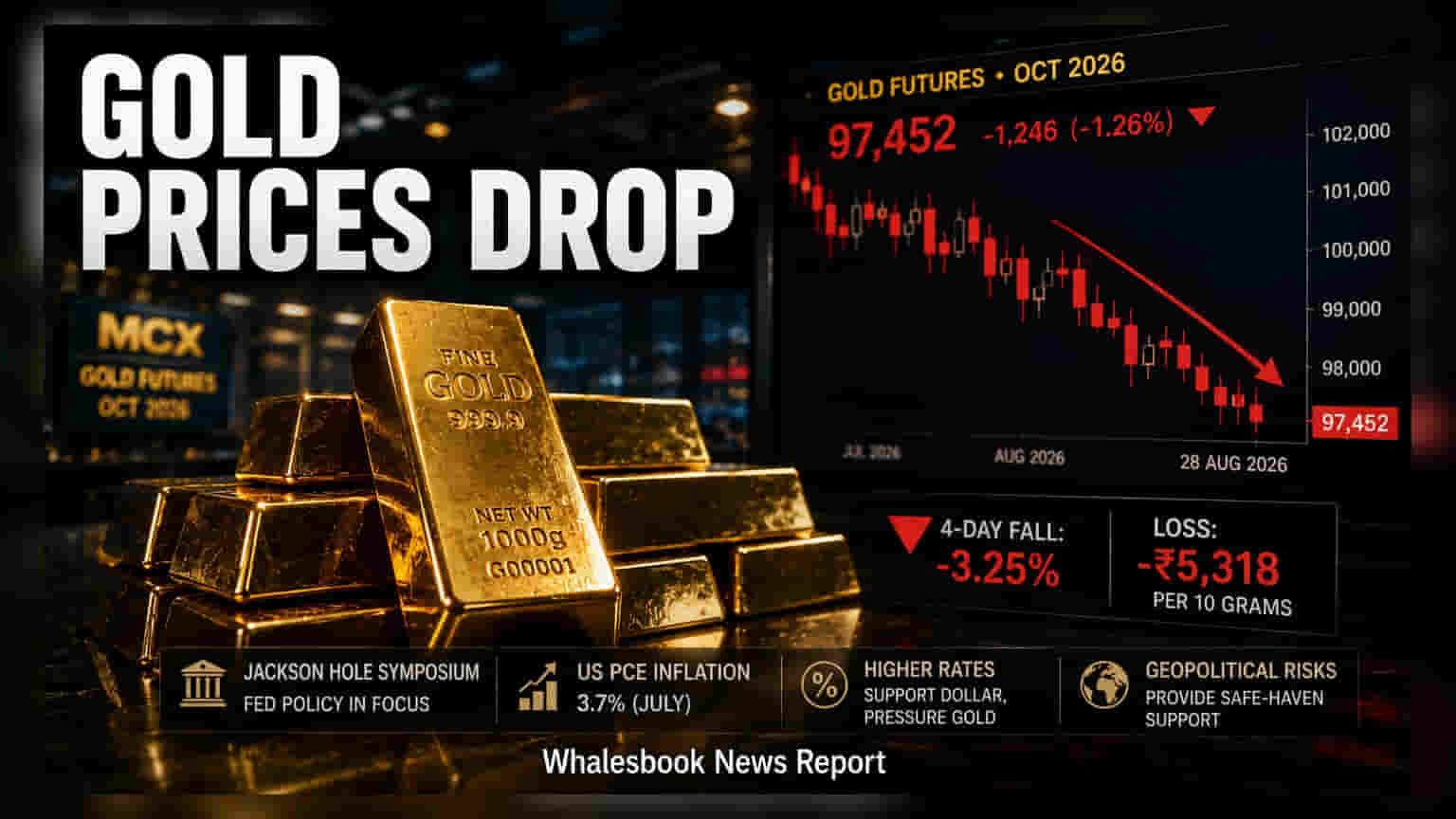
Gold futures on the Multi Commodity Exchange extended their decline for the fourth consecutive session, losing over 3% in value this week. Investors are cautious ahead of Federal Reserve Chair Kevin Warsh’s key speech at the Jackson Hole Symposium. The market is weighing the possibility of further US interest rate hikes, which generally reduces the appeal of non-yielding assets like gold.
Gold prices in India continued their downward trend on Friday, August 28, 2026, marking a fourth straight day of losses. On the Multi Commodity Exchange (MCX), the October gold futures contract has fallen by approximately 3.25% over the last four trading sessions, translating to a drop of roughly Rs 5,318 per 10 grams. This retreat follows a similar trend in global markets, where spot gold prices have moved away from the three-month highs reached earlier this week.
The Impact of Jackson Hole
The primary reason for this current volatility is the ongoing Jackson Hole Economic Policy Symposium in Wyoming. Market participants are waiting for the keynote address by Federal Reserve Chair Kevin Warsh. Investors are looking for clues about the future path of US interest rates. When interest rates are expected to stay high or rise, it often creates pressure on gold prices. This happens because higher interest rates increase the yield on government bonds, making them a more attractive option for investors compared to gold, which does not pay any interest or dividends.
Inflation and Monetary Policy
The anxiety surrounding the Fed's next moves is driven by recent US economic data. The Personal Consumption Expenditures (PCE) inflation rate in the US was reported at 3.7% year-on-year for July. This level of inflation suggests that price pressures remain persistent, leading many in the market to believe that the Federal Reserve may need to maintain restrictive monetary policies to cool the economy. If the Fed signals that it intends to keep rates higher for longer, it typically strengthens the US dollar and increases bond yields, both of which can negatively affect the price of gold.
Market Tug-of-War
While the macro-economic pressure from rising yields is currently dominating, the gold market is facing a tug-of-war. On one side, investors are selling gold to lock in profits and avoid the potential impact of higher interest rates. On the other side, geopolitical risks, such as concerns regarding the Strait of Hormuz and fresh sanctions on Iran, continue to provide a floor for gold prices. Historically, gold is seen as a safe haven during times of geopolitical tension. However, in the current environment, the immediate influence of Federal Reserve policy expectations is outweighing these safe-haven impulses.
For investors, the most important development to track will be the commentary from the Jackson Hole Symposium and its immediate impact on US Treasury bond yields. Shifts in these yields often serve as a leading indicator for the direction of precious metals. The market is currently pricing in a high level of uncertainty, meaning any clear signal from the Federal Reserve regarding the September or December interest rate outlook is likely to dictate the next move for gold prices.