

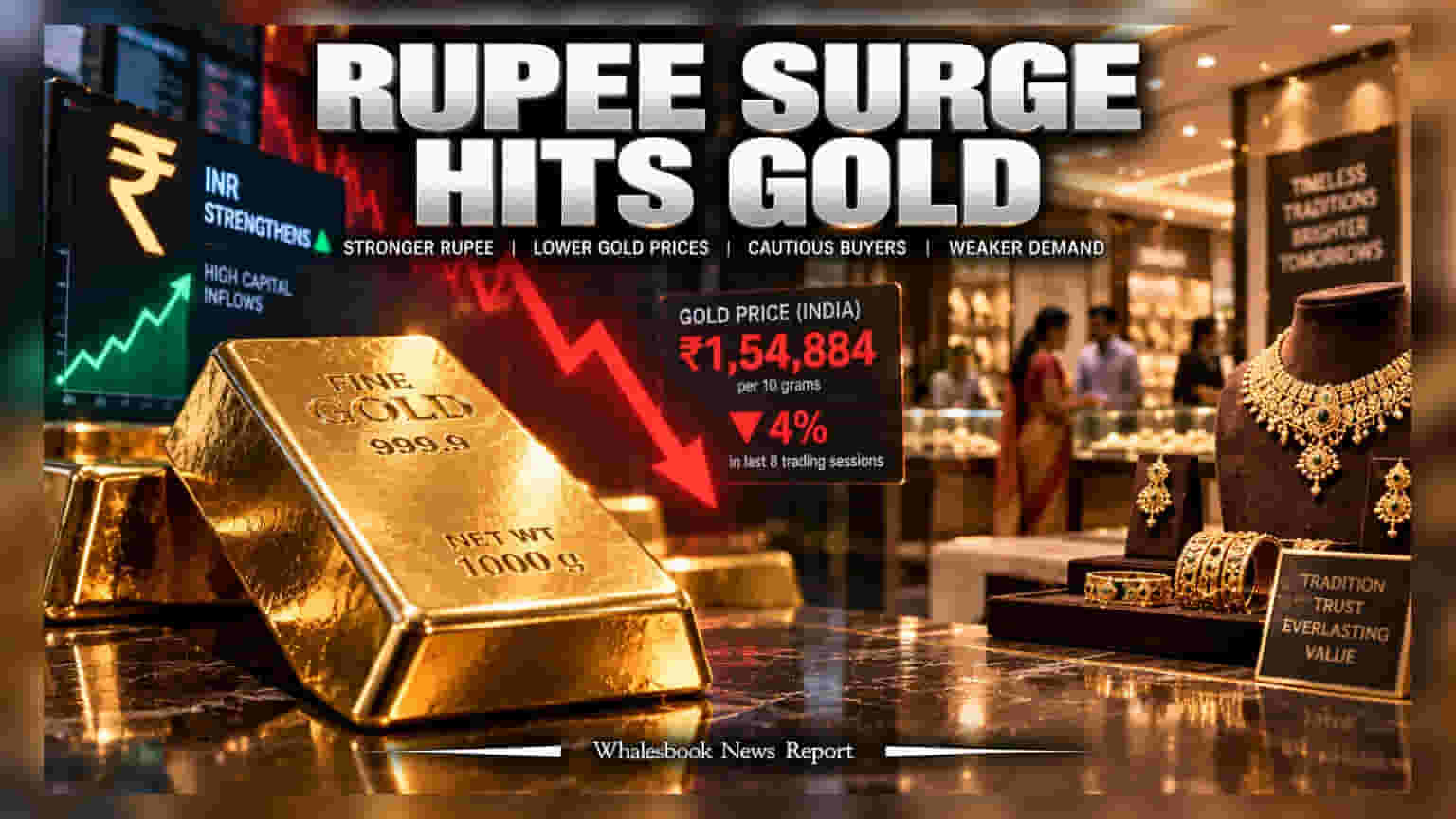
Gold prices in India dropped 4% to ₹1,54,884 per 10 grams over the last eight trading sessions, driven by a stronger rupee. While the price dip provides temporary relief, consumers are delaying purchases, leading to a cautious market ahead of the upcoming festive and wedding seasons.
Gold prices in India have seen a sharp 4% correction over the last eight trading sessions, settling at ₹1,54,884 per 10 grams as of early September 2026. This downward movement is primarily linked to the Indian rupee’s recent appreciation against the US dollar, which has acted as a cooling agent for domestic bullion costs.
Since India imports most of its gold, the exchange rate is one of the most significant factors influencing local retail prices. The rupee has gained strength following major capital inflows, including $127 billion through Foreign Currency Non-Resident (FCNR) deposits. When the rupee is stronger, the cost of importing gold in local currency terms decreases, allowing domestic prices to drop even if international gold prices remain high. This currency dynamic has provided a brief respite for consumers who have been dealing with historically high precious metal costs.
However, this price drop has created a cautious "wait-and-see" environment. Retail buyers, hoping for further corrections, are postponing their purchases rather than rushing to buy. According to industry observations, this hesitation has led to a temporary dip in retail transaction volumes. This is occurring despite the approaching festive and wedding seasons, which are usually periods of high demand.
Despite the current price relief, the market faces several structural pressures. The government continues to maintain a 15% import duty on gold, which is designed to manage the country’s trade deficit and limit import bills. Additionally, there have been government appeals for citizens to limit non-essential gold consumption to support national self-reliance. For both retailers and consumers, these factors mean that gold remains an expensive asset, and the price difference between local and international markets will likely persist.
Investors and industry players are now monitoring currency stability and consumer sentiment. While experts remain optimistic that the long-term demand for gold for weddings and traditional events will stay robust, any sudden reversal in the rupee’s strength could quickly change the domestic price trend. The most important update for the market to follow will be how demand shapes up once consumers feel that prices have stabilized, as well as any further changes in government import policies.