

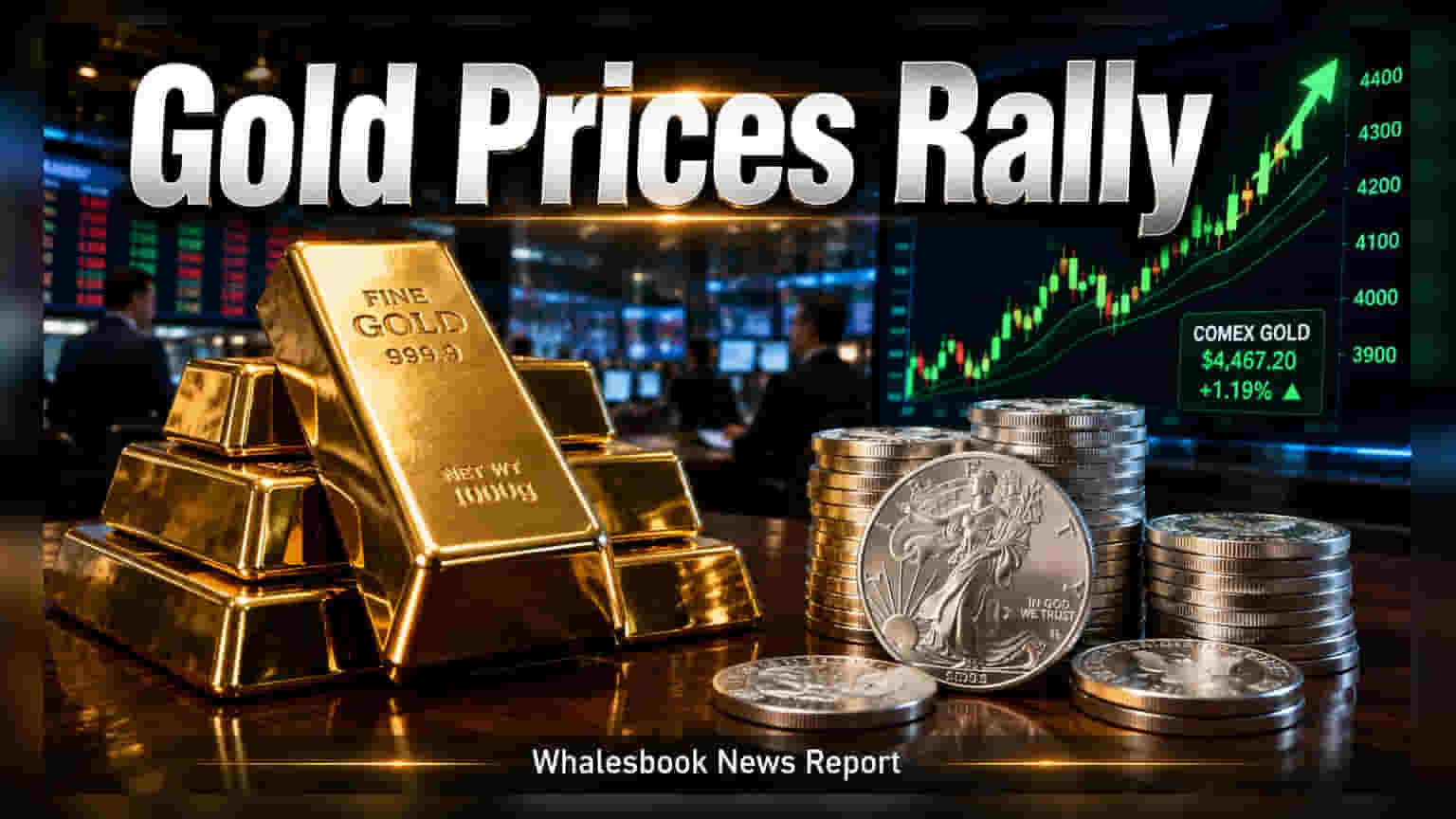
Gold prices rebounded on September 3, with COMEX futures climbing to $4,467.20 per ounce. A weaker U.S. dollar and lower-than-expected August job data have eased fears of aggressive interest rate hikes, supporting the metal's price. Investors are now awaiting U.S. non-farm payroll reports for further policy cues.
Gold prices saw a turnaround on September 3, 2026, breaking a three-day decline as the U.S. dollar softened and investors digested new economic data. COMEX gold futures climbed 1.19% to trade at $4,467.20 per ounce. Domestic markets followed suit, with the MCX October gold contract closing at Rs 1,52,544 per 10 grams, marking a 0.09% gain. Silver prices also saw positive momentum, advancing 1.29% to $66.30 per ounce.
Impact of U.S. Labor Data on Commodities
The primary catalyst for this recovery is the cooling labor market in the U.S. The latest ADP report indicated that only 38,000 new private-sector jobs were added in August, which missed market expectations. This is a critical development for gold because it is a non-yielding asset, meaning it does not pay regular interest or dividends. When economic data suggests a slowdown, expectations for aggressive interest rate hikes by the Federal Reserve tend to cool. Since higher interest rates generally make fixed-income investments like bonds more attractive than gold, a move away from aggressive rate hikes typically supports gold prices.
Macro Drivers and Market Risks
The weakening U.S. dollar has further provided a cushion for bullion prices. Because gold is priced in dollars globally, a weaker currency makes the metal more affordable for buyers using other currencies, often helping to sustain demand. Additionally, concerns regarding energy-linked inflation have moderated following statements from New York Federal Reserve President John Williams regarding the fading impact of certain trade tariffs.
However, investors should remain cautious as the environment remains complex. Geopolitical tensions, particularly involving the U.S. and Iran, remain a significant wildcard that could disrupt energy supplies and trigger inflationary pressures. If inflation expectations rise sharply, the Federal Reserve may be forced to maintain or increase interest rates, which historically exerts downward pressure on non-yielding assets like gold. Furthermore, structural concerns regarding U.S. debt levels continue to create uncertainty in global markets.
What Investors Should Monitor
All eyes are now on the upcoming U.S. Non-Farm Payrolls and unemployment reports. These data points are essential for the Federal Reserve to evaluate the health of the economy and adjust monetary policy accordingly. Market sentiment can shift quickly based on these reports; any sign that the labor market is stronger than currently expected could lead to a stronger U.S. dollar and potentially reverse the recent gains in gold. Monitoring currency fluctuations, particularly the performance of the Japanese yen against the dollar, will also provide insight into broader market stress.