

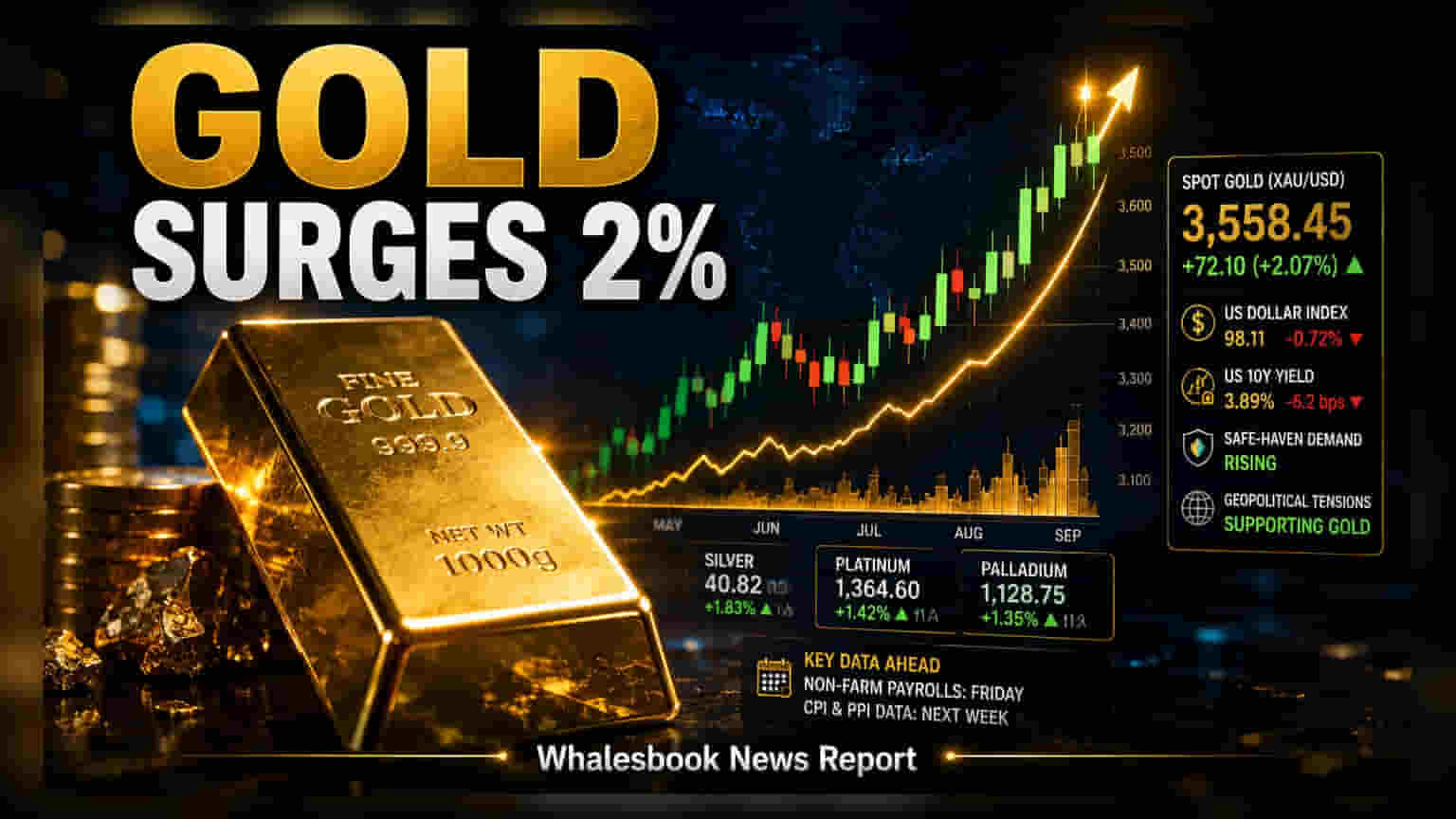
Gold prices climbed nearly 2% on Thursday after Federal Reserve Governor Christopher Waller hinted at a potential pause in interest rate hikes for September. This shift in policy expectations weakened the US dollar and Treasury yields, boosting interest in bullion. Investors are now focusing on upcoming US payroll and inflation data to determine the next market direction.
Gold prices rallied by approximately 2% on Thursday, reaching their highest levels since late August. This price movement followed comments from Federal Reserve Governor Christopher Waller, who signaled that the central bank might pause interest rate hikes at its upcoming September 15–16 meeting. This support is contingent on incoming economic data confirming that inflation pressures are cooling.
The shift in tone significantly impacted market expectations. Prior to these remarks, traders had priced in a higher probability of a rate increase. Since those comments, the likelihood of a rate hike for the September meeting has fallen from approximately 63% to around 50%. Gold is an asset that does not pay interest, so it often struggles when interest rates are high, as investors may prefer to hold bonds or savings accounts that offer guaranteed returns. When expectations for further rate hikes cool, the pressure on gold decreases, often making it more attractive.
Financial markets also saw a reaction, with both the US dollar and Treasury yields softening. A weaker US dollar is generally beneficial for gold because it makes the metal cheaper for international buyers. Beyond gold, other precious metals such as silver, platinum, and palladium also recorded gains, suggesting a positive sentiment across the commodities sector.
Adding to the support for gold prices are ongoing geopolitical tensions in West Asia. Reports regarding security threats and strikes involving Iran have renewed investor concerns about potential supply chain disruptions, particularly in energy markets. In times of global uncertainty, gold is often viewed as a safe-haven asset, meaning investors may buy it to protect their portfolios, which creates additional buying pressure.
For investors, the market remains sensitive to upcoming US economic reports. The immediate monitorable will be the non-farm payrolls report due on Friday, followed by crucial consumer and producer inflation data scheduled for next week. If this data confirms that the economy is cooling, it could strengthen the case for a pause in interest rate hikes. Conversely, if the numbers show that inflation remains sticky or the economy is stronger than expected, it could force the Federal Reserve to maintain its aggressive policy, potentially reversing recent gains in gold prices. Investors should remain aware that gold is highly reactive to these shifts in monetary policy data.