

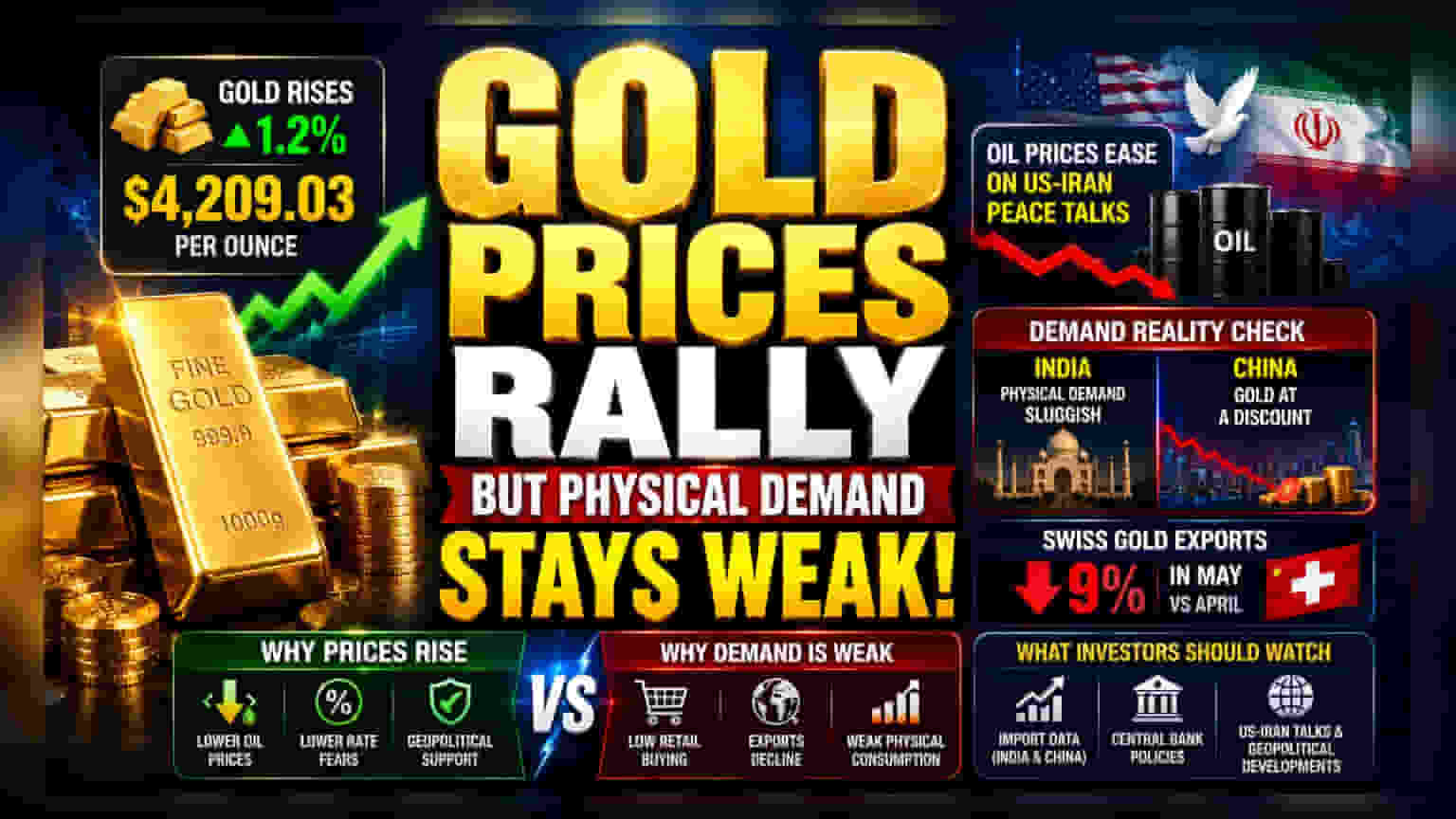
Gold prices climbed over 1% on Monday, driven by cooling oil prices following reports of progress in US-Iran peace negotiations. However, physical demand in India and China remains weak, with Swiss export data highlighting the current lack of buyer enthusiasm in major markets.
What Happened
Gold prices staged a recovery on Monday, gaining 1.2% to trade at $4,209.03 per ounce. This move followed a decline in the previous session. The price jump is largely attributed to a softening in Brent crude oil prices, which has been linked to news of progress in peace negotiations between the United States and Iran. When oil prices ease, market concerns about inflation—and the potential for central banks to raise interest rates to fight that inflation—often decrease. Gold, which does not pay interest, often becomes more attractive when interest rate fears subside, as the opportunity cost of holding the metal lowers.
The Demand Reality Check
While market prices for gold are trending upward, the reality on the ground tells a different story. Physical demand for gold in India, one of the world's largest consumers, remains sluggish despite prices falling to approximately two-and-a-half-month lows recently. A similar trend is visible in China, where gold is currently trading at a discount. This discount in China is a clear signal that there is little robust buying interest among physical consumers at these price levels.
Why Global Export Data Matters
Investors often look at Swiss gold export data as a barometer for global physical demand. The latest figures show that Switzerland’s gold exports fell 9% in May compared to the previous month. The data reveals that lower shipments to major hubs like India and Hong Kong were not fully offset by increased exports to Britain and China. For investors, this creates a contrast: while global market prices are rising due to geopolitical or macroeconomic factors, the actual consumption of gold is not keeping pace.
Investor Context
This gap between rising financial market prices and weak physical buying is an important dynamic to understand. It suggests that the current price rally is being driven more by traders and investors reacting to geopolitical news, such as the US-Iran peace talks, rather than a surge in actual consumer buying. When price increases are not supported by strong physical demand, volatility can remain high, as there is less "floor" support from buyers who purchase gold for jewelry or physical investment.
What Investors Should Track Next
Moving forward, the sustainability of this price rally will depend on whether physical demand recovers. Investors should watch for upcoming import data from India and China, as well as any changes in central bank policies regarding interest rates. If inflation fears return, oil prices may rise again, which could impact gold prices further. Additionally, developments in the geopolitical situation regarding the US-Iran talks remain a key monitorable that could shift market sentiment quickly.