 Whalesbook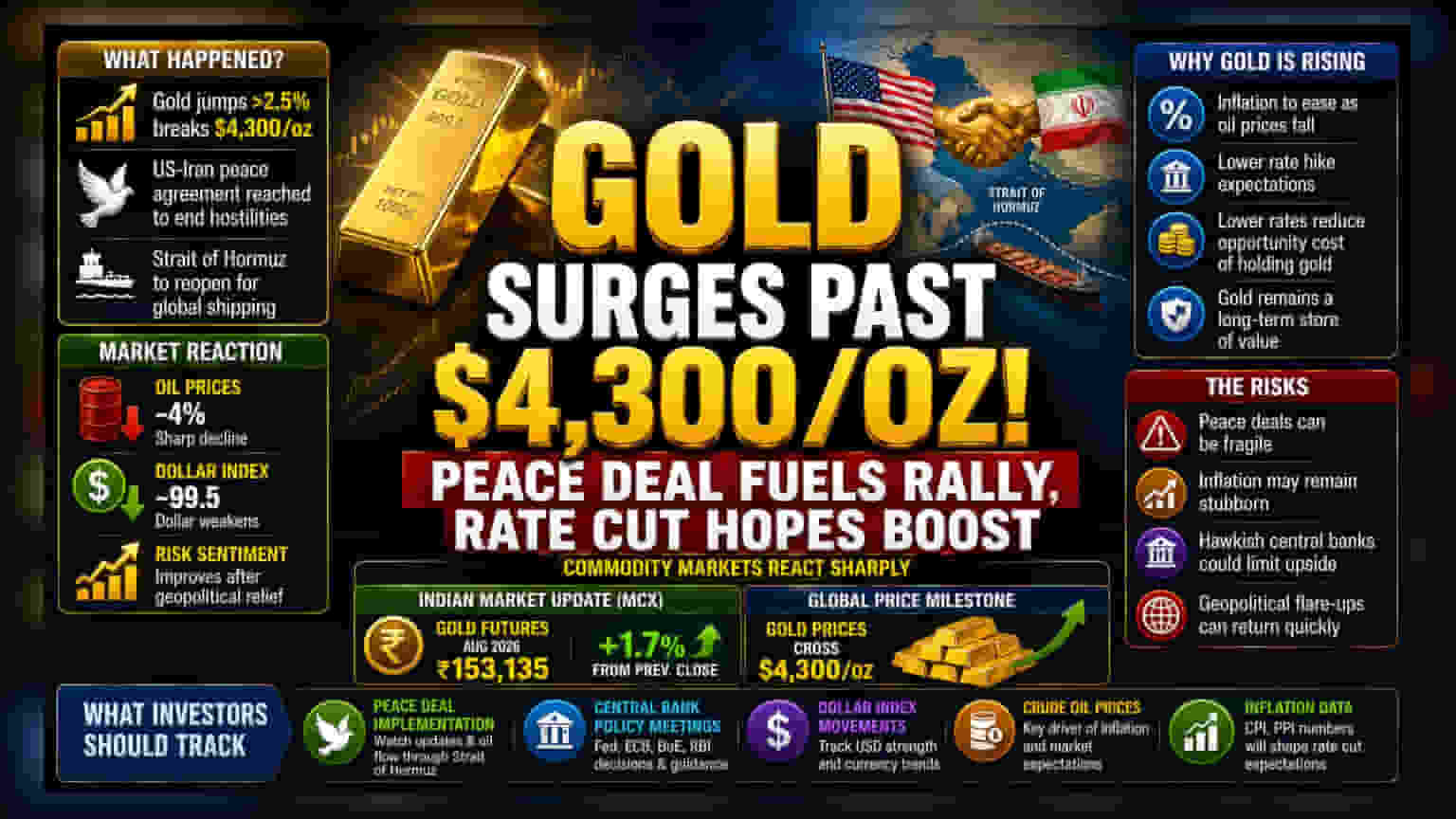


Gold prices surged over 2.5% to exceed $4,300 an ounce following a U.S.-Iran peace deal to reopen the Strait of Hormuz. The agreement has lowered inflation and interest rate hike expectations, boosting the appeal of non-yielding assets like gold. On India's MCX, gold futures for August delivery rose 1.7% to ₹153,135. Investors are now watching central bank policies for further direction.
What Happened
Gold prices recorded a significant jump on Monday, breaking through the $4,300 per ounce level. The rally, which saw prices climb more than 2.5%, follows reports of a new peace agreement between the United States and Iran. This deal aims to end hostilities and reopen the Strait of Hormuz, a critical global shipping route for oil. The news triggered a sharp reaction across commodity and currency markets, with oil prices falling nearly 4% and the U.S. dollar index softening to approximately 99.5.
Why Investors Are Watching Rate Hopes
While gold is traditionally sought after as a safe haven during geopolitical conflict, the current market move is driven by a shift in economic expectations. Gold is a non-yielding asset, meaning it does not pay interest or dividends. When central banks keep interest rates high, the opportunity cost of holding gold—which earns no return—increases.
The U.S.-Iran agreement has raised hopes that inflation, which was partially fueled by higher oil prices due to the conflict, will stabilize. If inflation cools, expectations for further interest rate hikes by the Federal Reserve and other central banks may decrease. This creates a more favorable environment for gold, as lower interest rates reduce the cost of holding it compared to interest-bearing assets like bonds.
How The Indian Market Reacted
In India, the impact was visible on the Multi Commodity Exchange (MCX). Gold futures contracts for August 2026 delivery rose to ₹153,135, reflecting an increase of 1.7% from the previous session's close. Indian investors often track global prices and currency movements, as gold is a major import for the country. The weakening of the dollar against international peers typically helps keep domestic gold price increases more moderate than global dollar-denominated moves.
The Risks Behind The Rally
While the market reacted positively to the peace deal, investors should note that the rally is sensitive to geopolitical stability. Geopolitical agreements can be fragile. If the peace process encounters hurdles or if economic indicators show that inflation remains stubborn, the market may quickly reassess its expectations for central bank interest rate policies.
Analysts at J.P. Morgan have suggested ambitious price targets for gold, reaching as high as $6,000 per ounce by year-end. However, these projections rely heavily on the sustained resolution of geopolitical tensions and specific policy decisions by major central banks. If the Federal Reserve maintains a hawkish stance despite the diplomatic progress, the support for gold prices could diminish.
What Investors Should Track Next
Investors should monitor official statements regarding the implementation of the peace deal and its actual impact on oil shipping through the Strait of Hormuz. Furthermore, the upcoming policy meetings of the Federal Reserve and other major central banks will be critical. Any divergence in policy—such as a central bank raising rates to combat local currency weakness despite global inflation trends—could influence gold's momentum. Finally, tracking the U.S. dollar index and global crude oil prices will provide clues on whether the current inflation-easing narrative remains intact.