

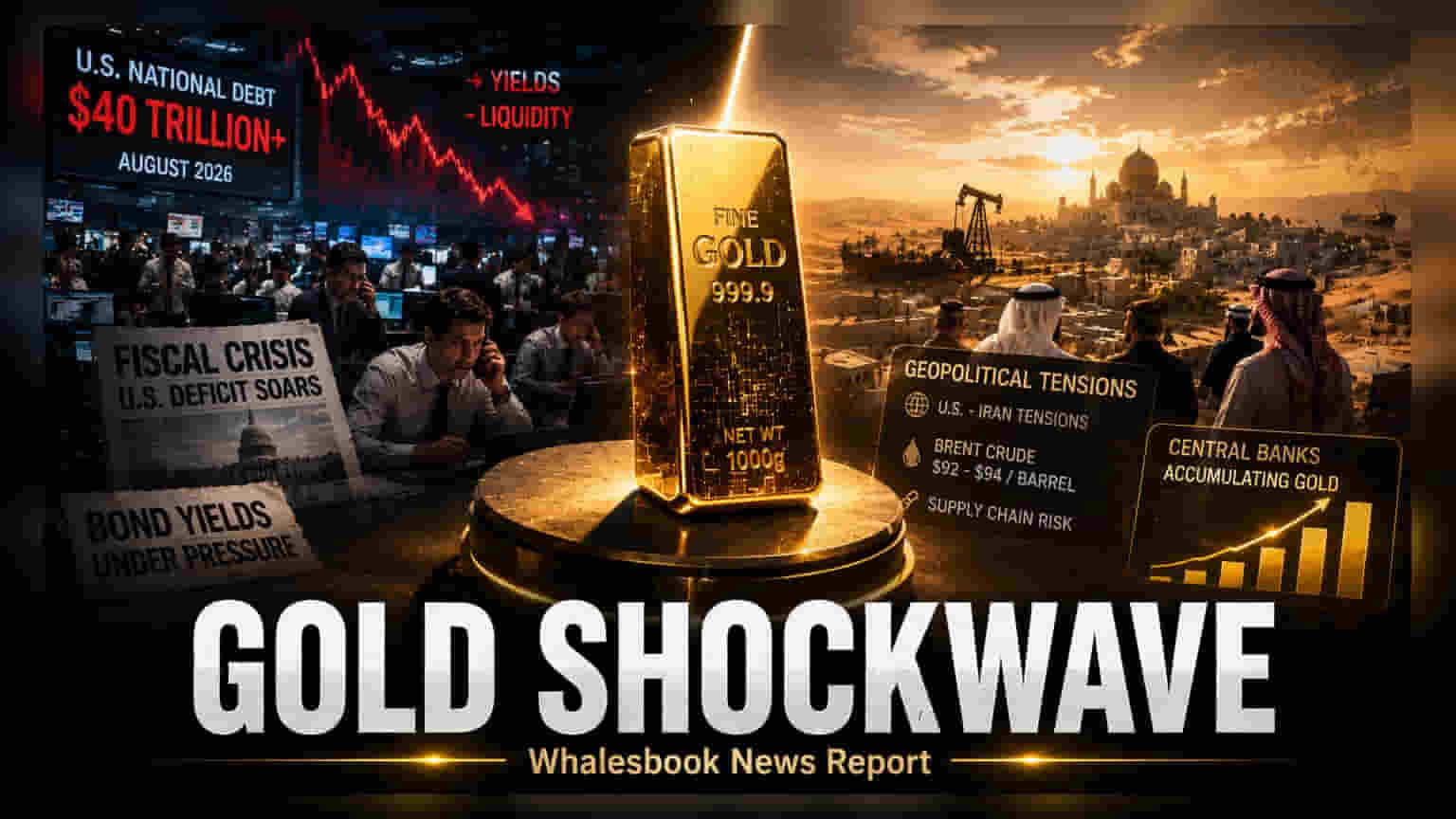
Gold prices have jumped over 17% since mid-July, driven by concerns over U.S. fiscal health and geopolitical tensions. With national debt crossing $40 trillion, investors are increasingly turning to bullion as a safe-haven asset.
Gold prices have risen more than 17% since mid-July, moving to levels not seen since mid-May. This shift in the precious metals market is largely driven by investor unease regarding the state of U.S. government finances and broader economic instability.
A major factor behind this rally is what market observers call the "debasement trade." This happens when investors worry that the value of government-issued currency may fall due to excessive borrowing and new money entering the financial system. With the U.S. gross national debt officially surpassing the $40 trillion mark in August 2026, many investors are choosing to move their wealth into gold as a form of protection against potential currency devaluation.
The U.S. Treasury’s ongoing bond buyback operations have also played a role. These programs are designed to keep cash flowing through the market and support liquidity. However, this action often puts downward pressure on Treasury bond yields. When bond yields fall, gold becomes more attractive to investors because it does not rely on interest payments, making it a competitive choice during times of low returns.
Geopolitical risks have added further fuel to the price rise. Recent tensions between the U.S. and Iran, highlighted by the Treasury's "Operation Economic Outcast," have created uncertainty in global supply chains. This has helped push Brent crude oil prices into the $92 to $94 per barrel range. When global conflicts threaten oil supplies and economic stability, gold is historically viewed as a safe place for capital, leading to increased buying activity.
Additionally, the U.S. dollar index has retreated to levels not seen since mid-May. When the dollar weakens, gold becomes less expensive for buyers holding other currencies, which naturally helps support demand. Global central banks have also continued to add to their gold reserves, further strengthening the price floor for the metal.
Investors should be aware that this rally comes with risks. Gold prices are currently sensitive to rapid changes in market sentiment and economic data. If the Federal Reserve shifts its interest rate policy or if bond market volatility settles, the speed of this gold price increase could slow down. High prices also expose investors to the risk of sharp corrections if the primary drivers—such as geopolitical tension or fiscal fears—begin to ease.
The key monitorables for the coming weeks will be the Federal Reserve's stance on future interest rates and any new data regarding U.S. fiscal sustainability. Investors will also track potential fluctuations in bond yields, as these will likely dictate the next direction for precious metal prices.