

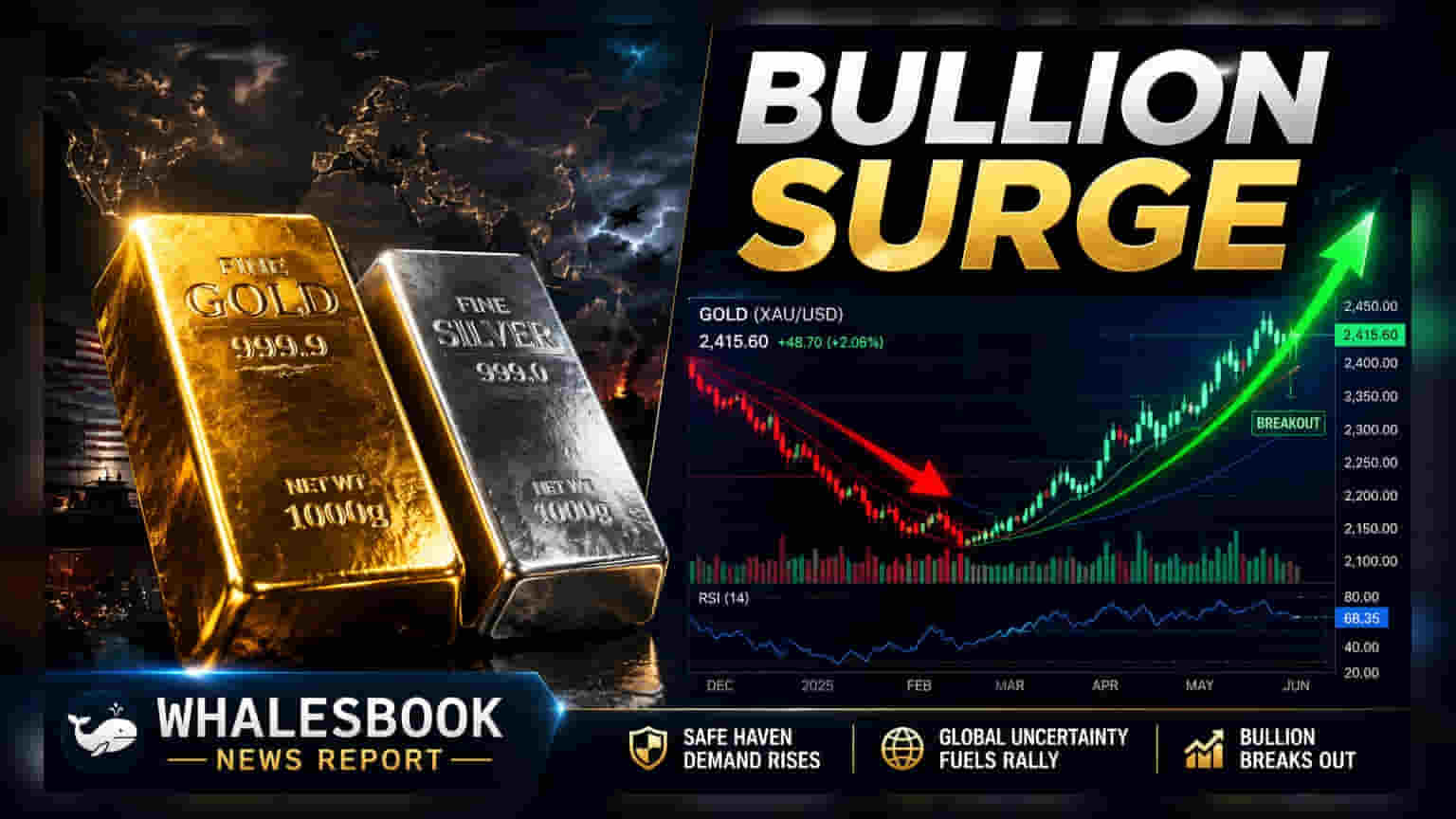
Gold and silver prices have rallied for four straight sessions following weaker US employment data. This shift has cooled expectations for Federal Reserve interest rate hikes, making non-yielding assets like bullion more attractive to global investors. Physical demand in India remains sensitive to these price movements.
Precious metal prices extended their gains on Monday, July 6, 2026, as gold climbed toward $4,180 per ounce. This marks the fourth consecutive day of price increases, with the metal reaching levels not seen since June 23. Silver followed a similar trend, rising by 0.2 percent to trade around $62.57 per ounce.
Impact of US Labor Market Data
The recent rise in bullion prices is largely tied to a cooling US labor market. Official data for June showed a clear slowdown in job creation, and numbers for the previous two months were also revised downward. For investors, this is a significant development because the US Federal Reserve’s interest rate policy is a major driver of gold prices. When the central bank is expected to keep interest rates steady or lower them, the appeal of gold increases. This is because gold does not pay interest, so it becomes a more attractive alternative to interest-bearing assets like bonds when rates are low or falling. Recent data from the CME FedWatch Tool suggests that the market now sees less than a 50 percent chance of further interest rate hikes, a change that has provided support to gold and silver prices.
Geopolitical and Economic Factors
Beyond interest rates, gold is often viewed as a safe-haven asset during times of global uncertainty. Ongoing diplomatic discussions between the US and Iran, which are currently being mediated by Qatar, remain a key point of interest for traders. Any easing in tensions or positive progress in these talks can influence market sentiment, although geopolitical instability typically encourages investors to hold gold.
Looking ahead, market participants are keeping a close watch on several upcoming US economic reports. Key updates on trade balance figures, upcoming FOMC meeting minutes, and weekly jobless claims are expected to dictate the direction of gold prices in the near term. These reports will provide further clarity on the health of the US economy and the future path of interest rates.
Physical Demand Trends in India
While global factors drive price movements, the retail impact is also visible in local markets. Physical gold demand in India experienced a brief increase, but it showed signs of easing on Friday as prices moved higher. In contrast, gold buying interest in China has shown a slight improvement. For Indian investors, the trend of higher global prices often translates into increased domestic costs, which can temporarily suppress physical buying interest. The movement of the Indian Rupee against the US dollar also remains a factor to track, as a weaker rupee can further inflate the cost of importing gold into India.