

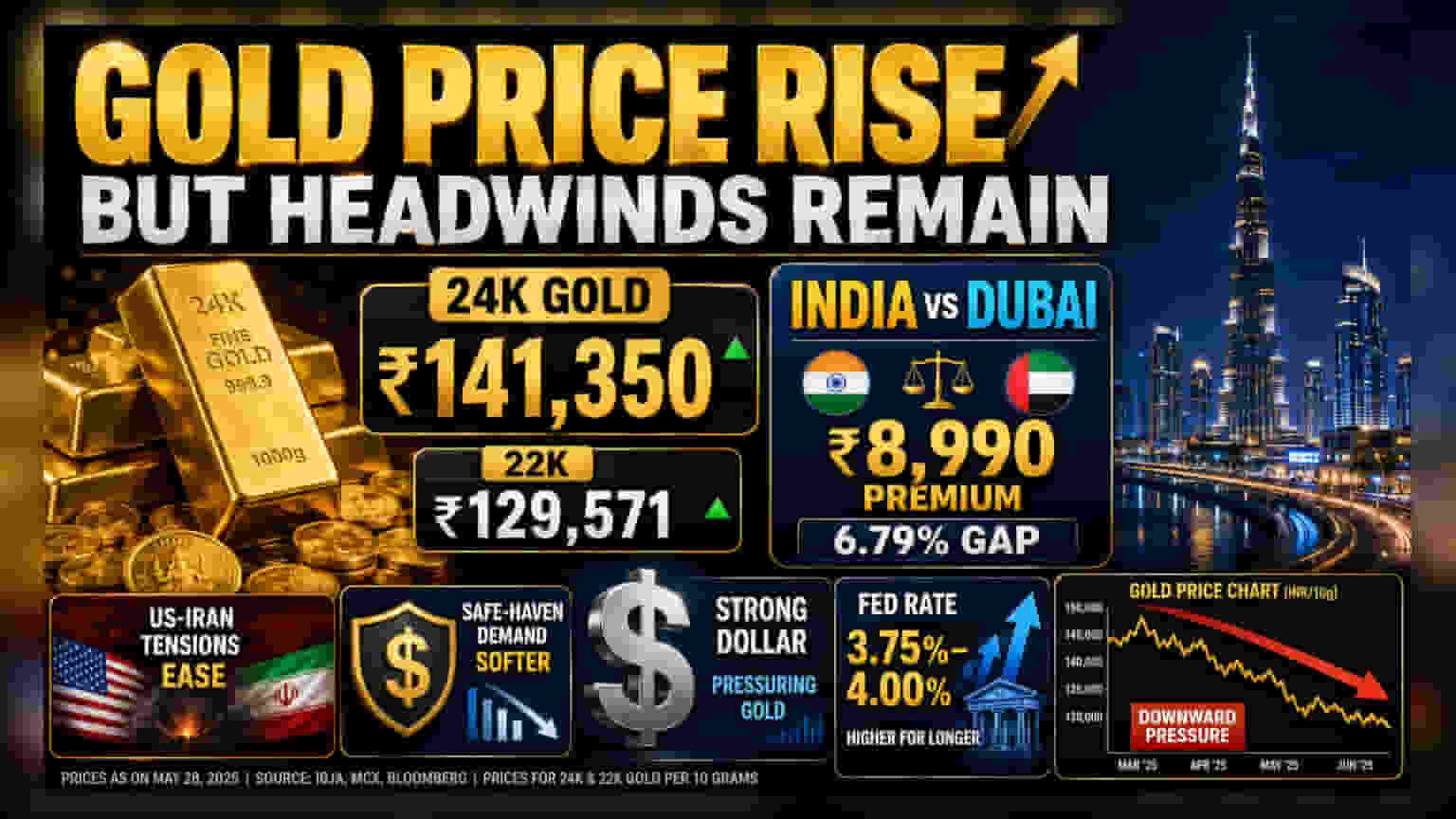
24K gold prices rose 0.12% to ₹141,350 per 10 grams on June 25, 2026. The domestic price remains significantly higher than Dubai rates due to import duties. Meanwhile, the precious metal faces global pressure from a strong US dollar and anticipation of Federal Reserve interest rate hikes.
What Happened
On June 25, 2026, gold prices in India recorded a minor increase of 0.12%. The 24-karat gold rate stood at ₹141,350 per 10 grams, marking a rise of ₹170 from the previous day's closing price. At the same time, 22-karat gold was quoted at ₹129,571 per 10 grams. While the price saw a slight uptick, the overall trend for the precious metal remains cautious due to significant global economic factors.
The India-Dubai Price Gap
A notable feature of the Indian gold market is the consistent price premium it commands over international hubs like Dubai. On the reporting date, the price in India was approximately ₹8,990 higher than in Dubai, representing a gap of about 6.79%.
This price disparity is largely structural rather than purely market-driven. It is primarily caused by import duties and taxes levied on gold entering India. When retail investors look at gold prices, it is important to note that domestic prices include these government-imposed costs, which do not apply to gold purchased in tax-friendly zones like Dubai. Consequently, Indian buyers effectively pay a higher cost to account for these regulatory levies.
Why Global Headwinds Are Pressuring Gold
Despite the small daily gain, gold is facing pressure from global economic developments. The metal is often viewed as a non-yielding asset, meaning it does not pay interest or dividends. When the US Federal Reserve signals interest rate hikes—as it has recently with expectations of rates rising between 3.75% and 4.00%—investors often shift their capital toward interest-bearing assets like bonds. This reduces the appeal of gold, causing potential selling pressure.
Additionally, the strength of the US Dollar index has acted as a hurdle. Gold is priced in dollars globally; a stronger dollar makes the metal more expensive for buyers using other currencies, which tends to suppress international demand.
Geopolitical Impact on Sentiment
Gold has historically performed well during times of geopolitical conflict because investors flock to it as a 'safe haven.' However, recent reports of easing tensions between the US and Iran have reduced this fear-driven demand. With the threat of immediate conflict appearing to wane, the urgency for investors to hold gold as a protective hedge has decreased, contributing to the broader decline in prices from their earlier yearly peaks.
What Investors Should Track
Investors looking to understand the gold market’s direction should monitor three primary factors. First, the upcoming US Personal Consumption Expectation (PCE) data will be critical, as it serves as a key inflation indicator for the Federal Reserve's policy decisions. Second, the movement of the US Dollar index will remain a proxy for gold's performance; a continued rise in the dollar generally serves as a headwind for bullion. Finally, domestic investors should watch for any changes in import duty policies, as these directly influence the price gap between Indian and international markets.