

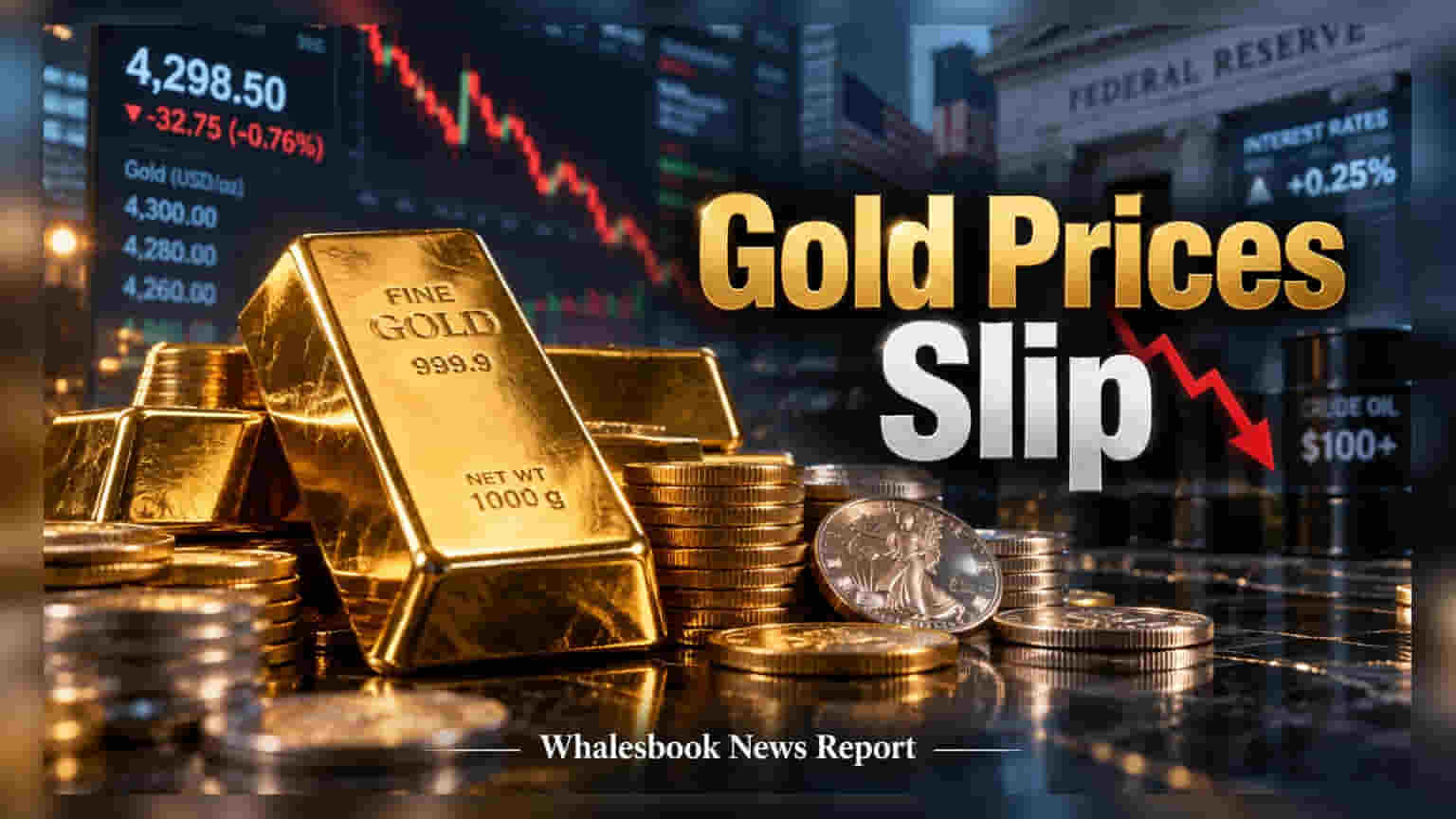
International gold prices have slipped under the $4,300 per ounce mark, marking their third consecutive week of decline. The drop follows a stronger U.S. dollar and a high probability that the Federal Reserve will raise interest rates this week. Indian investors are tracking how these global factors influence domestic MCX futures.
Global gold prices are facing sustained pressure, trading below the $4,300 per ounce level as of September 15, 2026. This marks the third straight week that the precious metal has lost value, as international investors prepare for the U.S. Federal Reserve’s upcoming policy meeting on September 15 and 16.
The primary reason for this decline is the rising expectation that the U.S. central bank will increase interest rates by 25 basis points. Market data currently suggests a more than 90% probability of this hike. When interest rates rise, gold often becomes less attractive to investors because it does not pay interest or dividends. As other assets like government bonds start offering better returns, investors tend to move their money out of gold.
Adding to the pressure is the strength of the U.S. dollar and rising crude oil prices, which have crossed the $100 per barrel mark. A stronger dollar makes gold more expensive for buyers using other currencies, which can hurt global demand. Meanwhile, higher oil prices are fueling concerns about inflation, which historically keeps interest rates higher for longer, creating a tough environment for non-yielding assets like gold.
In the Indian market, the Multi Commodity Exchange (MCX) has seen gold and silver futures mirror this global trend. While the domestic price movement may occasionally show small gains, the general sentiment is being dictated by these international factors. Because India is a large importer of gold, global price corrections often flow through to domestic prices.
From a technical standpoint, market experts are watching key support levels for spot gold between $4,280 and $4,300 per ounce. This is a price range where buyers have historically stepped in to support the market. If the price falls and stays below this level, it could lead to further selling by traders and technical liquidations, potentially pushing prices lower.
Investors are now closely tracking the conclusion of the Federal Reserve meeting on September 16. Any official comment from the Fed regarding future interest rate paths or how long rates will stay high will be the next major trigger for gold prices. Until that clarity arrives, the market is expected to remain cautious, with traders avoiding large positions.