

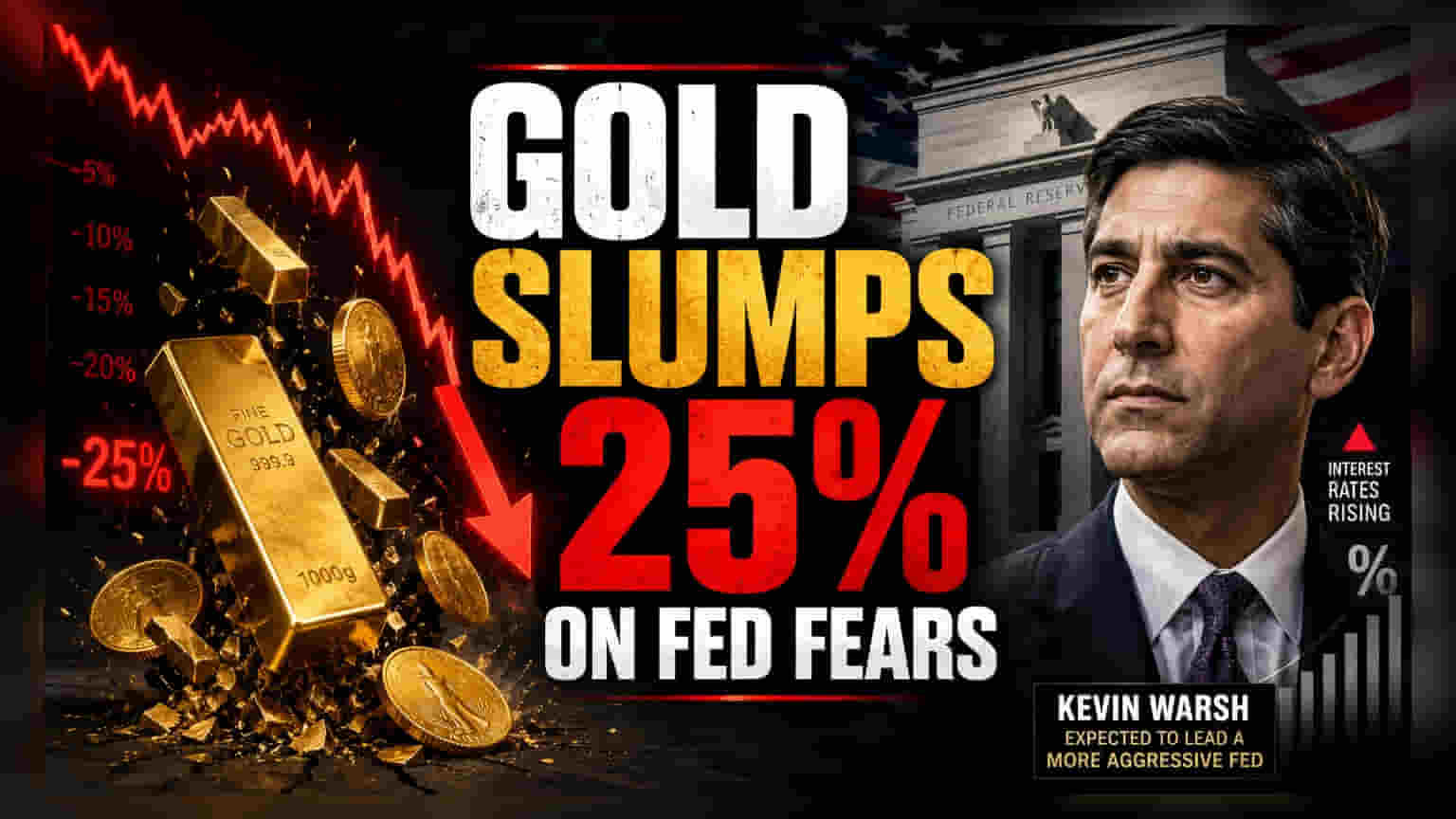
Gold prices have dropped over 25% since January 30, following the nomination of Kevin Warsh to lead the US Federal Reserve. The shift toward a potentially hawkish monetary policy—which includes possible rate hikes to combat inflation—has reduced the appeal of non-yielding assets like gold. While central bank buying provides a potential price floor, investors are preparing for continued volatility as interest rate expectations evolve.
What Happened
Gold prices have experienced a significant downturn, falling more than 25% since January 30, 2026. This downward trend intensified following the nomination of Kevin Warsh as the next chairman of the US Federal Reserve. The market has interpreted this development as a signal for a more aggressive monetary policy stance. This correction marks the sharpest single-day decline for the precious metal since 1983, reflecting a rapid shift in investor sentiment regarding the US economic outlook.
Why Rising US Rates Pressure Gold
Gold is a non-yielding asset, meaning it does not generate interest income or dividends for its holders. When the US Federal Reserve raises interest rates to curb inflation, the appeal of gold often diminishes compared to interest-bearing assets like government bonds. Market analysts now suggest that with US growth trends and labor market data remaining resilient, the central bank may prioritize further rate hikes over cuts. If the Federal Reserve follows through with projected rate increases in late 2026 and early 2027, the opportunity cost of holding gold could remain high, keeping downward pressure on its price.
Analyst Views and Technical Trends
Financial institutions have begun to revise their expectations for the metal. Deutsche Bank has lowered its price forecast, noting that if the market fully prices in three to four Fed rate hikes, prices could face further pressure toward the $3,800 per ounce level. From a technical perspective, gold has also traded below its 50-week moving average for the first time since October 2023. In financial markets, breaking below this long-term average is often viewed by traders as a signal that the medium-term price trend has weakened.
The Role of Central Banks
Despite the sharp price decline, global central banks remain a critical source of support. According to the World Gold Council, 89% of reserve managers expect central bank gold holdings to increase over the coming year. This consistent buying creates a ‘floor’ for the price, acting as a buffer against deeper, panic-driven corrections. Many central banks continue to add to their reserves as a way to diversify and hedge against risks related to currency debasement and rising government debt levels.
What Indian Investors Should Track
For investors, the current environment presents a complex picture. While international prices face headwinds due to US monetary policy, the domestic price of gold in India is also influenced by currency fluctuations and import duties. Investors may want to monitor official updates regarding US inflation data and Federal Reserve policy meetings, as these events are primary drivers of global gold trends. The balance between aggressive rate hike expectations and the structural demand from central banks will likely remain the key factor in determining whether gold enters a period of stabilization or continues to face volatility.