

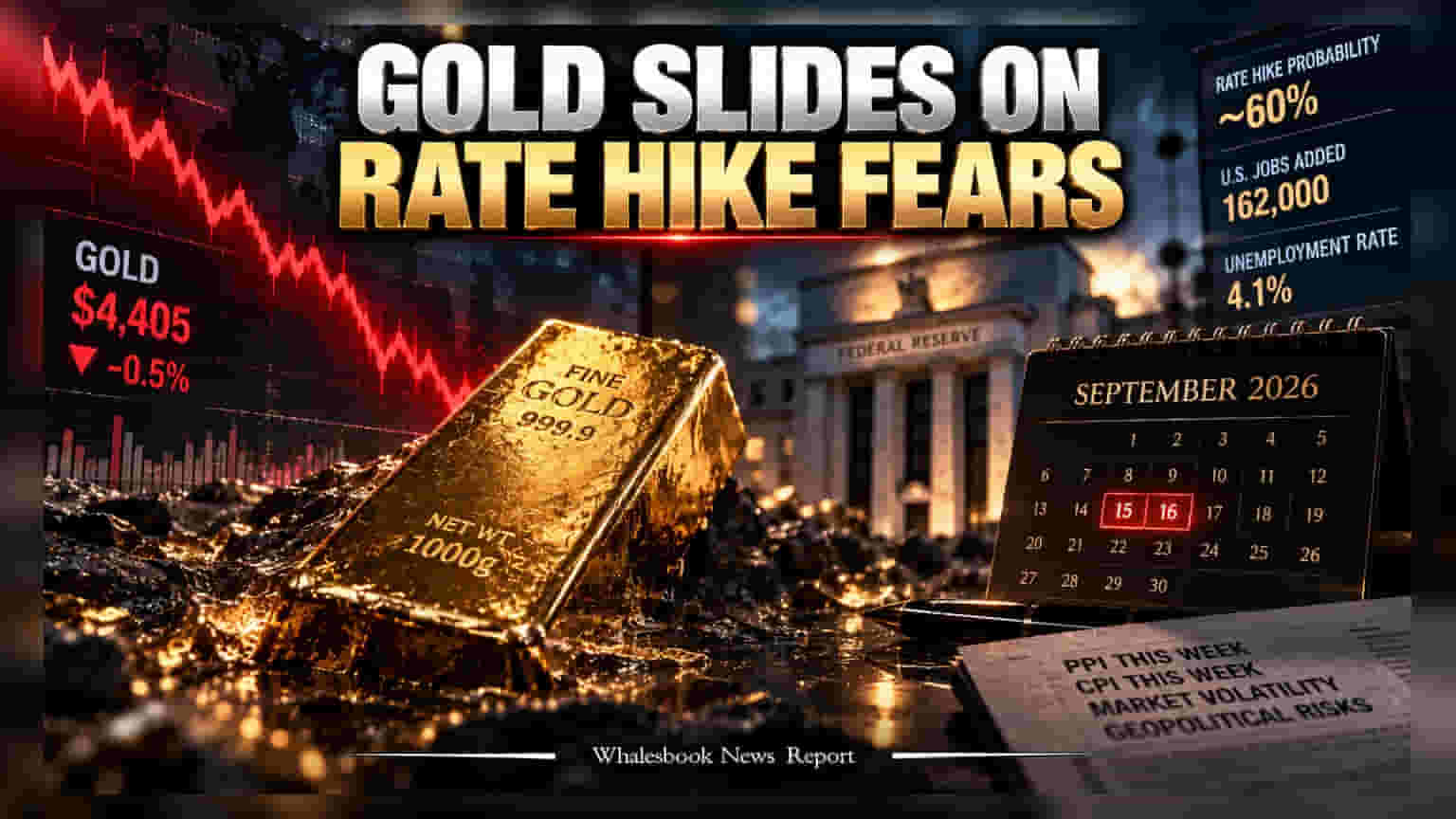
Gold prices fell to $4,405 per ounce on Monday as resilient U.S. labor data signaled a potential Federal Reserve rate hike. With the economy adding 162,000 jobs in August, investors are now bracing for key inflation reports that could shape future monetary policy.
Market Reaction to Employment Data
Gold prices retreated on Monday, trading near $4,405 per ounce, as markets reacted to a surprisingly strong U.S. employment report. The precious metal saw a 0.5% decline, continuing a downward trend that began after Friday’s data release showed the U.S. economy added 162,000 jobs in August. This figure significantly outperformed market expectations, which had anticipated much lower job growth. The steady unemployment rate of 4.1% further reinforced the perception of a resilient labor market.
Impact of Interest Rate Expectations
The robust labor data has shifted investor sentiment regarding the Federal Reserve’s upcoming policy meeting scheduled for September 15-16. Market participants are now pricing in a roughly 60% probability of an interest rate hike. Higher interest rates typically exert pressure on gold because the metal does not generate interest or dividends. When central banks raise rates, investors often shift their capital toward interest-bearing assets like government bonds, which can reduce the relative appeal of non-yielding assets like bullion.
Inflation Data and Geopolitical Risks
Investor focus is now shifting toward upcoming U.S. economic data, specifically the Producer Price Index (PPI) and the Consumer Price Index (CPI), both scheduled for release later this week. A stronger-than-expected inflation reading could signal to the Federal Reserve that additional monetary tightening is necessary, which might keep gold under downward pressure.
Beyond economic indicators, the market is also tracking ongoing geopolitical tensions involving the U.S. and Iran. Concerns regarding potential disruptions to oil shipments have raised fears of higher energy costs. If energy prices rise, they can feed into broader inflation metrics, further complicating the central bank’s efforts to stabilize prices. This environment of economic uncertainty and potential rate hikes continues to contribute to volatility in precious metal markets.
What Investors Are Monitoring Next
The most important monitorables for the coming days include the release of the PPI and CPI data. These reports will provide more clarity on whether inflationary pressures are cooling or intensifying. If the data shows persistent inflation, it may solidify the case for a Federal Reserve rate hike, potentially keeping gold volatile. Investors will also be watching for any official commentary from central bank policymakers as the September meeting approaches.