

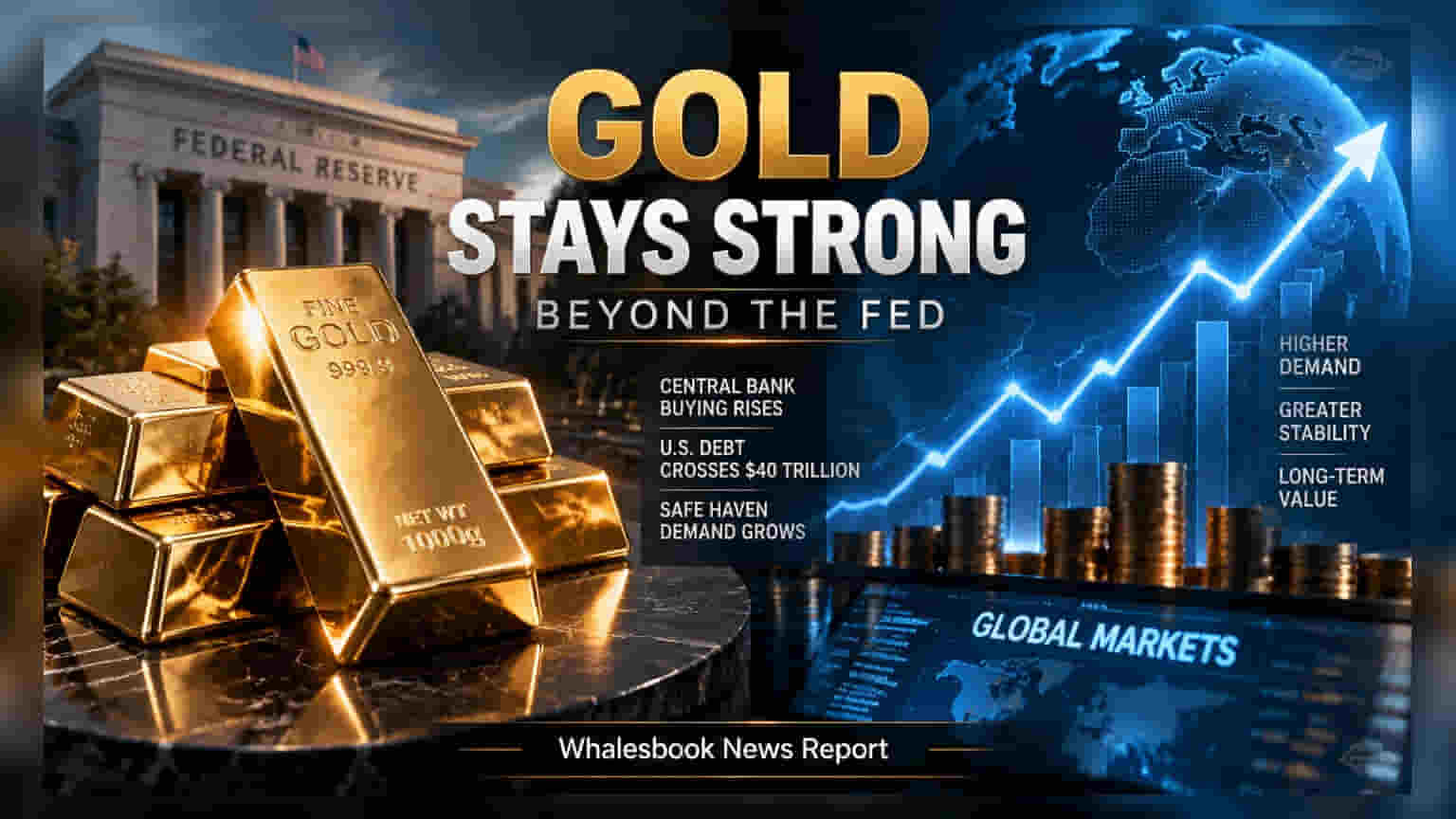
Gold is decoupling from U.S. interest rate trends as central banks aggressively diversify reserves and U.S. national debt crosses $40 trillion. This shift changes the role of gold for Indian investors from a short-term hedge to a core long-term portfolio component.
Gold’s traditional relationship with the U.S. Federal Reserve is changing. Historically, when the Fed cut interest rates, gold prices tended to rise, and when rates stayed high, gold often struggled. However, the market is currently seeing a different trend where gold prices remain strong despite shifts in monetary policy. This indicates that global investors are now prioritizing assets that offer safety from fiscal instability over short-term interest rate gains.
A major driver of this change is central bank activity. Data from the World Gold Council shows that global monetary authorities now account for nearly 20% of total gold demand. Unlike private investors who may trade based on daily price fluctuations, central banks are buying gold as a long-term strategic asset. This move is largely driven by geopolitical tensions and a desire to reduce reliance on foreign currency reserves, which are subject to the policies of other nations.
The U.S. national debt, which has now crossed the $40 trillion mark, has introduced new concerns about the long-term purchasing power of the U.S. dollar. When investors worry that a currency might lose value due to high debt levels, they look for alternative stores of value. Gold is increasingly serving this purpose, acting as a neutral asset that is not controlled by any single government’s fiscal policy or debt management.
For Indian investors, this trend has practical implications. Many Indians have traditionally viewed gold as a commodity for consumption or a tactical hedge against short-term inflation. However, the current global shift suggests that gold is becoming a structural necessity for portfolio stability. While local prices in India will still be influenced by the rupee-dollar exchange rate and domestic import duties, the long-term rationale for holding gold is evolving. It is no longer just a reaction to the U.S. central bank's actions but a response to broader global economic fragmentation.
Investors should remain aware that this structural shift does not guarantee a one-way path for prices. Markets will experience volatility and price corrections regardless of the long-term trend. The core monitorable for investors moving forward is not just the outcome of the next Federal Reserve meeting, but how global central banks adjust their gold holdings in response to changing geopolitical and fiscal realities.