

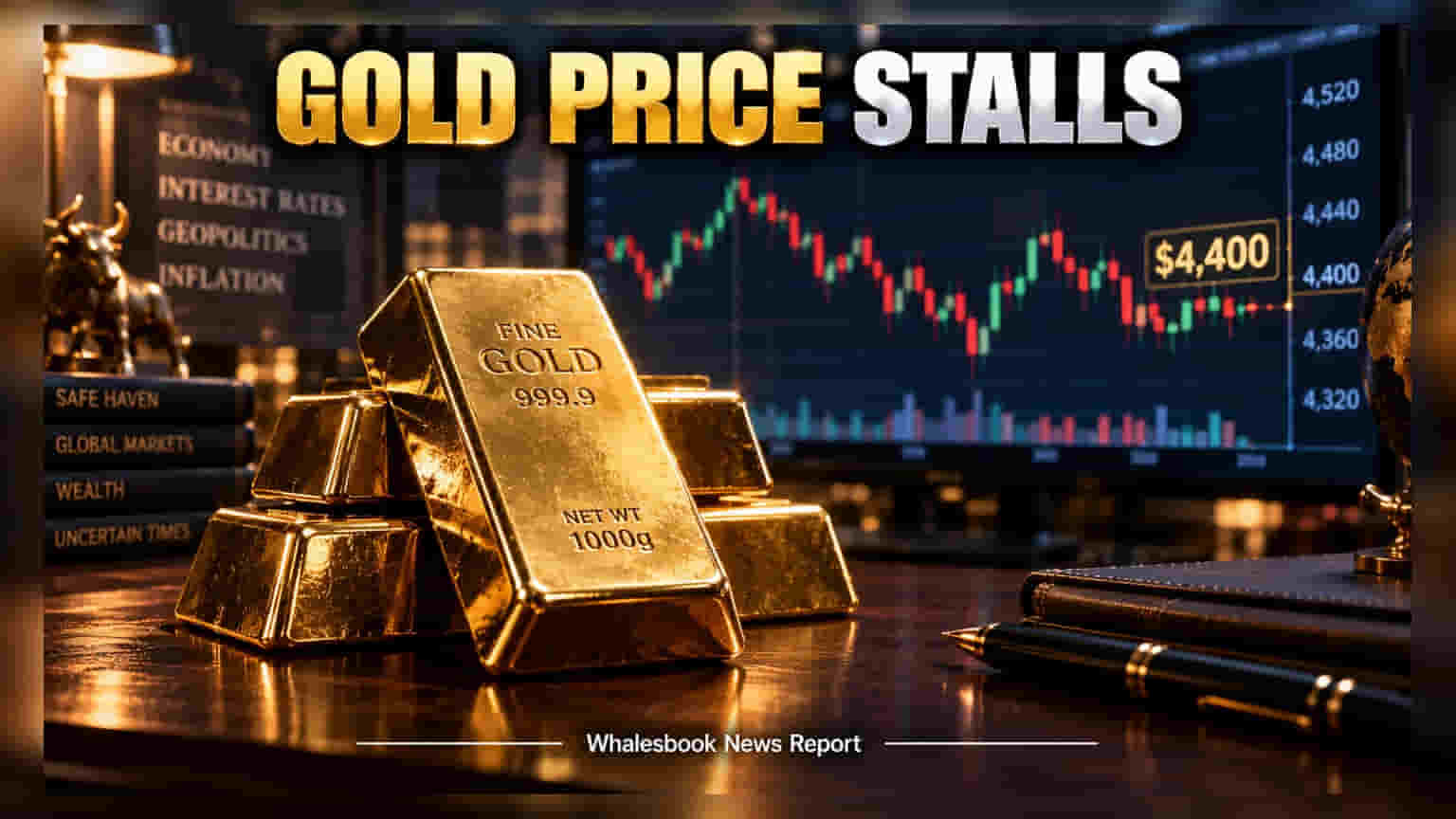
Gold prices are trading flat around $4,400 per ounce as strong US employment data clashes with geopolitical uncertainty. Investors are currently in a waiting pattern ahead of key inflation reports and the upcoming Federal Reserve meeting. The market is weighing the risk of higher interest rates against safe-haven demand caused by tensions in the Middle East.
Gold prices are locked in a narrow range near $4,400 per ounce as traders navigate a complex mix of economic strength and global instability. The precious metal is currently caught between conflicting forces that have kept price movement limited for the past few sessions.
Impact of US Labor Data
On one side of the market, the US economy continues to show surprising resilience. Recent reports for August indicated that US employers added 162,000 jobs, a figure that significantly exceeded market forecasts. When the labor market is strong, the Federal Reserve is more likely to maintain a strict monetary policy to keep inflation under control.
Because gold does not pay interest, it often struggles when interest rates are high or rising, as investors can earn better returns in bonds or cash. Currently, market data suggests a 60% probability of a Federal Reserve interest rate hike at the upcoming September 15–16 meeting. This expectation has strengthened the US dollar and Treasury yields, creating pressure on gold prices.
Geopolitical Support Floors
Despite the pressure from the prospect of higher rates, gold has maintained a support floor due to ongoing geopolitical friction. Tensions in the Middle East, particularly regarding transit security in the Strait of Hormuz, have kept energy markets nervous, with Brent crude oil prices hovering near the $100 per barrel threshold.
Whenever global stability is threatened, investors often flock to gold as a defensive asset or a "safe haven." This physical and institutional demand acts as a buffer, preventing the price of gold from falling significantly even when macroeconomic indicators are negative for the metal.
What Investors Should Monitor
The immediate direction of gold prices will likely depend on how the Federal Reserve interprets incoming data. Investors are now shifting their attention to the upcoming US Consumer Price Index (CPI) and Producer Price Index (PPI) releases later this week.
These inflation numbers will be critical for determining the Fed’s next move. A higher-than-expected inflation print could cement the case for a rate hike, which would likely increase the opportunity cost of holding gold. Conversely, if inflation shows signs of cooling, it could provide the catalyst for a shift in sentiment. For now, the market remains in a holding pattern, with traders waiting for a clearer signal on whether the central bank will favor economic restraint or allow for flexibility.