

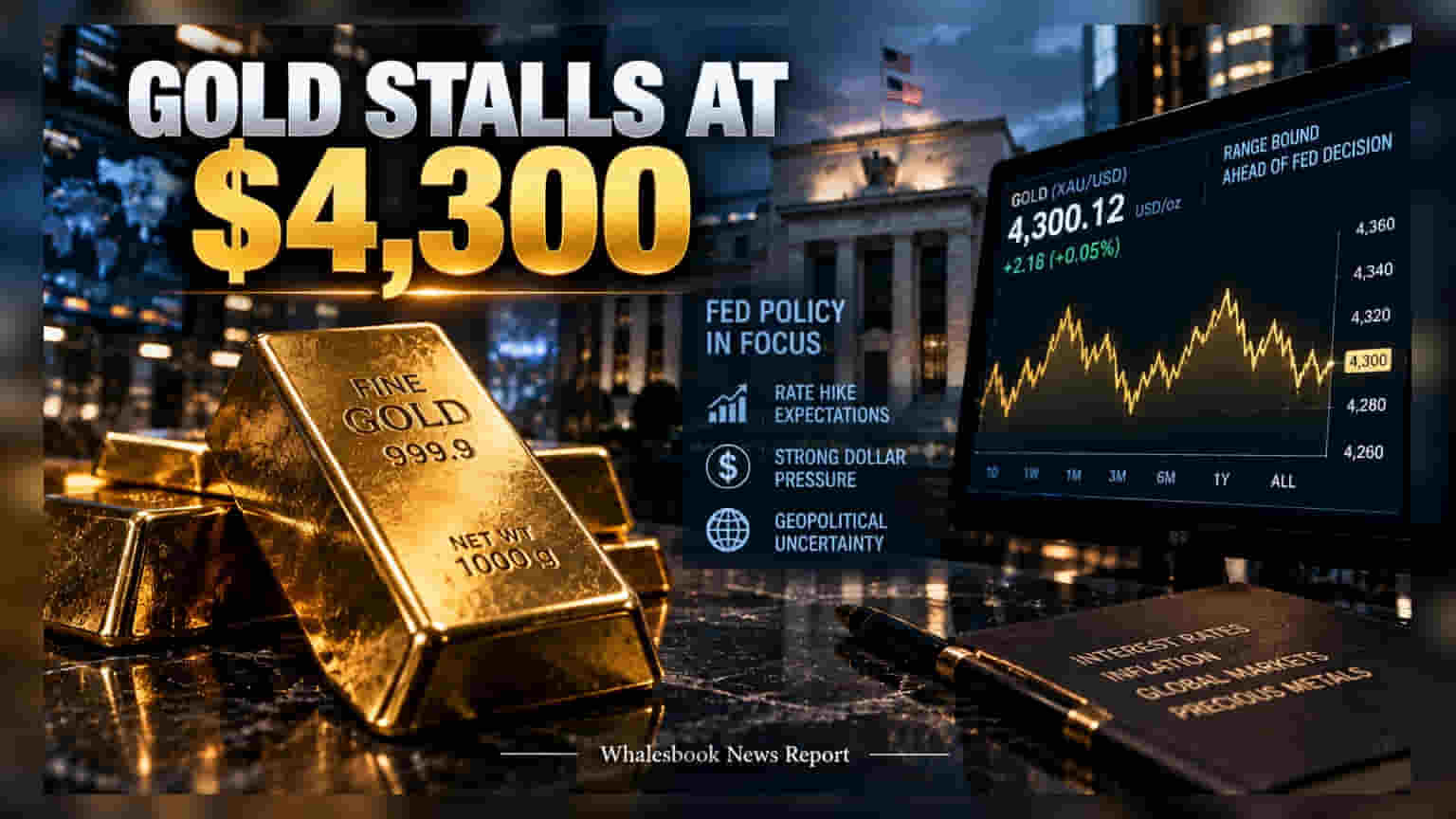
Spot gold prices are steady at $4,300 per ounce as markets prepare for the US Federal Reserve's policy announcement on September 16. A 25-basis-point rate hike is widely expected, but investors are focused on the central bank's forward guidance. Higher interest rates often make non-yielding assets like gold less attractive, creating a cautious mood for precious metal investors.
Gold prices are trading in a narrow range around $4,300 per ounce as global markets adopt a cautious stance ahead of the US Federal Reserve’s upcoming policy announcement. The central bank is scheduled to release its decision on Wednesday, September 16, 2026. With expectations of a 25-basis-point interest rate hike to a range of 3.75% to 4.00%, market participants are looking for clarity on the future direction of monetary policy.
The Impact of Interest Rates on Gold
For investors, the primary concern is the opportunity cost of holding gold. Gold does not pay interest or dividends. When the Federal Reserve raises interest rates, yields on assets like US Treasury bonds typically increase. This makes bonds more attractive to investors compared to non-yielding assets like gold. Consequently, a more aggressive, or hawkish, tone from the central bank can exert downward pressure on bullion prices.
Analysts are paying close attention to the messaging from Fed Chair Kevin Warsh. The critical question for the market is whether the central bank will signal a prolonged cycle of tightening to combat inflation or if it will adopt a more data-dependent, measured approach. A signal that rates might stay higher for longer could strengthen the US dollar, which acts as a headwind for dollar-denominated commodities, including gold.
Market Risks and Volatility
Beyond interest rate decisions, several factors continue to influence the precious metals complex. Geopolitical tensions, particularly in the Middle East, remain a persistent source of uncertainty. While such tensions often drive investors toward gold as a safe-haven asset, this support is currently competing with the pressure from higher US yields and a strong dollar.
Energy supply disruptions and elevated oil prices also play a role in the current market environment. These factors contribute to persistent inflation, which complicates the Federal Reserve’s goal of balancing economic growth with price stability. Investors are also noting a divergence in the performance of other metals; while silver has shown modest resilience, platinum has faced selling pressure, highlighting a lack of uniform appetite across the metals sector.
As the Fed meeting approaches, the focus for investors remains on the specific language in the policy statement. The market will track whether the Fed remains committed to aggressive tightening or if it begins to hint at a potential pause in rate hikes. This guidance will likely dictate the next major move for gold prices in the coming weeks.