

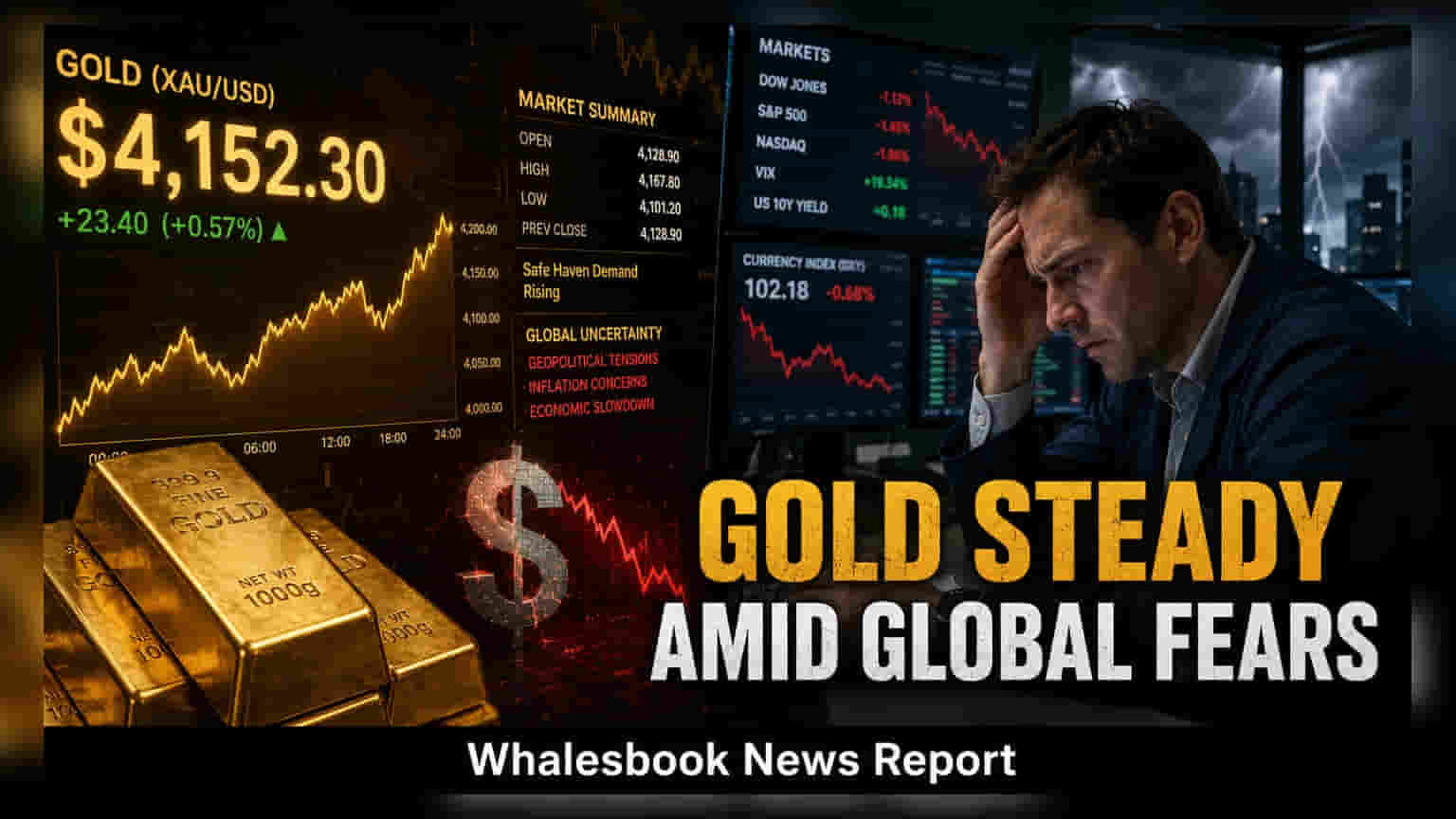
Gold prices rose 0.44% to approximately $4,095 an ounce on Wednesday, supported by a weaker US dollar and a cooling labor market. Investors are closely watching upcoming US employment reports, which are expected to influence the Federal Reserve's future interest rate decisions and determine the next trend for bullion prices.
Gold prices found support on Wednesday, hovering near $4,095 per ounce, marking a gain of about 0.44%. The precious metal is currently benefiting from a softer US dollar, which makes gold more affordable for international buyers, and signs that the US labor market is beginning to cool.
The primary focus for the market today is the US labor situation. Recent data showed that June job openings slipped to 7.36 million, falling short of the 7.44 million that analysts had expected. This cooling trend is significant because the Federal Reserve monitors employment figures closely when determining its interest rate policy.
Gold is a non-yielding asset, meaning it does not provide interest income or dividends. When interest rates are high, the opportunity cost of holding gold—the potential money an investor could have made elsewhere—increases, which often weighs on prices. If upcoming employment reports, such as the ADP private payrolls data due today or the nonfarm payrolls report on Friday, indicate that the job market remains stronger than expected, the Federal Reserve may feel compelled to maintain higher interest rates for longer. Such a scenario would likely put pressure on gold prices.
Beyond US economic data, investors are also monitoring geopolitical tensions in the Middle East. Diplomatic developments involving the US and Iran continue to influence market sentiment. When uncertainty rises, investors often turn to gold as a 'safe-haven' asset, seeking security during periods of political or economic stress. Additionally, the impact of these tensions on global oil prices creates concerns about persistent inflation, which further complicates the central bank’s decision-making process.
For investors, the near-term outlook for gold remains tied to how these two forces—economic data and geopolitical risk—interact. A sharp increase in employment figures could strengthen the US dollar and potentially weaken gold, while a softer-than-expected report might reinforce the case for a pause or reduction in interest rates. The market will be tracking the release of these labor statistics closely to gauge whether gold can break out of its current trading range or if it will face continued pressure from the monetary policy outlook.