

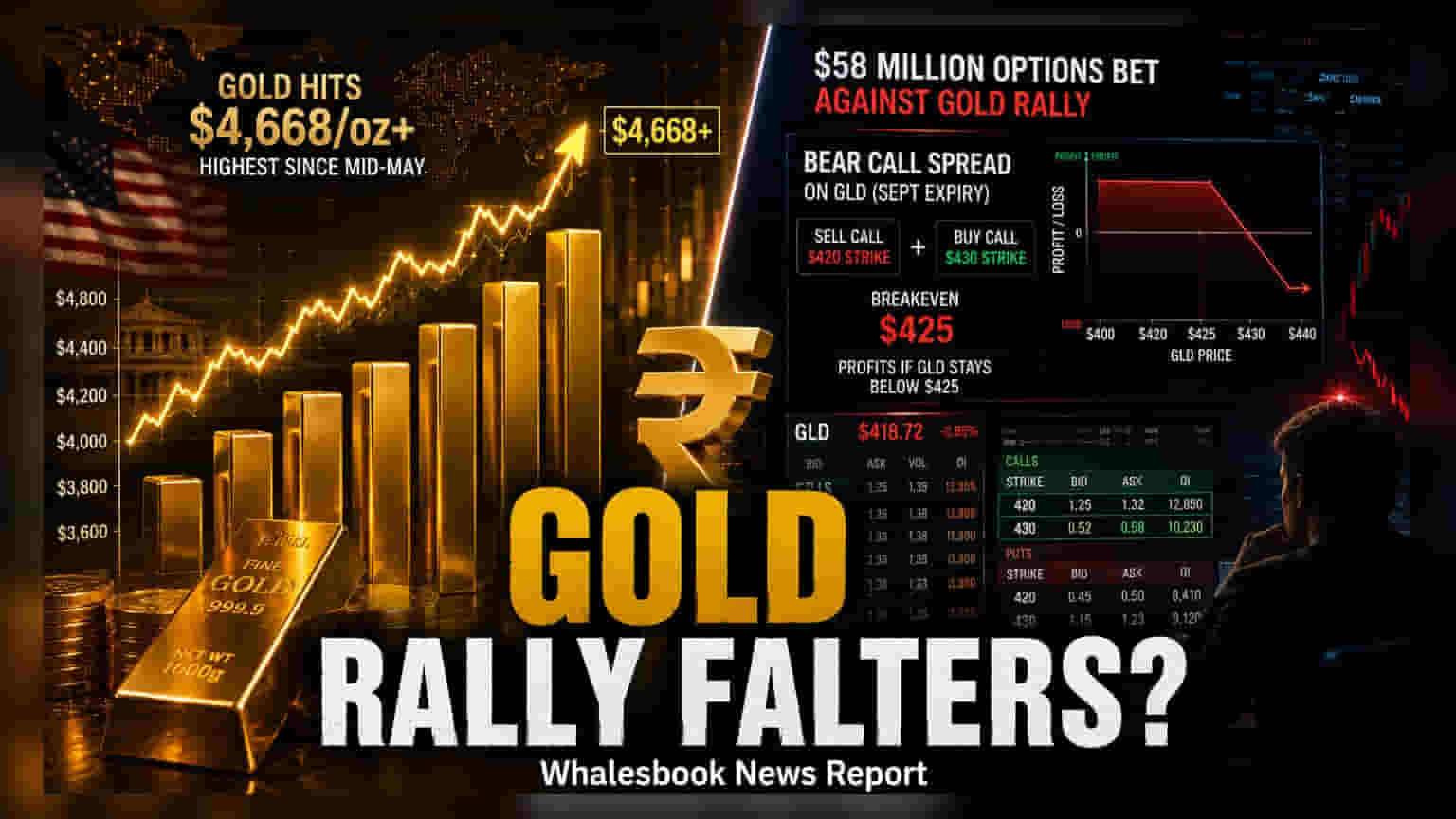
Gold prices have jumped above $4,668 an ounce, driven by concerns over U.S. fiscal health. Despite the rally, a massive $58 million options bet on the SPDR Gold Shares ETF suggests some investors expect a short-term cooling in prices.
Gold prices have climbed to their highest levels since mid-May, crossing the $4,668 an ounce mark, with futures trading even higher. This rally is largely driven by investor anxiety regarding U.S. fiscal stability. Concerns have grown that the U.S. government may struggle to manage its borrowing costs without intervention, leading to what market analysts call the "dollar-debasement trade." Essentially, as worries about the long-term value of the dollar rise, investors are flocking to gold as a safer store of wealth.
While the general market sentiment remains bullish, a significant financial move suggests some skepticism among institutional players. A single large investor recently executed an options trade involving $58 million, betting against a continued, sharp rise in the price of the SPDR Gold Shares (GLD) ETF.
Understanding the Bet
The investor placed a "bear call spread," a strategy that involves selling call options at a $420 strike price and buying an equal number at a $430 strike price. In simple terms, this trade generates a profit if the price of the gold ETF remains below the breakeven level of approximately $425 by the September expiration date. By creating this position, the trader is effectively betting that the current gold rally will hit a ceiling or cool off in the short term, rather than continuing to surge aggressively higher.
This move acts as a contrarian signal. While gold is currently seen as a safe haven due to global uncertainty, this large options trade indicates that at least one major player believes prices may be overextended or ready for a temporary correction. For individual investors, this highlights that even in a strong uptrend, large institutional money is often hedging its positions against the risk of a sudden reversal.
Why Investors Are Watching
The gold market is currently sensitive to two main factors: U.S. Treasury policies and inflation data. The recent decision by the U.S. Treasury to increase liquidity support through buybacks has fueled fears that the government will prioritize keeping borrowing costs low, potentially at the expense of currency stability. This environment has been the primary engine behind gold's recent strength.
However, the risks to this trade are clear. If geopolitical tensions worsen or if new economic data shows that inflation is not being controlled, gold prices could continue to climb, potentially invalidating the bearish bet. If the price of the GLD ETF rises above $430, the investor who placed this $58 million trade would face losses.
Investors looking for the next trend in gold should monitor upcoming U.S. economic data, including PCE inflation figures and commentary from central bank officials. These events often act as catalysts that can either validate the current bullish momentum or trigger the cooling-off period that the recent options trade is anticipating.