

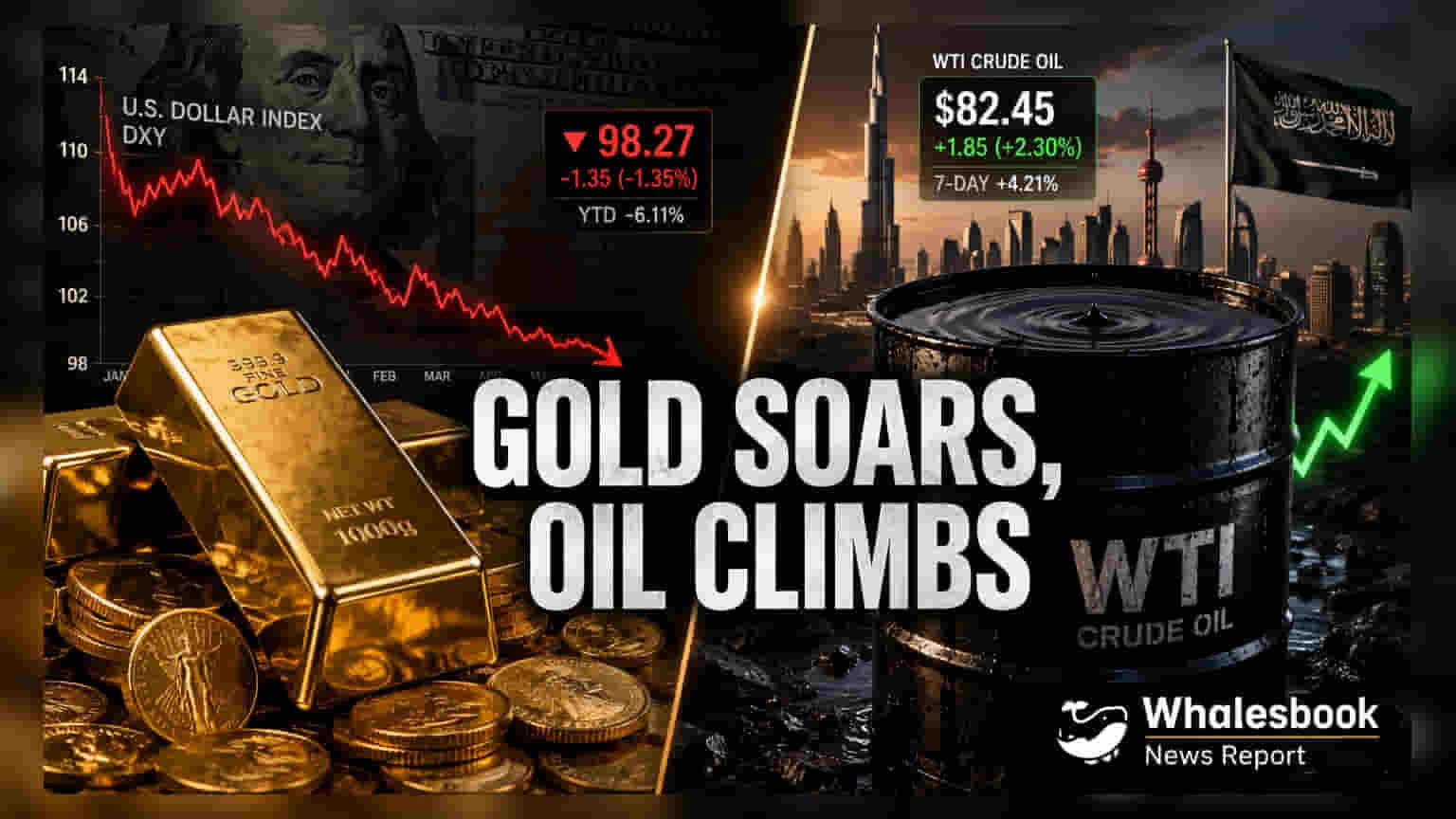
Gold prices reached their highest level since late June, marking a weekly gain as weaker U.S. employment data weighed on the dollar. The move reflects shifting investor expectations regarding Federal Reserve interest rate policy, which typically influences non-yielding assets like bullion.
What Happened
Gold prices rose on July 3, 2026, reaching their highest point in five weeks. Spot gold climbed 0.5% to $4,144.83 per ounce, while U.S. gold futures for August delivery moved up 0.8% to $4,157.50. This surge marks the precious metal's first weekly gain in five weeks. The price movement follows the release of U.S. employment reports, which came in weaker than expected, signaling a potential cooling in the labor market. Along with gold, other precious metals also saw gains, with silver prices jumping 1% to $61.50 per ounce, while platinum and palladium recorded increases of approximately 1% each.
Why This Matters For Investors
Gold is often viewed by investors as a hedge against economic uncertainty. When U.S. economic data, such as employment figures, shows signs of weakness, investors often anticipate that the Federal Reserve may move away from aggressive interest rate hikes. Because gold does not pay interest, it tends to perform better in an environment where interest rates are stable or falling. Furthermore, the U.S. dollar, which has been tracking for its largest weekly decline in nearly three months, inversely impacts gold prices; as the dollar weakens, gold becomes cheaper for holders of other currencies, which can support demand.
The Impact Of Commodity Movements
Oil prices also saw modest gains, with Brent crude rising to $72.10 per barrel and West Texas Intermediate (WTI) reaching $68.83 per barrel. While the increase in oil is linked to geopolitical observations in the Middle East, the broader commodity complex is currently reacting to the macro-economic signals coming out of the United States. Lower interest rate expectations typically support commodity prices across the board, though energy prices remain more sensitive to supply chain and geopolitical headlines compared to precious metals.
What To Watch Next
Investors will likely monitor upcoming U.S. economic releases to see if the recent labor market data is part of a sustained trend or a temporary fluctuation. The Federal Reserve's stance in their next meeting will be a major trigger, as any confirmation of a pause or shift in policy could further influence the dollar's strength and gold's valuation. Additionally, trading volumes were reported as light due to the approaching U.S. holiday, meaning price swings could be more pronounced. Monitoring the dollar index and treasury yields will provide further clues into whether this rally in precious metals can maintain momentum in the coming weeks.