 Whalesbook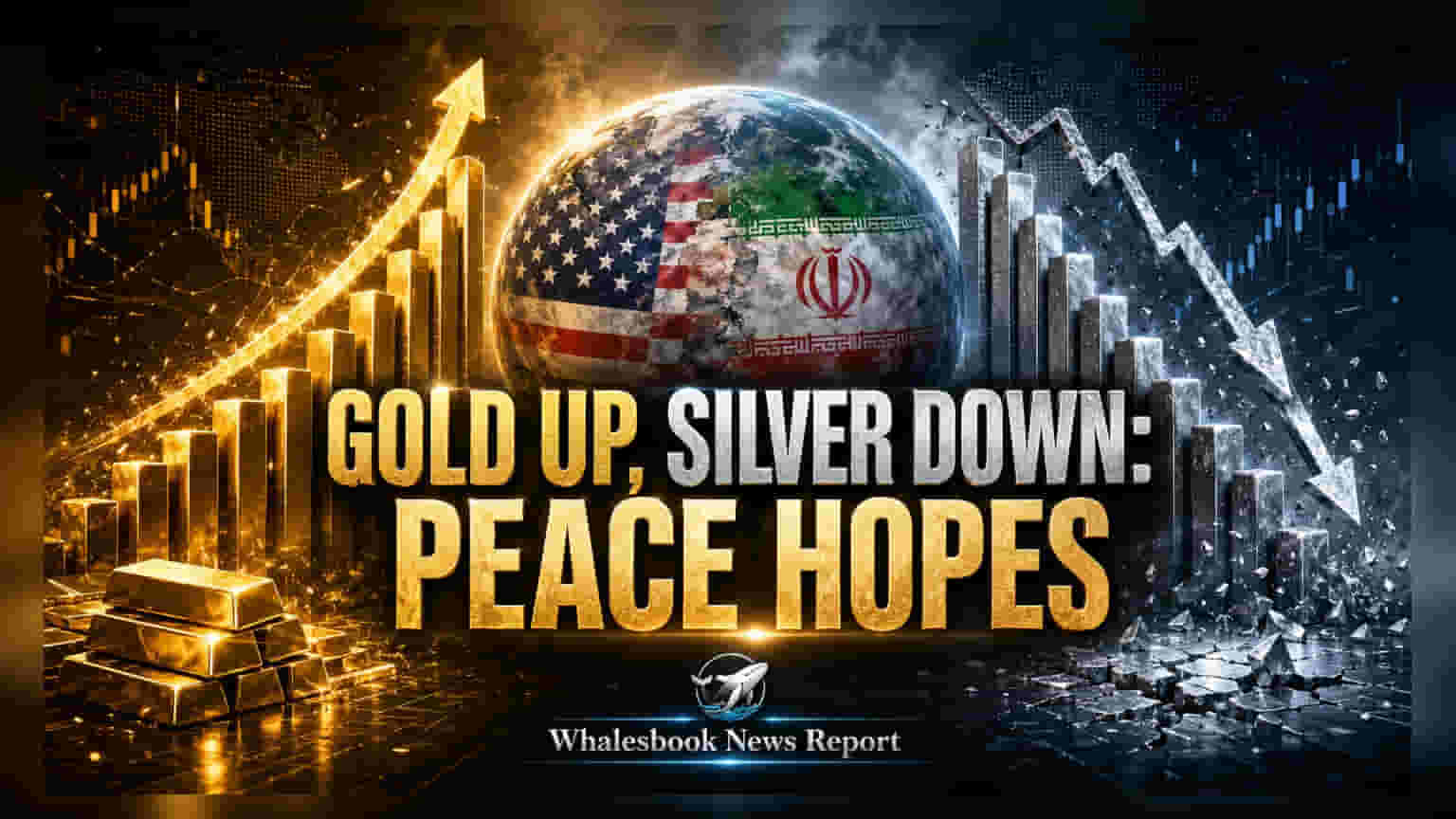


Gold Shines Amid Peace Hopes, Silver Struggles with Demand Woes
Precious metals showed sharply different paths Wednesday, with gold rising on geopolitical optimism and silver falling due to a slowdown in industrial use.
Geopolitical Calm Boosts Gold
Easing tensions between the US and Iran lifted gold prices, calming fears of rising inflation and persistent high interest rates. Spot gold rose 0.4% to $4,499.69 per ounce. This safe-haven asset benefited from expectations of reduced conflict, which could ease energy market pressures. However, US gold futures for June delivery saw a small dip of 0.2% to $4,502.30. Domestically, gold prices in India's capital jumped Rs 800 to Rs 1,63,600 per 10 grams for 99.9% purity, reflecting positive sentiment from the potential diplomatic progress.
Silver Hit by Industrial Slowdown
Silver prices fell by Rs 5,000 to Rs 2,71,000 per kilogram. This sharp decline stems from weak industrial demand and negative global market signals. Global silver demand is expected to decrease by 2% in 2026, with industrial demand predicted to fall by 3%, mainly due to reduced demand from the solar power sector. Although silver's demand is closely linked to industrial activity, with about 60% coming from sectors like solar PV, electric vehicles, and semiconductors, current trends point to a slowdown. The World Silver Survey 2026 forecasts a smaller supply deficit, adding pressure to prices. Analysts at UBS and HSBC have lowered their silver price outlooks, citing weaker demand in photovoltaics and jewelry, along with increased mine supply. HSBC predicts industrial demand will drop to 642 million ounces in 2026.
Why Silver Prices Are Falling
The drop in silver prices highlights concerns for its industrial uses. Lower demand from the photovoltaic sector, partly due to high raw material costs and efficiency improvements by manufacturers, is directly affecting silver consumption. Additionally, a narrowing supply deficit, from an estimated 143 million ounces in 2025 to 73 million ounces in 2026 (according to HSBC), suggests weakening price support. While some analysts maintain a long-term positive view due to ongoing deficits, the current outlook is burdened by reduced industrial and investment demand. UBS has reduced its price forecast, expecting silver to trade mostly sideways.
Outlook for Gold and Silver
Gold's price may continue to find support from ongoing geopolitical factors and the possibility of lower interest rates, though investors will watch for clues from US Federal Reserve minutes. Silver, however, faces challenges from a weaker industrial demand forecast and a shrinking supply gap. Despite potential short-term rebounds predicted by some models, the negative signs from industrial demand and supply adjustments suggest a cautious approach for silver investors.