

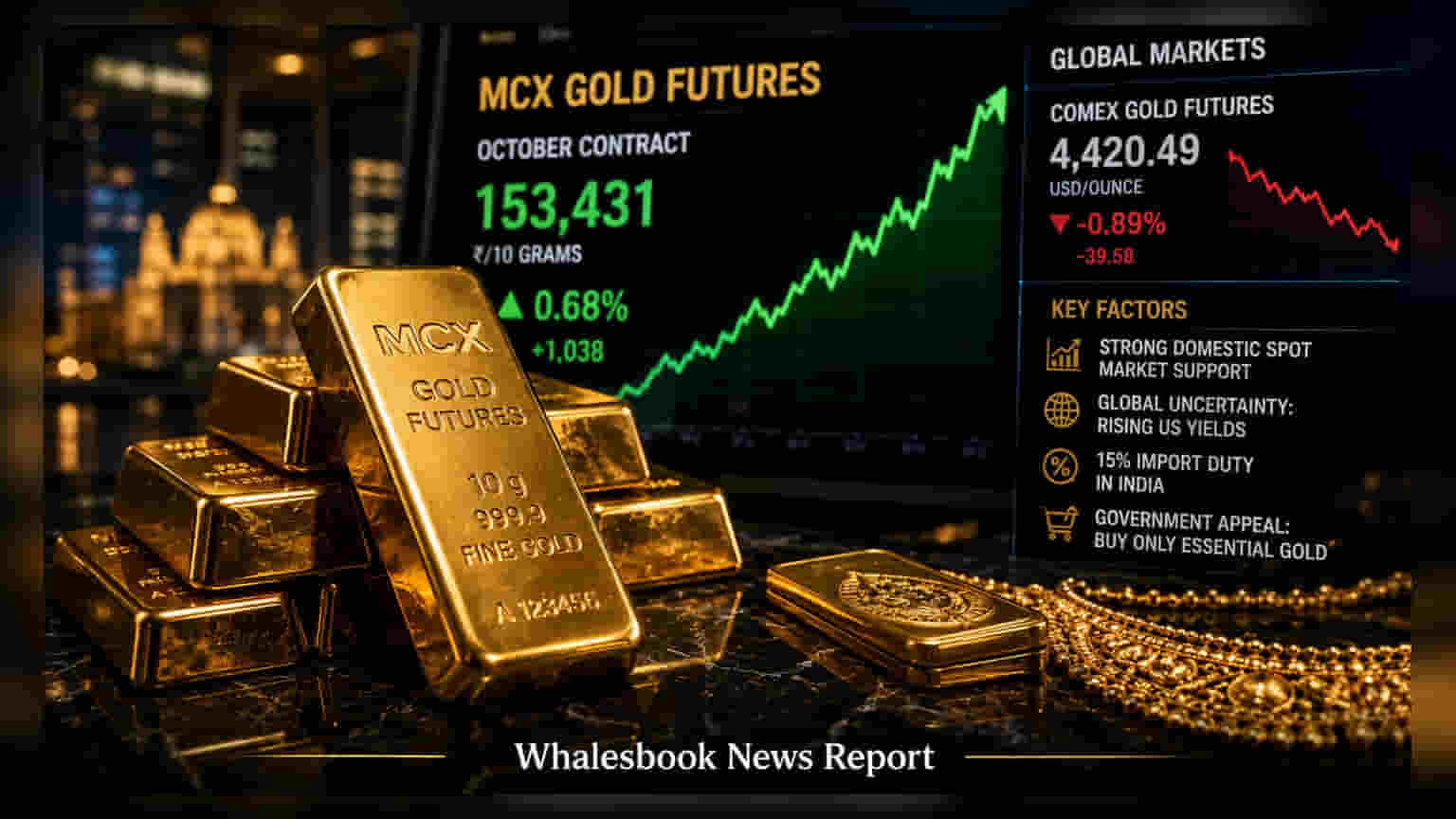
Gold futures on the Multi Commodity Exchange climbed to ₹153,431 per 10 grams on September 3, 2026, driven by robust local buying. While international prices in New York fell, India’s domestic market is showing a clear divergence, with spot demand supporting current valuations despite global headwinds.
Gold futures for the October contract on the Multi Commodity Exchange (MCX) rose by 0.68 percent to reach ₹153,431 per 10 grams on Thursday. This increase reflects sustained interest from traders and strong activity in the domestic spot market, which continues to provide a floor for prices even as the global sentiment remains cautious.
Local Trend Diverges from International Markets
The domestic rally stands in contrast to the performance of gold in international markets. Gold futures on the New York COMEX exchange recently slipped by 0.89 percent, trading at $4,420.49 per ounce. This decoupling of Indian gold prices from global benchmarks is currently being led by domestic buying activity. When Indian prices move in the opposite direction of global trends, it often suggests that internal factors, such as specific consumption patterns, are outweighing the influence of international price adjustments.
Key Risks and Monitorables
Investors looking at the gold market should remain aware of the factors that can challenge this price stability. The global outlook for gold remains sensitive to rising US Treasury yields and ongoing expectations that the Federal Reserve may adjust interest rates. Higher interest rates typically make non-yielding assets like gold less attractive to global investors, which can put consistent pressure on international spot and futures prices.
Within India, the market faces specific constraints that influence pricing. The existing 15 percent import duty on gold continues to create a price wedge, keeping domestic rates higher than the landed cost of international bullion. Furthermore, ongoing government appeals for citizens to limit gold purchases to essential needs may impact retail sentiment and jewellery demand over time. The primary risk for traders at these levels is that if global gold prices face a sharper correction due to macroeconomic factors, it may eventually limit the extent to which domestic prices can continue to move independently.
Market participants are currently tracking the balance between fresh domestic buying positions and the broader macro environment. The sustainability of this rally will likely depend on whether local spot market demand remains firm enough to absorb potential volatility stemming from global interest rate and bond yield fluctuations.