

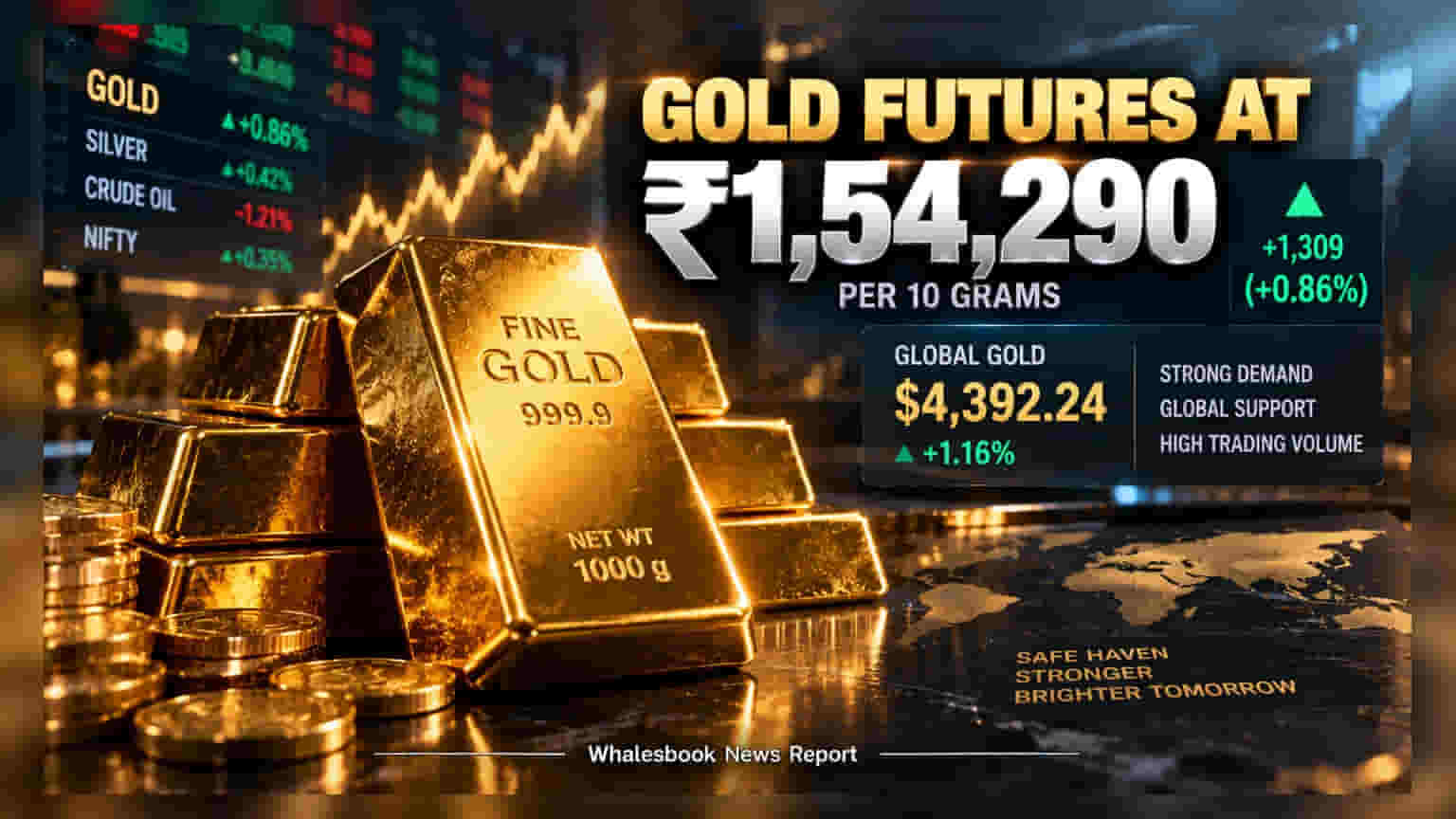
Gold futures on the Multi Commodity Exchange rose by ₹1,309 to hit ₹1,54,290 per 10 grams for October delivery. This increase reflects stronger demand in the spot market and positive global price trends. Investors often look to gold as a hedge when financial markets face uncertainty or currency volatility.
Gold futures traded at ₹1,54,290 per 10 grams on Friday, following an increase of ₹1,309 or 0.86% on the Multi Commodity Exchange. The October delivery contract saw a turnover of 2,156 lots, which points to active participation from traders and investors in the bullion market. This movement shows that buyers are maintaining interest in gold even as prices reach higher levels.
The domestic rally in gold prices is supported by trends in international markets. In New York, gold futures rose by 1.16% to reach $4,392.24 per ounce. Since gold is a globally traded commodity, changes in international pricing often have a direct impact on how gold is priced within India. When global prices rise, the cost of importing gold into India typically goes up, which influences domestic futures contracts.
Investors often move capital into gold during periods of economic uncertainty. It is widely viewed as a store of value that can help protect wealth when other assets experience volatility. The recent rise in speculative activity and trading volume suggests that many traders are positioning themselves in gold to hedge against potential risks in the wider financial system.
However, there are factors that investors should consider when evaluating this trend. Gold prices are highly sensitive to central bank policies, particularly interest rate decisions made by the US Federal Reserve and the Reserve Bank of India. When interest rates rise, the appeal of non-yielding assets like gold can sometimes decrease, which may put pressure on prices. Furthermore, the exchange rate between the Indian Rupee and the US Dollar plays a critical role. If the Rupee weakens against the Dollar, the local cost of gold often rises, regardless of international price movements.
Another important aspect for investors to monitor is the impact of high prices on physical demand. In the Indian market, a sharp rise in the price of gold can sometimes lead to a slowdown in buying from individual consumers and jewelers, as they may wait for a price correction before making fresh purchases. If demand in the physical market weakens significantly, it could limit the scope for further gains in the futures market.
Moving forward, the primary triggers for gold prices will be global inflation data, central bank commentary, and currency fluctuations. Investors may track whether the current volume of trading is sustained or if higher prices lead to profit booking in the coming sessions.