

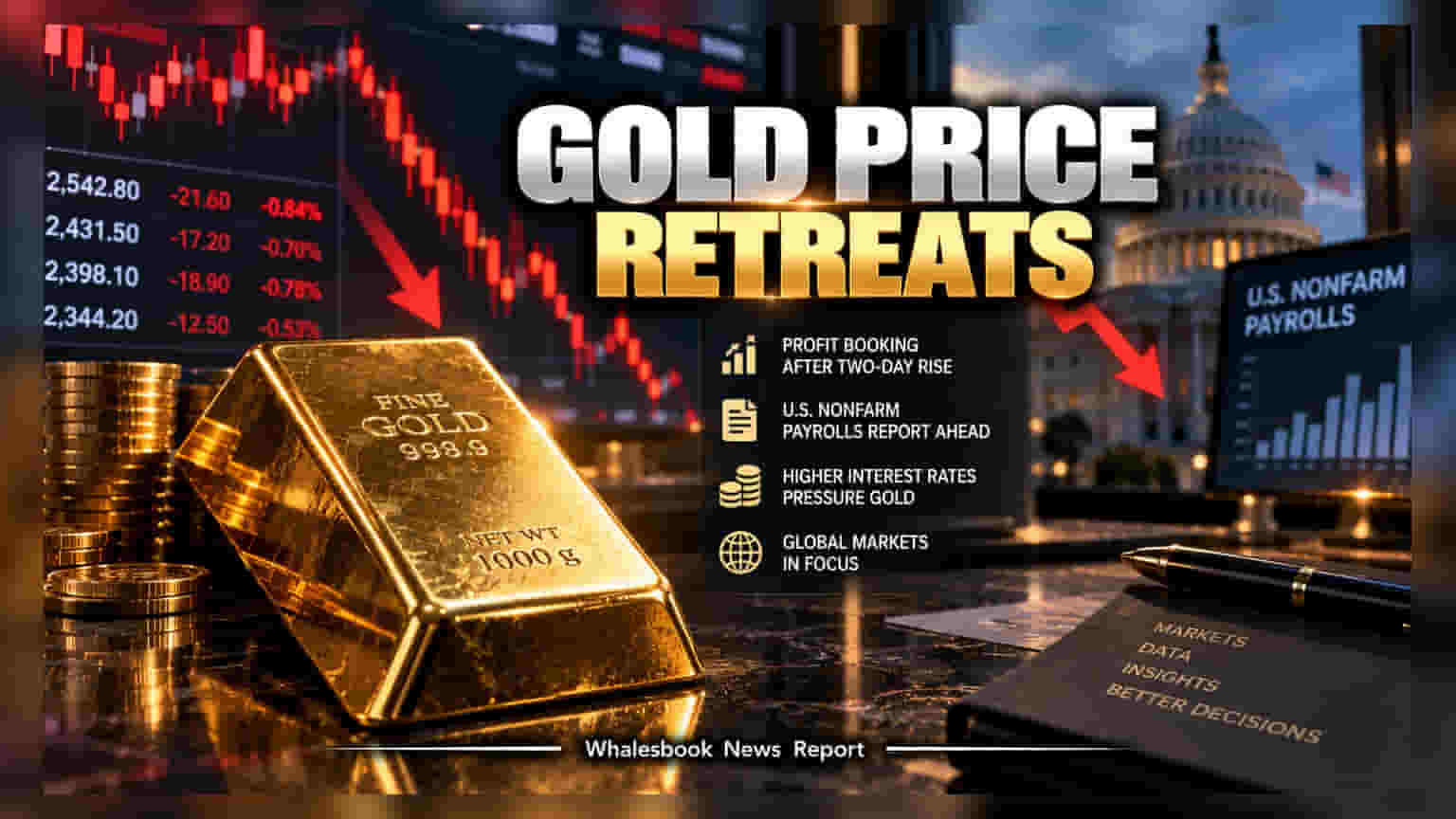
Gold futures on India's Multi Commodity Exchange (MCX) declined on Friday, ending a two-day winning streak. Investors are adopting a cautious approach ahead of the upcoming U.S. nonfarm payrolls report, which is expected to influence future Federal Reserve interest rate policy.
Gold prices on India's Multi Commodity Exchange (MCX) saw a decline on Friday, September 4, 2026, as investors chose to lock in profits following a two-day rise. The October delivery futures dropped by 0.28% during the session, signaling that traders are currently hesitant to build large new positions before a major global economic update.
The primary reason for this market caution is the impending release of the U.S. nonfarm payrolls report. This set of data is closely watched by global markets because it provides a clear picture of the health of the U.S. labor market. Investors and central bank officials use this information to guess the next steps for the U.S. Federal Reserve, which manages interest rates.
There is a direct link between interest rates and gold prices. Gold does not pay interest or dividends. When interest rates are high, investors can often earn better returns from safer assets like U.S. Treasury bonds. This makes non-yielding assets like gold less attractive to hold. If the upcoming jobs report indicates a strong labor market, it could encourage the Federal Reserve to keep interest rates higher for a longer time, which historically puts downward pressure on gold prices. On the other hand, if the data is weaker than expected, it might suggest the economy is cooling, potentially leading to lower interest rates, which could support gold.
International gold prices mirrored this caution. COMEX gold futures for December delivery were trading near $4,528 per ounce. The global market is currently balancing the value of the U.S. dollar and the movement of government bond yields, both of which heavily influence the price of precious metals.
For investors, the key monitorable remains the actual data released in the U.S. jobs report versus what the market expects. A surprise in the employment numbers often leads to immediate price swings. If the data leads to a stronger U.S. dollar or higher bond yields, gold may face continued selling pressure. Conversely, any data that changes the outlook for interest rate cuts will be the main driver for the next move in gold prices.