

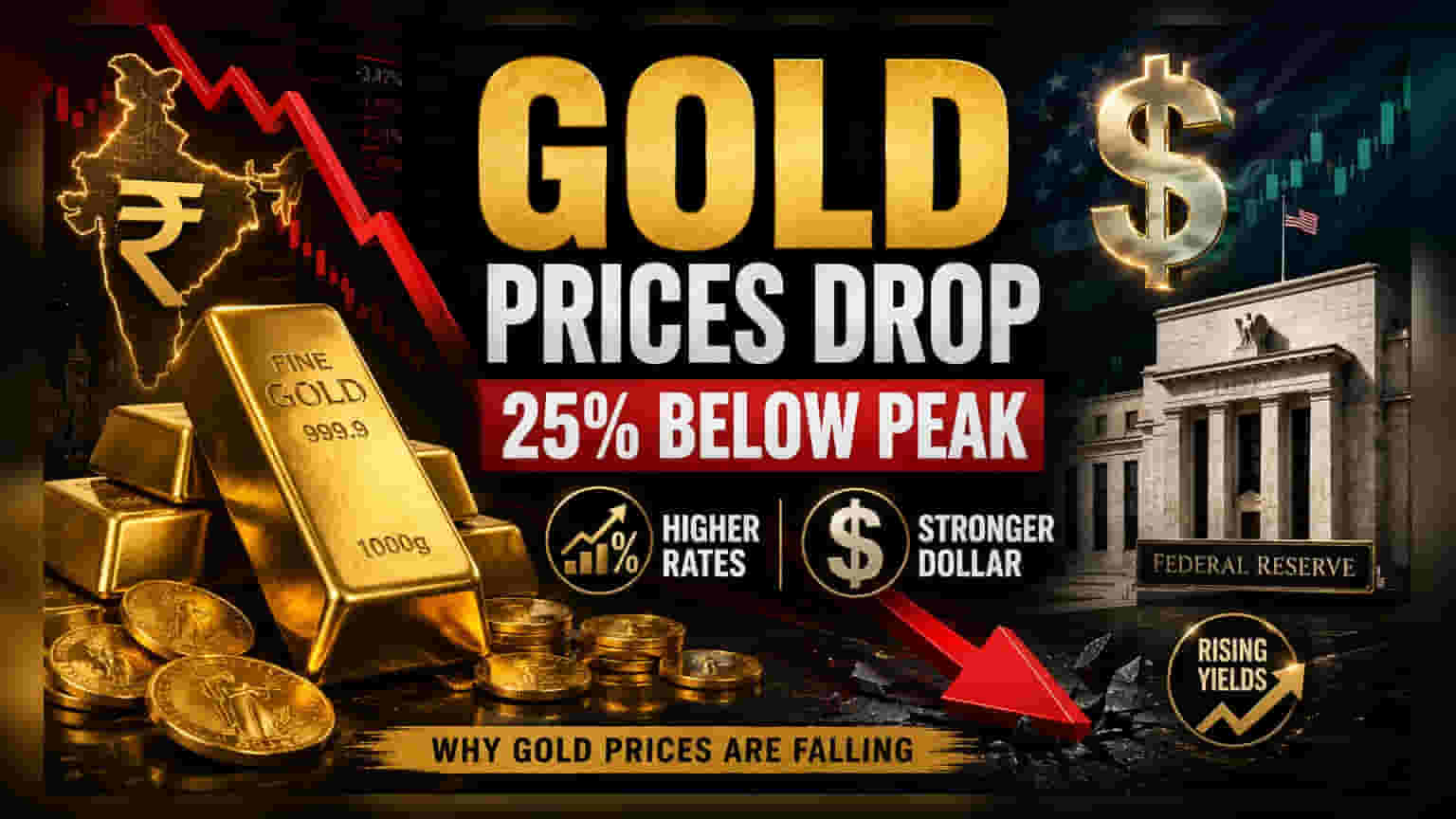
Global gold prices have dropped over 7% in June, marking a fourth consecutive monthly decline as a strong US dollar and hawkish Federal Reserve signals reduce the metal's appeal. In India, the price impact has been cushioned by import duties and a weaker rupee, though the broader outlook remains cautious.
What Happened
Global gold prices have faced a significant correction in June, falling by more than 7% and extending a losing streak to four months. The precious metal is now trading approximately 25% lower than its peak earlier this year. This decline reflects a shift in global investor sentiment regarding inflation, interest rates, and the strength of the US dollar. While gold is often seen as a safe investment during times of uncertainty, it is currently struggling to compete with assets that pay higher returns, such as bonds, as interest rates remain elevated.
The Federal Reserve and Gold Link
The primary reason for the drop is the change in the US Federal Reserve's stance. While the central bank has held interest rates steady at 3.50-3.75%, it has signaled a hawkish tone, meaning it is not rushing to cut rates. With inflation projections for Core PCE holding at 3.3%, the market has lowered expectations for rate cuts later this year. When interest rates are high, gold becomes less attractive because it does not pay interest or dividends. This has pushed US Treasury yields higher and strengthened the US Dollar Index, which recently crossed 101. A stronger dollar makes gold more expensive for holders of other currencies, which typically pulls prices down.
Why Indian Prices Differ
In India, the decline in gold prices has been less severe compared to international markets. Two main factors are at play here: import duties and the currency exchange rate. Gold is imported in India, so when the Indian Rupee weakens against the US Dollar, the cost of importing gold rises, which helps support domestic prices even if international prices fall. Additionally, government import duties add a layer of cost to the final price. However, physical demand in India has remained soft, as high prices and seasonal factors—such as the monsoon season and fewer wedding dates—have led consumers to exchange old gold rather than buy new jewelry.
Geopolitics and Demand Dynamics
Gold prices are also reacting to changing geopolitical conditions. Initial optimism about potential peace deals in West Asia had reduced the fear-driven demand for gold. However, the situation remains volatile, with ongoing tensions in the region influencing energy markets. If regional instability escalates, it often causes crude oil prices to spike, which can re-ignite inflation concerns and potentially bring gold back into focus. Meanwhile, central banks across the world continue to act as a floor for prices. According to data from the World Gold Council, central banks remain active buyers, viewing gold as a critical long-term reserve asset despite current market fluctuations.
What Investors Should Watch Next
Investors tracking the gold market should focus on upcoming US economic data, specifically the Personal Consumption Expenditures (PCE) inflation report, as this will influence Federal Reserve decisions. Any shift in Fed commentary regarding future rate hikes or cuts will directly impact the dollar and, by extension, gold. Domestically, tracking the Indian Rupee’s performance against the dollar and potential government adjustments to gold import duties will be important for understanding local price movements. Finally, any sharp changes in crude oil prices due to regional developments in West Asia will serve as a key monitorable for sentiment.