

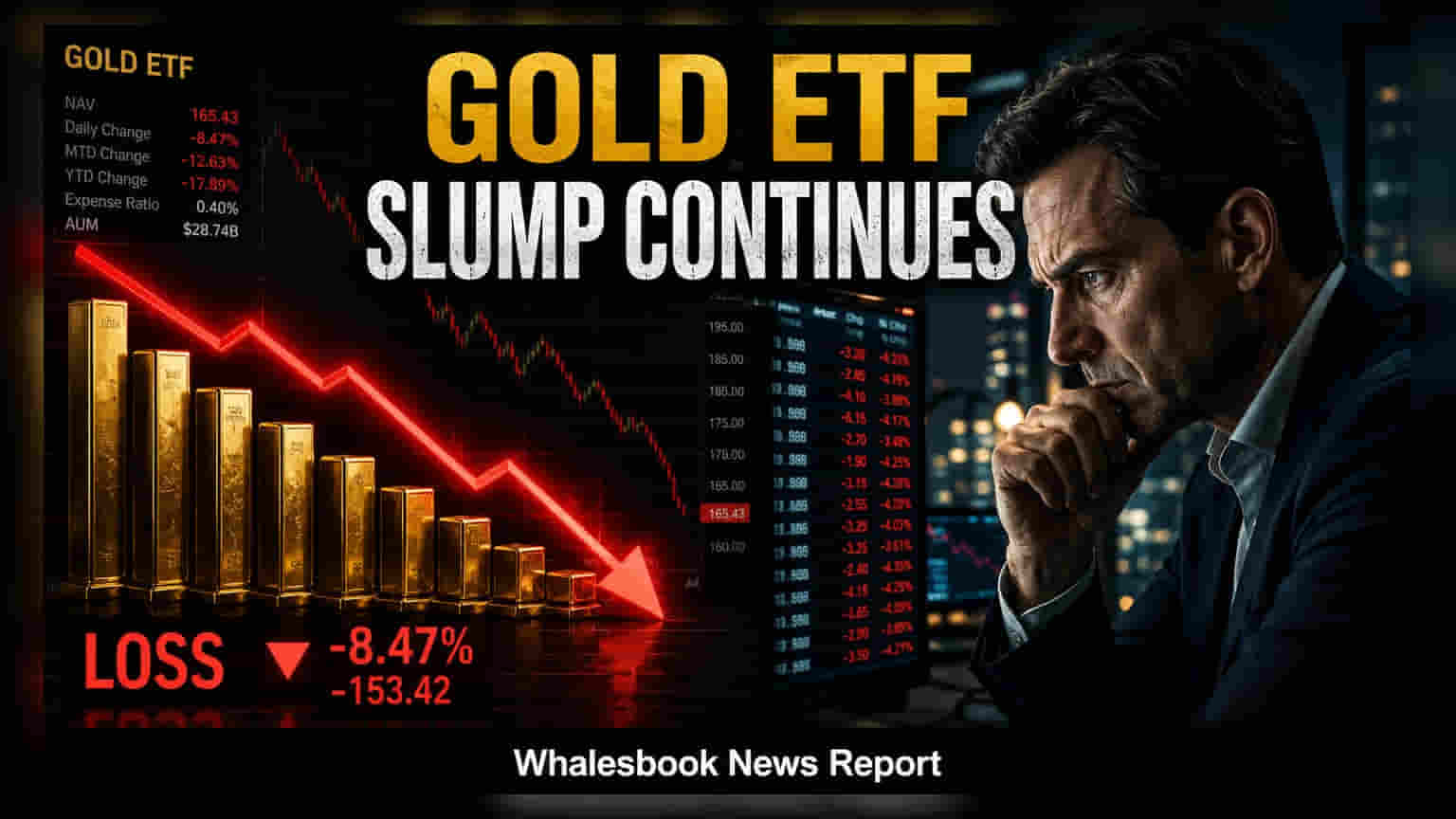
Top-tier gold ETFs like Mirae Asset Gold ETF have reported negative returns of approximately -4.7% over the last three months. This dip follows recent volatility in global gold prices, making it essential for investors to look beyond short-term data. Understanding long-term performance trends and benchmark tracking is key to assessing these passive investment products.
Gold exchange-traded funds, or ETFs, which track the domestic price of gold, have experienced a difficult three-month period. As of July 28, 2026, leading funds including Mirae Asset Gold ETF, DSP Gold ETF, and Aditya Birla SL Gold ETF all recorded negative returns of 4.7%. These returns reflect the recent price performance of the underlying physical gold held by these funds, which has faced downward pressure in recent months.
Size and Market Context
When looking at the size of these funds, or the total assets managed, there is a significant range among the top players. ICICI Prudential Gold ETF remains the largest in this category, managing a corpus of over Rs 25,226 crore. While size provides liquidity, it does not guarantee higher returns, as these ETFs are passive instruments designed to mirror the movement of gold prices rather than outperform them through active management.
Why Time Horizon Matters
Investors often find that performance rankings change significantly depending on the time frame analyzed. For instance, while Mirae Asset Gold ETF showed the lead in the short-term three-month and six-month periods, its returns were negative during those windows. In contrast, the one-year data tells a different story, with Aditya Birla SL Gold ETF delivering a 43.1% return. Over a three-year horizon, ICICI Prudential Gold ETF has emerged as a top performer with a 32.5% return.
Risks and Monitoring
Gold ETFs are primarily used as a hedge against inflation or to diversify a portfolio, rather than as a primary source of aggressive growth. The primary risk for investors is the volatility in gold prices, which is influenced by factors such as international central bank policies, the value of the US dollar, and domestic demand. Because these funds track physical gold, they do not provide dividends or interest. Investors should track the tracking error, which is the difference between the ETF's returns and its benchmark index, to ensure the fund is efficiently mirroring gold price movements. Additionally, checking expense ratios remains important, as higher costs can eat into overall returns over the long term. Future performance will continue to depend heavily on global commodity price trends.