

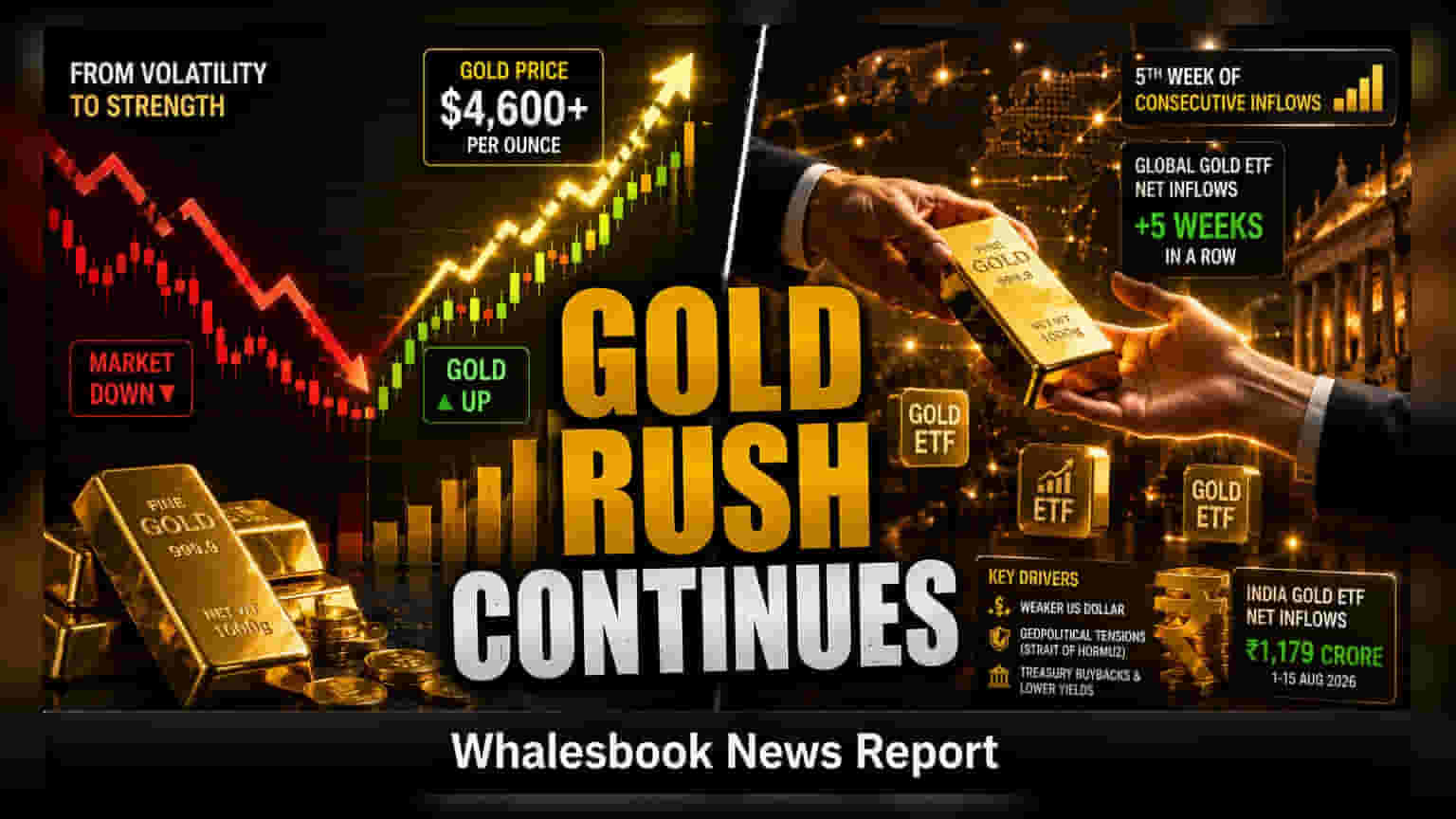
Global gold ETFs have recorded net inflows for the fifth straight week as prices crossed $4,600 an ounce. Investors are turning to gold as a safe-haven asset amid US dollar weakness and geopolitical tensions. In India, local gold ETFs attracted ₹1,179 crore in the first half of August 2026.
Global demand for physically-backed gold exchange-traded funds (ETFs) has remained strong, with net inflows recorded for the fifth consecutive week. This trend highlights a shift in investor sentiment as gold prices continue to climb, recently trading above $4,600 an ounce.
The sustained interest in gold comes as the market navigates a complex economic environment. A primary driver for this surge is the weakening of the US dollar, which has been influenced by the US Treasury’s expanded bond buyback program. When the dollar weakens and bond yields are pressured, non-yielding assets like gold often become more attractive to institutional and retail investors. Additionally, heightened geopolitical tensions, particularly concerns surrounding the Strait of Hormuz, have reinforced gold's traditional role as a safe-haven asset for those looking to protect their portfolios against uncertainty.
Domestic Trend in India
This global appetite for gold is also visible within the Indian market. Domestic gold ETFs witnessed a net inflow of ₹1,179 crore during the first half of August 2026. Indian investors have increasingly used these instruments to gain exposure to gold, moving away from physical purchases toward more liquid and transparent investment options that closely track international price movements.
Factors to Monitor
While the current momentum remains positive, the outlook for gold is not without challenges. Investors are carefully balancing the safe-haven demand against several economic risks. High long-term US Treasury yields remain a hurdle for the precious metal, as they can increase the opportunity cost of holding gold. Furthermore, energy-led inflation pressures persist, which could force central banks to maintain restrictive monetary policies for longer than expected.
Market participants are currently focused on upcoming macroeconomic events that could trigger volatility in gold prices. Key updates, including insights from the Jackson Hole Symposium and pending US PCE inflation data, are expected to provide clearer signals regarding future interest rate policies. For investors, the performance of gold in the coming weeks will likely depend on how these central bank decisions interact with ongoing geopolitical developments.