

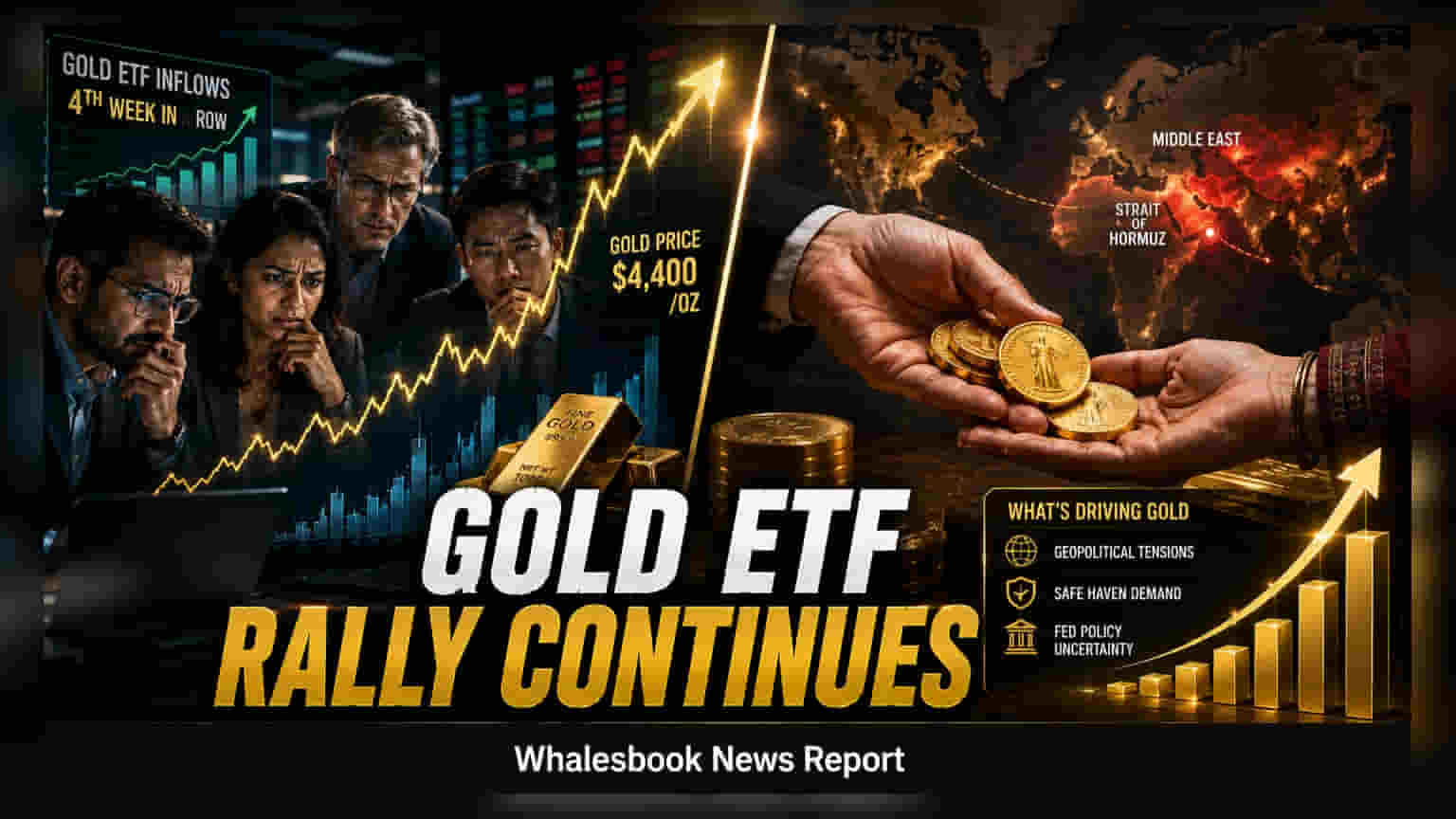
Global gold exchange-traded funds have marked their fourth consecutive week of net inflows as investors turn to safe-haven assets. This trend is driven by ongoing geopolitical tensions, including the standoff in the Strait of Hormuz, and expectations surrounding future U.S. Federal Reserve policy. Prices remain near the $4,400 per ounce level, reflecting sustained demand despite potential economic headwinds.
Investors are increasingly turning to gold exchange-traded funds (ETFs) for the fourth week in a row, signaling a renewed appetite for the precious metal. This shift reflects a cautious market environment where investors are prioritizing stability amid global uncertainty. For the week ending August 7, 2026, data suggests significant net inflows, building on a broader recovery that began in July after a period of outflows.
Gold prices have been consolidating around $4,400 per ounce as of mid-August. This resilience comes even as markets navigate complex economic signals. The primary catalyst for this demand remains the elevated geopolitical risk, particularly with tensions regarding the Strait of Hormuz and ongoing conflicts involving the U.S. and Iran. In such environments, gold often functions as a traditional store of value, attracting investors looking to hedge against potential instability.
While demand has picked up, the market remains sensitive to monetary policy developments. The U.S. Federal Reserve’s stance continues to be a critical factor for precious metals. Higher interest rates typically increase the opportunity cost of holding gold, as the metal does not pay interest or dividends. Investors are currently tracking upcoming U.S. economic data, including industrial production figures and the minutes from the Federal Open Market Committee (FOMC) meetings. Additionally, comments from Fed Chair Kevin Warsh at the upcoming Jackson Hole symposium are widely expected to provide clarity on the central bank's future policy direction.
Asian markets have played a notable role in this trend, with India and China contributing significantly to global inflows year-to-date. For domestic investors, currency fluctuations also remain a relevant factor. A weakening rupee against the dollar can often increase the cost of imported gold, impacting local price trends regardless of international spot movements.
Looking ahead, the market is balancing two opposing forces: the desire for safe-haven assets and the pressure of potential interest rate hikes. If geopolitical tensions were to de-escalate, some of the current premium on gold might soften, as safe-haven demand could wane. Conversely, any unexpected strength in U.S. economic data—such as employment numbers or manufacturing output—could lead to market repricing, causing some investors to reduce their gold positions.
For investors, the key monitorable remains the interplay between global economic data releases and geopolitical headlines. Sustained inflows suggest a positive sentiment for now, but the trend's longevity will depend on whether the Federal Reserve signals a more dovish path or if global uncertainties continue to escalate. Investors should watch for upcoming central bank commentary and any major developments in the Middle East, as these will likely determine whether the current inflow momentum continues through the remainder of the quarter.