

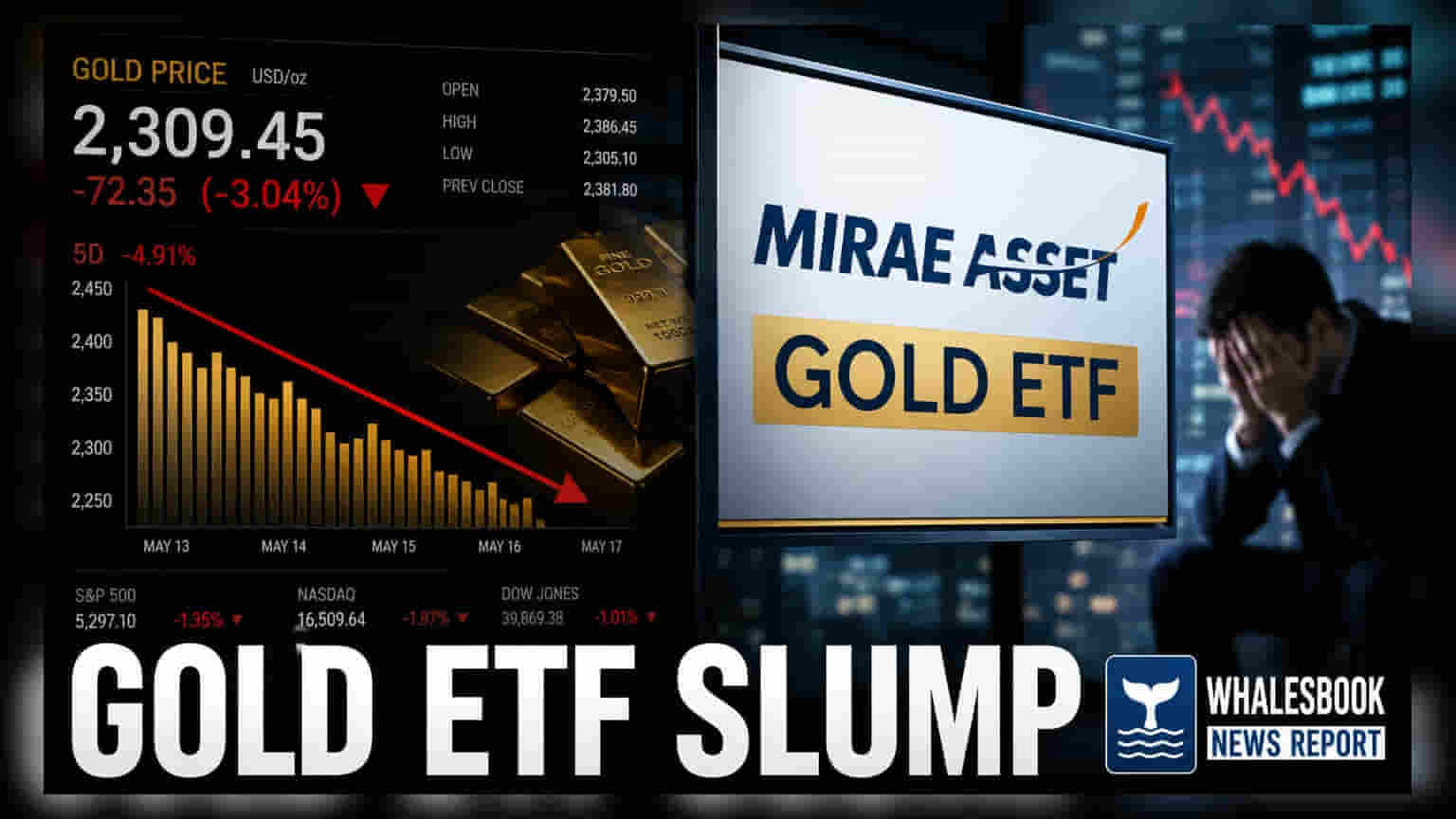
Major gold ETFs like Mirae Asset, DSP, and Aditya Birla SL reported a 2.3% loss over the past three months. While short-term returns have turned negative, these funds show substantial gains over one-year and three-year periods. Investors should look at multi-year performance rather than short-term fluctuations to understand the underlying value.
Gold exchange-traded funds (ETFs) in India have seen a dip in performance over the last three months, with several leading funds posting identical negative returns of 2.3%. Data analyzed as of July 6, 2026, shows that funds including Mirae Asset Gold ETF, DSP Gold ETF, and Aditya Birla SL Gold ETF all faced this short-term pressure. Despite this recent decline, these funds manage large investor corpuses, with some assets under management exceeding Rs 1,500 crore.
Understanding Performance Shifts Across Timeframes
It is common for gold ETF performance to vary significantly depending on the time period chosen for analysis. While the three-month data indicates a decline, longer-term metrics show a different trajectory. For instance, the Mirae Asset Gold ETF has shown a strong track record of outperforming its benchmark over the past year and three years. Specifically, it outperformed its benchmark by 37.8 percentage points over a one-year period and by 32.3 percentage points over a three-year window. This highlights that short-term price movements in gold often do not reflect the long-term wealth creation or hedging potential of the asset.
Why Rankings Change Based on Tenure
Different funds often lead the rankings depending on the specific window being measured. While the Mirae Asset Gold ETF appeared as a leader in the recent three-month data, the Aditya Birla SL Gold ETF has shown strength over other durations. The Aditya Birla fund recorded a return of 6.1% over a six-month period and an impressive 48.2% over the past year. Over a three-year horizon, it also led the category with a 34.1% return. Such variance is typical in commodity-linked investments, as gold prices are driven by global factors like central bank policies, currency fluctuations against the US dollar, and international demand trends.
Investor Perspective on Gold ETF Volatility
For investors, the key takeaway is to avoid focusing solely on quarterly performance. Gold ETFs are primarily used as a tool to hold gold in a paper format, tracking the domestic price of physical gold. When analyzing these funds, investors may track the tracking error, which is the difference between the fund's returns and the actual gold price, and the expense ratio, which impacts the net returns. Since gold is often used as a hedge against market volatility, short-term losses are often part of the cyclical nature of commodity markets. Future updates to track include the movement in global gold spot prices and any changes in domestic import duties, as these are the primary factors that influence the underlying value of these ETFs.