

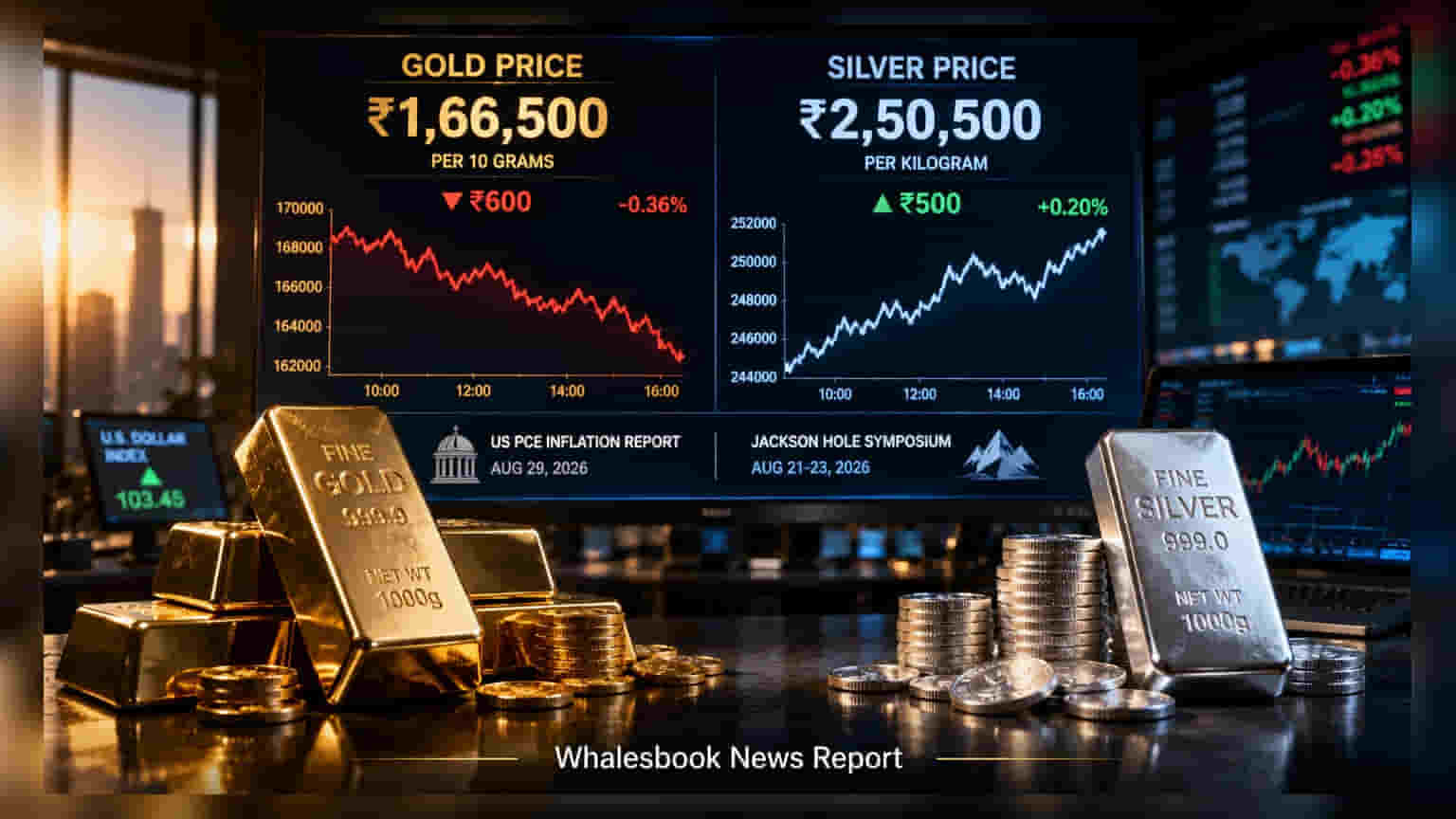
Gold prices in Delhi fell by ₹600 to ₹1,66,500 per 10 grams on August 26, 2026, as investors locked in profits after a four-day rally. Silver bucked the trend, rising ₹500 to ₹2,50,500 per kilogram. The market correction follows a stronger US dollar and cautious sentiment ahead of critical US inflation data and Federal Reserve commentary.
Delhi's bullion market witnessed a correction on Wednesday, August 26, 2026, as gold prices retreated from their recent highs. After a four-day winning streak that pushed prices to multi-month levels, the yellow metal saw a decline of ₹600, settling at ₹1,66,500 per 10 grams. Market observers attribute this drop primarily to profit-booking, a common occurrence where traders sell assets to secure gains after a sustained upward price movement.
While gold faced selling pressure, silver moved in the opposite direction. The white metal showed resilience, rebounding by ₹500 to close at ₹2,50,500 per kilogram. This divergence highlights a shift in sentiment toward industrial precious metals, even as the broader market remains volatile.
The recent price action in domestic markets is largely reflecting movements in the global economy. A strengthening US dollar has created a temporary headwind for gold. Historically, gold and the US dollar often share an inverse relationship; when the dollar rises, dollar-denominated assets like gold become more expensive for international buyers, often leading to a price dip.
Investors are currently holding a cautious stance, waiting for clarity on US monetary policy. The market is closely watching the upcoming Personal Consumption Expenditures (PCE) inflation report, which is a key gauge the Federal Reserve uses to assess economic health. Furthermore, the Jackson Hole Symposium has become the focal point for investors. Any commentary from the Federal Reserve regarding future interest rate adjustments will likely drive the next phase of volatility in precious metal markets.
The risk for investors remains centered on the Federal Reserve’s tone. If the central bank signals that it intends to keep interest rates higher for longer—a stance often referred to as hawkish—it could put additional pressure on non-yielding assets like gold. Conversely, if the commentary suggests a more relaxed policy, price dynamics could change. Beyond monetary policy, participants are also monitoring broader commodity trends, including crude oil, which has seen price fluctuations following supply developments in the Strait of Hormuz.
For those tracking the bullion market, the key monitorable will be the upcoming US inflation data and the subsequent management commentary from the Federal Reserve. These events will likely dictate whether the current profit-taking in gold turns into a longer trend or if the metal resumes its upward momentum.