 Whalesbook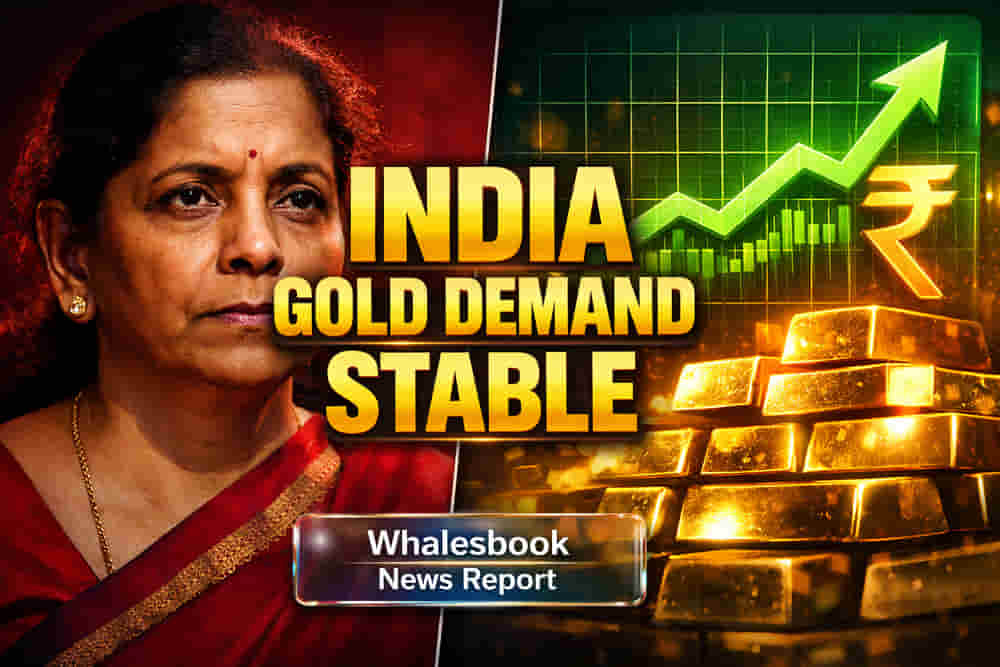
1. THE SEAMLESS LINK (Flow Rule):
The recent affirmation from Finance Minister Nirmala Sitharaman that gold demand in India has not reached "alarming proportions" highlights the traditional role of gold in the nation's economy. She emphasized that purchases are primarily tied to cultural and seasonal influences, such as festivals and auspicious dates, rather than speculative fever. This perspective, echoed by Reserve Bank of India Governor Sanjay Malhotra who identified no immediate macroeconomic concern due to India's strong external sector, aims to temper anxieties surrounding elevated global bullion prices. However, this official stance contrasts with observable market dynamics where robust central bank accumulation and persistent geopolitical uncertainties are fundamentally reshaping gold's price trajectory.
2. THE STRUCTURE (The 'Smart Investor' Analysis):
The Core Catalyst: Official Reassurance Amidst Global Tailwinds
Finance Minister Nirmala Sitharaman's remarks on February 23, 2026, aimed to frame India's gold consumption within predictable cultural parameters, suggesting current demand levels are not extraordinary despite significant price increases. RBI Governor Sanjay Malhotra reinforced this by stating gold imports are not a current macroeconomic worry, citing the country's strong external sector and a modest increase in import value from April to December 2025. This narrative seeks to de-escalate potential market concerns regarding the impact of high gold prices on India's economy.
The Analytical Deep Dive: Global Drivers and Import Nuances
Globally, gold prices have been significantly influenced by sustained, aggressive buying from central banks, particularly in Asia and Eastern Europe, as they diversify reserves away from the U.S. dollar and seek hedges against inflation and currency volatility. Major institutions forecast gold prices to trade between $4,700 and $6,500 in 2026, with some projections extending much higher, driven by these structural demand factors and ongoing monetary policy uncertainties. Despite Sitharaman's comments, India's own import data for April to December 2025 reveal a notable 18.29% decrease in gold import volumes, even as the average unit price rose by 24.62%. This led to only a modest 1.83% increase in the total value of imports, indicating that higher prices are indeed curtailing physical demand volumes. This trend suggests that while cultural demand remains, it is price-sensitive. Furthermore, the strengthening of the Indian rupee can partially offset global price rises, but the nation's heavy reliance on imports (around 86% historically) makes its domestic prices sensitive to both international gold values and currency fluctuations. The widening trade deficit, partly due to precious metal inflows, remains a consideration, though the RBI currently views it as manageable. Indian households, a significant global consumer base, hold vast amounts of gold, estimated at over $5 trillion, which, while providing a cultural anchor and savings mechanism, also represents a largely untapped asset for broader economic mobilization. The surge in gold ETFs in India also indicates a shift in investment patterns, with inflows in January 2026 more than doubling equity mutual fund inflows.
⚠️ THE FORENSIC BEAR CASE (The Hedge Fund View):
While official narratives suggest stability, the underlying market forces present considerable risks. The primary driver of escalating global gold prices is relentless central bank accumulation, a trend that could continue pushing valuations to unsustainable levels if not accompanied by a corresponding increase in physical supply. This inorganic demand from official reserves may create price disconnects from broader economic fundamentals. For India, despite the Finance Minister's reassurances, sustained high global prices combined with any future rupee depreciation could reignite concerns about import bills, current account deficits, and inflationary pressures. The price elasticity of Indian demand, evident in the volume decline despite value gains, means that continued price appreciation, even if driven by external factors, could eventually strain household budgets and the broader economy. Moreover, the substantial portion of household wealth locked in physical gold, particularly jewelry (75-80% of holdings), represents a significant portion of national wealth that is largely illiquid and not directly contributing to productive economic investment, posing a structural challenge to economic growth and financial sector policy. The reliance on imports also exposes India to geopolitical supply chain risks and currency volatility. While current RBI assessments deem gold imports non-concerning, historical precedent suggests that unchecked import values can significantly impact external sector stability. The recent surge in gold ETF inflows, while formalizing savings, ultimately necessitates physical procurement, thus sustaining import pressures and potentially contributing to wider trade imbalances, as noted by analysts.
3. THE STYLE (Formatting & Safety):
Future Outlook:
Analysts project continued strength in gold prices throughout 2026, with consensus forecasts ranging from $4,700 to $6,500 per ounce, underpinned by persistent central bank demand, geopolitical risks, and expectations of global monetary easing. These predictions suggest gold will remain a strategic asset for portfolio diversification and inflation hedging. However, the market acknowledges potential volatility, with some forecasts indicating consolidation rather than linear appreciation after the significant gains of 2025. The sustained demand from institutional investors and central banks, coupled with gold's traditional role as a safe-haven asset, points towards a supportive environment for the precious metal, although the magnitude and speed of future price movements will depend on evolving macroeconomic conditions and geopolitical developments. The Reserve Bank of India will likely continue to monitor import levels and their impact on the external sector, balancing cultural demand with macroeconomic stability.