

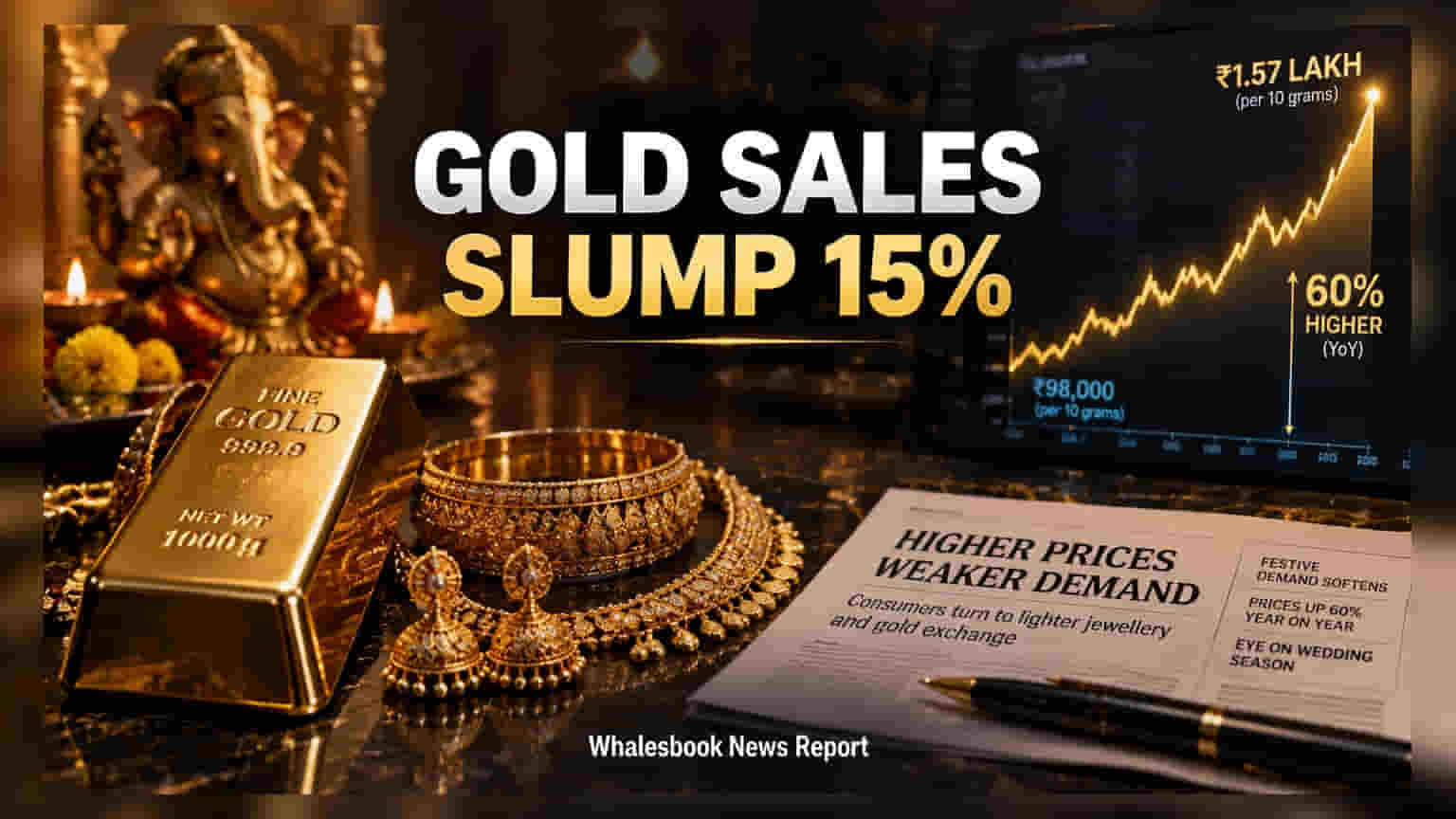
Gold volumes dropped 15% during Ganesh Chaturthi as prices surged to Rs 1.57 lakh per 10 grams, forcing consumers to opt for lightweight jewelry and gold exchanges. Investors are watching how this price resistance affects listed jewelry retailers, who depend heavily on the upcoming wedding season to offset the current slowdown in discretionary spending.
Retail gold demand in India faced significant headwinds during the recent Ganesh Chaturthi festival, with volume sales contracting by approximately 15% compared to the previous year. This cooling in demand is primarily attributed to a sharp rally in gold prices, which touched Rs 1.57 lakh per 10 grams in the Mumbai spot market. This represents a roughly 60% increase from the Rs 98,000 price point recorded during the same period last year, a level that has caused many households to defer non-essential purchases or re-evaluate their spending plans.
Impact on Jewelry Retailers
The current price environment presents a complex challenge for Indian jewelry retailers. While higher gold prices generally increase the revenue value for these companies, volume growth remains the critical metric for gauging long-term health. When prices rise too rapidly, consumer demand often shifts toward lightweight jewelry or cost-effective options, which can alter the product mix and impact profit margins. Furthermore, retailers rely on high-volume festive seasons to clear inventory and manage working capital efficiently. If volume pressure persists, it may lead to higher inventory carrying costs for companies that do not adjust their procurement strategies quickly to match the changing demand.
Strategic Shifts in Consumer Behavior
Market observations suggest that consumers are increasingly prioritizing utility and value preservation over heavy discretionary buying. There is a notable rise in the practice of exchanging old gold jewelry to finance new purchases, which helps maintain some transaction velocity in the market even when fresh demand is weak. Additionally, bullion products such as coins and bars continue to find consistent buyers who view the metal as a stable store of value amidst ongoing global price volatility. This trend indicates that while total volume is under pressure, the underlying demand for gold as an asset class remains intact, even if the form of purchase is changing.
Outlook for the Peak Wedding Season
The jewelry sector is now looking toward the upcoming peak wedding season to provide a floor for demand. Historically, the wedding season is the most significant contributor to annual sales, and industry players are hopeful that the convergence of festive dates and wedding ceremonies will trigger a recovery. To stay relevant, retailers are actively pivoting their inventory strategies, focusing on versatile designs that cater to both gifting and everyday use. The final performance for the second half of the year will depend on whether gold prices stabilize, allowing consumers to align their budgets with the higher price reality. Investors monitoring the sector will look for updates in upcoming quarterly financial results regarding volume trends, margin stability, and inventory levels.