

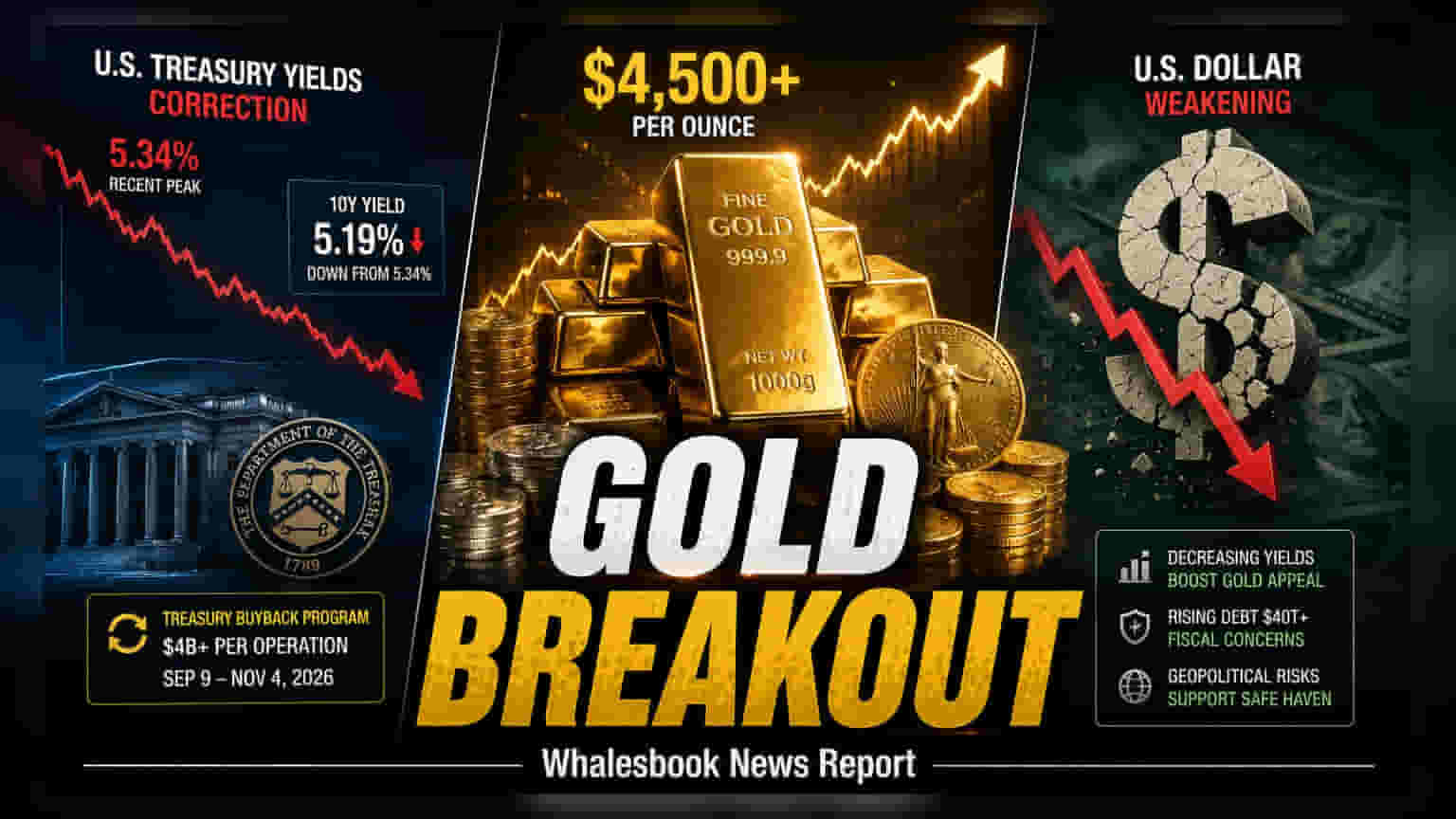
Gold prices climbed above $4,500 per ounce on August 20, 2026, driven by falling U.S. Treasury yields and a weaker dollar. The rally follows the U.S. Treasury's decision to double long-term bond buybacks to at least $4 billion starting September 9. Investors are balancing this liquidity support against hawkish signals from Federal Reserve minutes regarding potential future rate hikes.
Gold prices hit a significant milestone on August 20, 2026, crossing the $4,500 per ounce mark for the first time since June. This price movement follows a sharp correction in U.S. Treasury yields, which typically makes gold more attractive to investors looking for a store of value. The primary driver behind this shift is the U.S. Treasury's recent announcement to increase its liquidity support for the bond market.
Starting September 9, 2026, the U.S. Treasury will double its buyback operations for 10-year to 30-year debt, moving from $2 billion to at least $4 billion per operation. This program, set to run through November 4, is designed to manage borrowing costs that had recently reached multi-year highs. By purchasing long-term bonds, the Treasury aims to lower yields, which recently retreated from near-peak levels of 5.34 percent to approximately 5.19 percent. As bond yields fall, the opportunity cost of holding gold—which does not pay interest—decreases, supporting the precious metal’s price.
While the bond buyback news provided a boost, the broader economic environment remains complex. Minutes from the Federal Reserve’s July meeting, released recently, highlighted that policymakers are still concerned about persistent inflation. Several officials suggested that further interest rate increases may be necessary if inflation does not cool down. Higher interest rates generally act as a headwind for gold, creating a tug-of-war for the metal's price direction.
Beyond monetary policy, structural economic pressures continue to influence market sentiment. U.S. public debt has now climbed past $40 trillion, raising long-term questions about fiscal stability. Additionally, geopolitical risks remain high, with ongoing tensions in the Middle East and the standoff in the Strait of Hormuz keeping energy prices and inflation expectations elevated. For many investors, gold serves as a hedge against these uncertainties.
In the Indian market, the price recovery in global bullion has had a direct impact on domestic prices. MCX gold futures, which reflect the price trend in India, saw a recovery from earlier lows. For Indian investors, gold prices are influenced not just by global dollar fluctuations but also by the strength of the rupee and local demand-supply dynamics.
Looking ahead, market attention is shifting toward upcoming U.S. economic indicators, including weekly jobless claims and manufacturing data. Investors will be monitoring whether the Treasury's liquidity intervention can sustainably lower borrowing costs or if persistent inflation will force the Federal Reserve to maintain high interest rates, potentially limiting further upside for gold.