

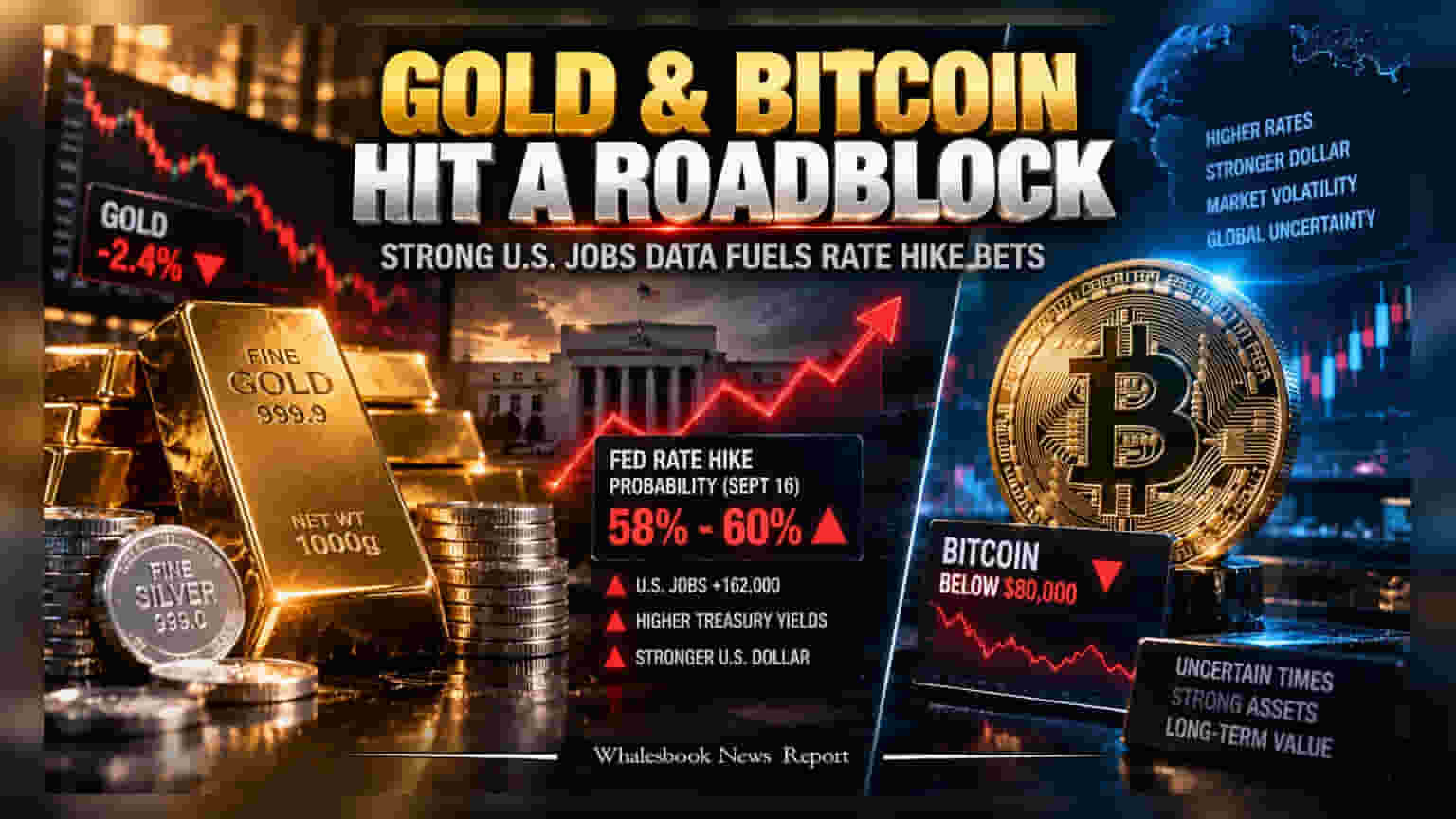
Gold prices fell 2.4% and Bitcoin dropped below $80,000 after stronger-than-expected August job data fueled expectations of a U.S. Federal Reserve rate hike. Investors are now adjusting to a 60% probability of an interest rate increase, which typically reduces the appeal of non-yielding assets like precious metals and cryptocurrencies.
The rally in gold and Bitcoin has hit a roadblock as financial markets react to new economic data from the United States. Following the release of August labor market figures, which showed that the U.S. economy added 162,000 jobs, sentiment has shifted rapidly. This stronger-than-anticipated growth suggests the economy remains resilient, increasing the likelihood that the U.S. Federal Reserve may choose to raise interest rates to keep inflation in check.
Impact on Market Pricing
The market reaction to the jobs report was immediate. On September 6, gold spot prices retreated by 2.4%, and Bitcoin, which had successfully climbed above the $80,000 mark in August, slipped below this psychological threshold. Investors are now recalibrating their expectations based on the CME FedWatch tool, which indicates that the probability of an interest rate hike during the upcoming September 16 policy meeting has risen to between 58% and 60%.
For investors, the connection between interest rates and these assets is simple but significant. When the Federal Reserve raises interest rates, U.S. Treasury yields typically rise and the dollar often strengthens. This creates a challenging environment for assets like gold and Bitcoin, which do not pay regular interest or dividends. When safer government bonds begin to offer better returns, investors are often less willing to hold assets that do not provide a yield, leading to the selling pressure observed over the last few days.
Short-Term Volatility Versus Long-Term Trends
While the immediate price movement is negative, some market analysts highlight that the structural support for these assets remains intact. Central banks around the world have been consistent buyers of gold, which provides a floor for prices. Furthermore, the argument for holding these assets often revolves around long-term concerns regarding the U.S. national debt, which currently stands at $40 trillion. Proponents of gold and Bitcoin suggest that if governments rely on currency debasement—or printing more money—to manage debt costs, these assets may serve as a store of value, independent of traditional monetary policy.
What Investors Should Track
The most important event for market participants is the Federal Reserve's meeting scheduled for September 16. Until then, any data releases regarding inflation or further labor market strength may cause additional swings in asset prices. Investors will also be watching the movement of the U.S. Dollar Index and Treasury yields, as these will likely dictate the short-term direction for both gold and Bitcoin. Market participants are preparing for continued volatility as the Fed balances the need to manage economic growth against the risk of persistent inflation.