

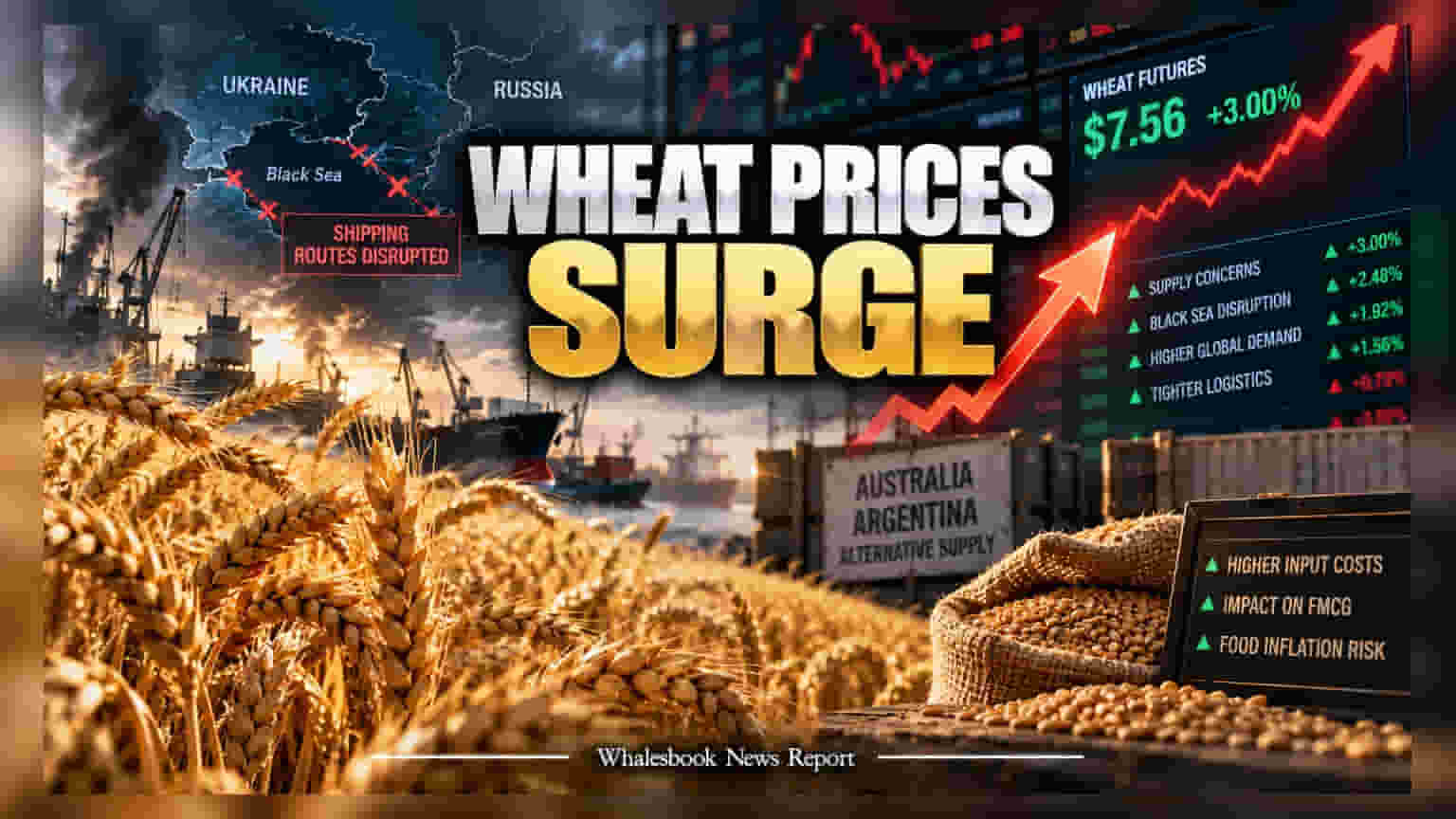
Wheat futures rallied by nearly 3% as diplomatic efforts to secure Black Sea shipping routes stalled. This disruption forces global buyers to pivot to alternative suppliers in Australia and Argentina. For Indian investors, the development highlights potential risks regarding global food inflation and input cost pressures for domestic FMCG and bakery companies.
Chicago wheat futures rose by approximately 3% on Tuesday, with prices reaching around $7.56 per bushel. This surge follows the failure of recent diplomatic efforts by US envoys to secure a ceasefire or a safe shipping agreement with Russian and Ukrainian leadership. The lack of progress means the Black Sea, which is a vital route for grain exports, remains effectively blocked and unreliable due to ongoing military strikes on port infrastructure.
Global Supply Shift and Logistics
The persistence of the conflict is forcing a change in how the world buys grain. With major export terminals in the Black Sea region facing damage and uncertainty, global buyers are increasingly moving their procurement toward alternative origins, specifically Australia and Argentina. This migration away from traditional supply routes has added pressure to global logistics, as importers look for stability in a market that has been rattled by persistent supply chain risks.
Impact on Indian Markets
While India is a large producer and consumer of wheat, it does not operate in isolation. Global price movements influence sentiment and can contribute to imported food inflation. For Indian investors, particularly those watching the FMCG and bakery sectors, this scenario is a key monitorable. Companies that rely heavily on wheat as a primary raw material—such as those manufacturing biscuits, bread, and noodles—often see their profit margins tighten when global wheat prices remain elevated. If these input costs stay high for a long period, companies may face challenges in maintaining profitability unless they can successfully pass the additional costs to the end consumer.
Risks and Market Sensitivity
The current price rally is also driven by speculative positioning. Markets are wary of further damage to critical grain storage and port facilities, which could lead to tighter supplies. However, this also makes the market highly volatile. Any credible sign of de-escalation in the conflict could trigger a rapid correction in prices, as traders might quickly unwind their positions.
What Investors Should Track Next
The market is now looking toward the upcoming U.S. Department of Agriculture monthly supply-and-demand report, which is scheduled for release this Friday. This report is expected to provide clearer data on global stock levels and the long-term price outlook. Domestically, investors should track government policy on grain exports and local inflation data, as these remain the primary factors determining how global agricultural trends impact the Indian economy.