

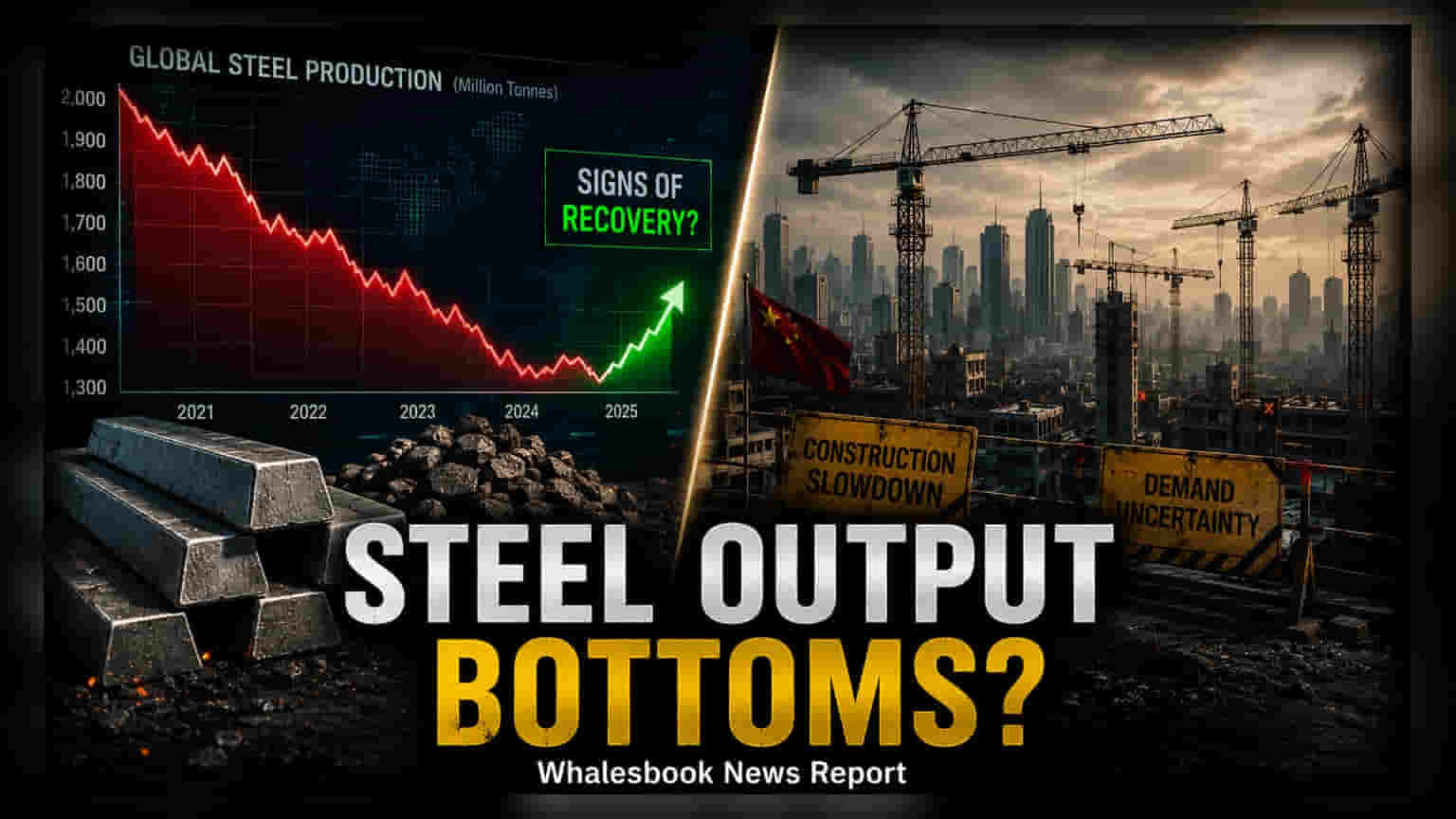
Global crude steel production increased by 1.7% in June compared to last year, largely due to a low base effect. However, falling iron ore prices and slowing GDP growth in China and India signal continued pressure on the industry. Investors should monitor how these demand constraints affect profitability for major steel manufacturers.
Global crude steel production showed a marginal year-on-year increase of 1.7% in June 2026. While this growth suggests that the industry might have hit a bottom after a lengthy period of decline, the underlying data indicates that the recovery remains fragile. A significant portion of this growth is attributed to a low base effect from the previous year rather than a sudden surge in industrial consumption.
China and India Demand Trends
China remains the most critical factor for the global steel industry, accounting for nearly half of total production and consumption. The country continues to face a significant economic slowdown, particularly within its property sector, which traditionally drives a large portion of steel demand. Consequently, China's steel output saw a sequential decline of 0.8% in June compared to May.
India is also experiencing a cooling in its growth trajectory. While India’s steel production grew by 4.5% in June, this is notably lower than the 7.1% growth rate recorded during the first half of the year. This deceleration aligns with broader economic forecasts, with the International Monetary Fund projecting India’s GDP growth to moderate to 6.4% in 2026, down from 7.7% in 2025.
Iron Ore Prices and Profitability Risks
Beyond production volumes, market participants are looking at commodity pricing for clues about the industry's health. Iron ore, a primary raw material for steelmaking, has seen its price drop from $110 per tonne in May to $98 per tonne. This decline often serves as a signal of weaker-than-expected demand from manufacturers.
For investors, the combination of moderating GDP growth and falling raw material prices presents a complex environment for steel companies. While lower input costs can sometimes provide margin relief, they are frequently outweighed by the impact of stagnant or falling steel prices in a low-demand environment. If steel prices drop faster than input costs, profit margins for producers could face significant pressure.
What Investors Should Monitor
Looking ahead, the primary monitorables for the sector will be the trend in iron ore prices and any signs of recovery in the Chinese property market. Investors may also track management commentary from major domestic and global steel producers regarding their order books and capacity utilization levels. These updates will be essential to determine if the June production uptick marks the beginning of a genuine recovery or a temporary stabilization in a challenging macroeconomic climate.