

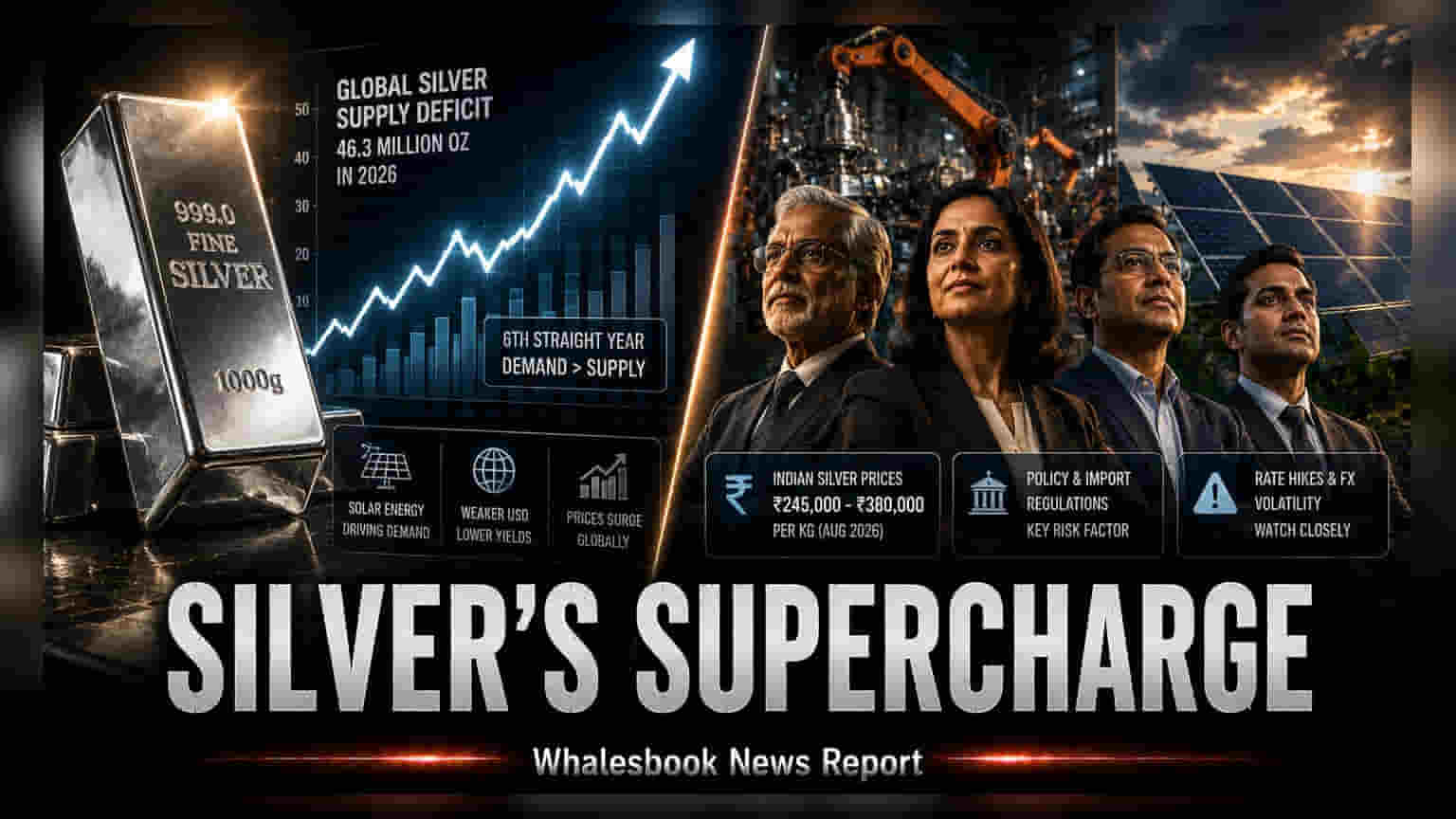
Global silver markets are facing a supply shortfall for the sixth consecutive year, driving prices up as industrial demand for solar energy remains strong. This imbalance, combined with recent shifts in global monetary policies, is impacting the Indian market. Investors should track volatility, regulatory changes in import duties, and the impact of the USD/INR exchange rate.
Global silver markets are currently experiencing a significant supply shortage, marking the sixth straight year that demand has outpaced production. The deficit for 2026 is estimated at 46.3 million ounces, creating a structural imbalance that continues to support higher prices globally. This supply-demand gap is being driven by steady industrial consumption, particularly from the renewable energy sector, where silver is a crucial component in photovoltaic solar cells.
Recent market movements have been influenced by global macroeconomic shifts. On August 19, 2026, the US Treasury announced plans for increased bond buybacks, which helped lower bond yields and soften the US dollar. Because precious metals often move in the opposite direction of the dollar, this news led to a quick rally of 5-6% in global silver prices.
In India, the impact has been visible through significant price volatility. Domestic silver prices have fluctuated, with reports placing values between ₹245,000 and ₹380,000 per kilogram in August 2026. Earlier in the year, the local market experienced supply tightness due to changes in import licensing systems, though supply flows have recently shown signs of recovery. For investors, this volatility underscores the sensitivity of the metal to local policy changes.
Despite the positive price momentum, there are risks to consider. The silver market is highly sensitive to external factors, including US Federal Reserve policy and the stability of the USD/INR exchange rate. Any sudden change in global interest rates can lead to sharp corrections and profit-taking in the precious metals space.
Furthermore, businesses are constantly adapting to high prices. There is an ongoing risk of industrial substitution or 'thrifting,' where companies develop technologies that use less silver to manage costs. Domestically, the market remains susceptible to regulatory risks. Changes in customs duties, Goods and Services Tax (GST) structures, or import licensing norms can significantly alter the domestic price and supply situation. Investors tracking the precious metals sector should keep a close watch on future import data, trends in solar energy demand, and any further updates from the government regarding trade policy and precious metal import regulations.