

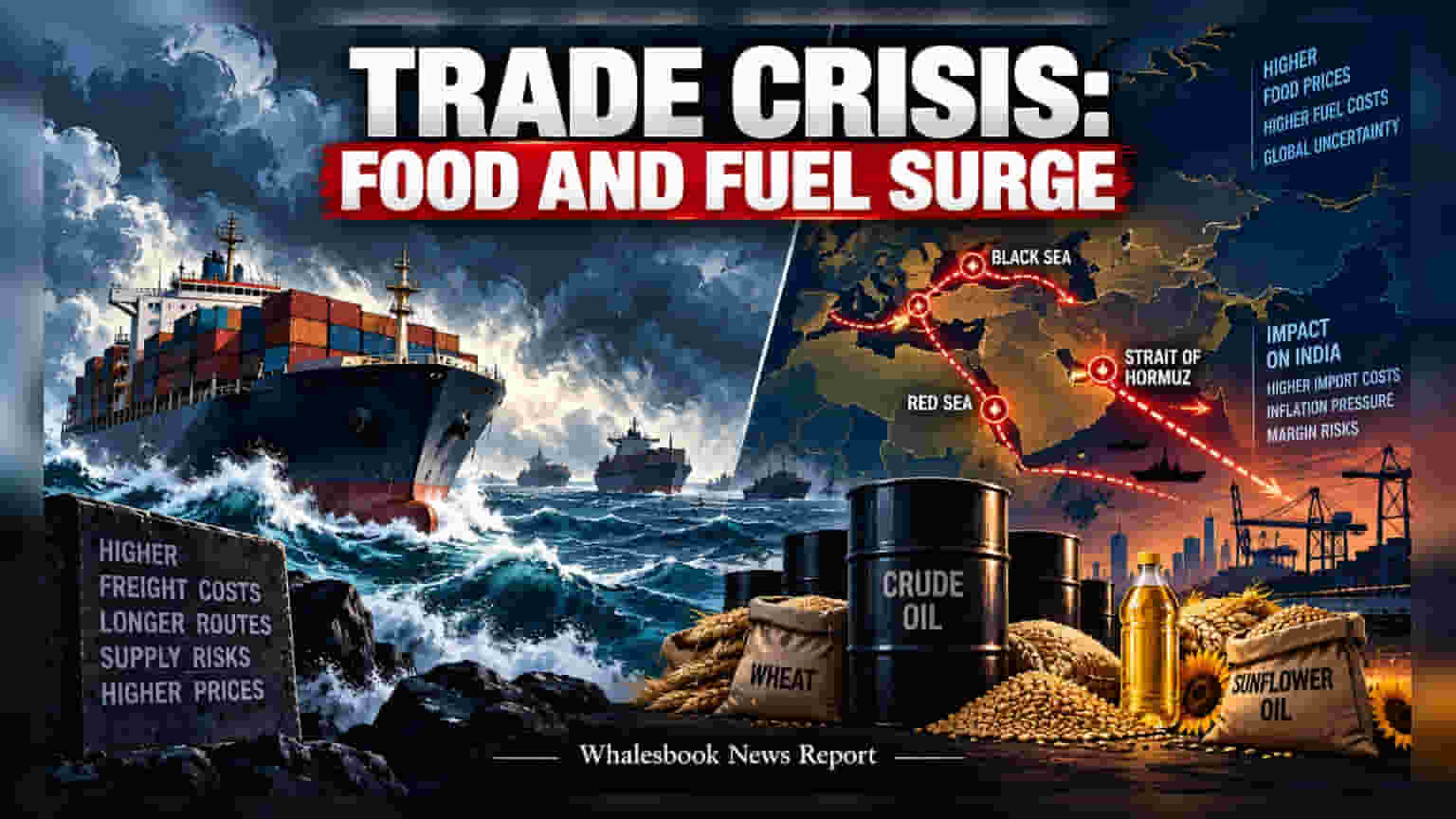
Tensions across the Strait of Hormuz, the Black Sea, and the Red Sea are delaying trade and raising shipping costs globally. For Indian investors, this creates potential pressure on inflation, import bills, and profit margins for companies that depend on imported energy and agricultural goods.
Geopolitical tensions across the Strait of Hormuz, the Red Sea, and the Black Sea are causing significant delays and cost increases for global maritime trade. With these routes serving as primary corridors for energy and agricultural goods, the disruption is creating a ripple effect that extends to Indian markets. For India, which remains a significant importer of crude oil and specific agricultural commodities like edible oils, these logistical hurdles present a challenge to inflation management and corporate profit margins.
The Strait of Hormuz is critical for global energy supplies, and instability here directly influences the landed cost of India's crude oil imports. When shipping insurance premiums rise or vessels are forced to take longer routes—such as bypassing the Red Sea to travel around the Cape of Good Hope—freight costs climb significantly. For Indian companies that rely on imported raw materials or energy, this translates into higher production costs. If companies cannot pass these higher costs on to customers, their operating margins may come under pressure.
The instability in the Black Sea is particularly relevant for the food sector. India imports a significant portion of its sunflower oil from the Black Sea region. Continued volatility in this corridor makes sourcing these goods both expensive and uncertain. While India’s domestic food production remains a strong buffer, the global rise in agricultural commodity prices can influence domestic price levels, making food inflation a key metric for the Reserve Bank of India to track.
Investors should consider how these global supply chain issues affect the broader economy. Sectors such as oil marketing companies, which depend on imported crude, and export-oriented industries, which rely on timely shipping, face indirect pressure from higher logistics costs. Higher freight rates and fuel prices increase the cost of doing business across the manufacturing sector, which can dampen overall profitability if demand remains weak. The key monitorable for the market will be the duration of these shipping disruptions and whether businesses have the pricing power to protect their margins in a higher-cost environment.