

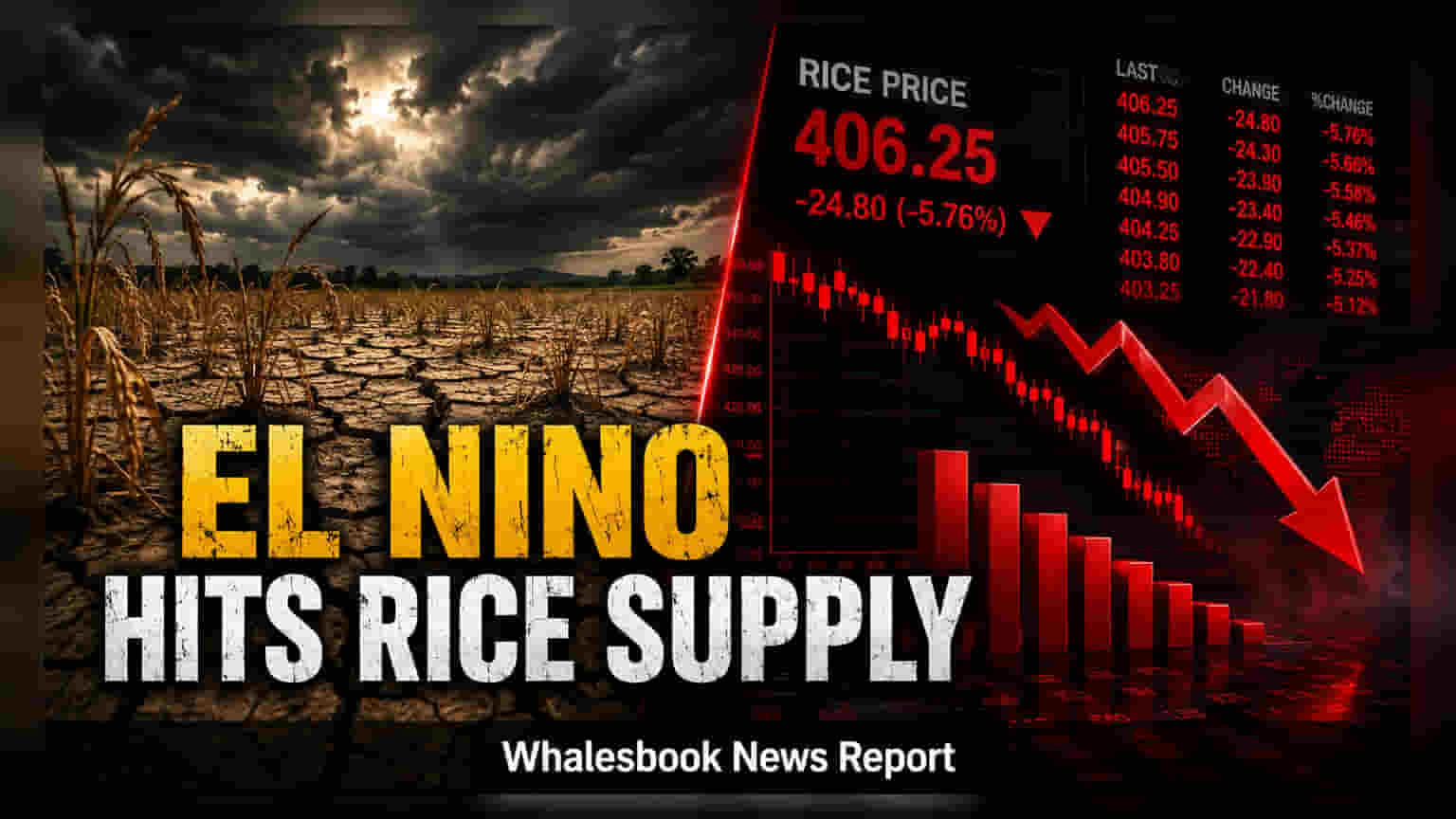
Global rice production is projected to decline by 9 million tonnes to 536.4 million tonnes for the 2026-27 season due to persistent El Nino conditions. While export volumes remain supported by existing stocks, a rise in global import demand is adding pressure to the supply chain.
The global rice market is preparing for significant volatility as production forecasts indicate a shortfall of approximately 9 million tonnes for the 2026-27 marketing year. According to projections cited by the Indian Rice Exporters Federation and analysis from S&P Global Energy, total global rice production is expected to reach 536.4 million tonnes, hindered by adverse weather and rising costs.
The Impact of El Nino on Production
A primary driver of this projected decline is the persistent El Nino phenomenon. The US National Oceanic and Atmospheric Administration has indicated a 97% probability of El Nino conditions continuing through early 2027. This extended weather pattern threatens to disrupt the planting and development stages of the paddy crop across key producing nations, including India, Pakistan, Thailand, Vietnam, and China.
Beyond weather-related crop damage, farmers are grappling with rising input expenses. Costs for fertilizer, fuel, and transportation have climbed, a situation worsened by geopolitical tensions in West Asia. These factors are creating a complex risk environment where higher operating costs may influence future planting decisions, potentially tightening supply further in subsequent seasons.
Trade Dynamics and Market Outlook
Despite the production shortfall, global export volumes are expected to remain steady, largely due to substantial carry-over stocks from the previous 2025-26 season. However, global import demand is projected to rise by nearly 4 million tonnes, reaching 59.7 million tonnes, as nations seek to secure supplies amidst growing harvest uncertainty.
For investors monitoring the sector, the situation presents a mix of potential opportunities and risks. Higher global prices could theoretically benefit exporters by improving price realization per tonne. However, Indian rice exporters must also navigate significant operational risks. Input cost inflation continues to pressure profit margins, and there is a constant risk of government-imposed export restrictions or policy changes if domestic rice prices were to spike due to tight local supply.
Monitoring Next Steps
Market participants will look to the Bharat International Rice Conference in New Delhi, scheduled for October 24, for more detailed insights. The discussions are expected to clarify the impact of these risks on trade flows and provide a clearer picture of price prospects over the coming 52 weeks. Investors may continue to track government policy announcements, global supply-demand trends, and input cost data as these factors will be critical in determining the profitability of rice exporters in the near term.