

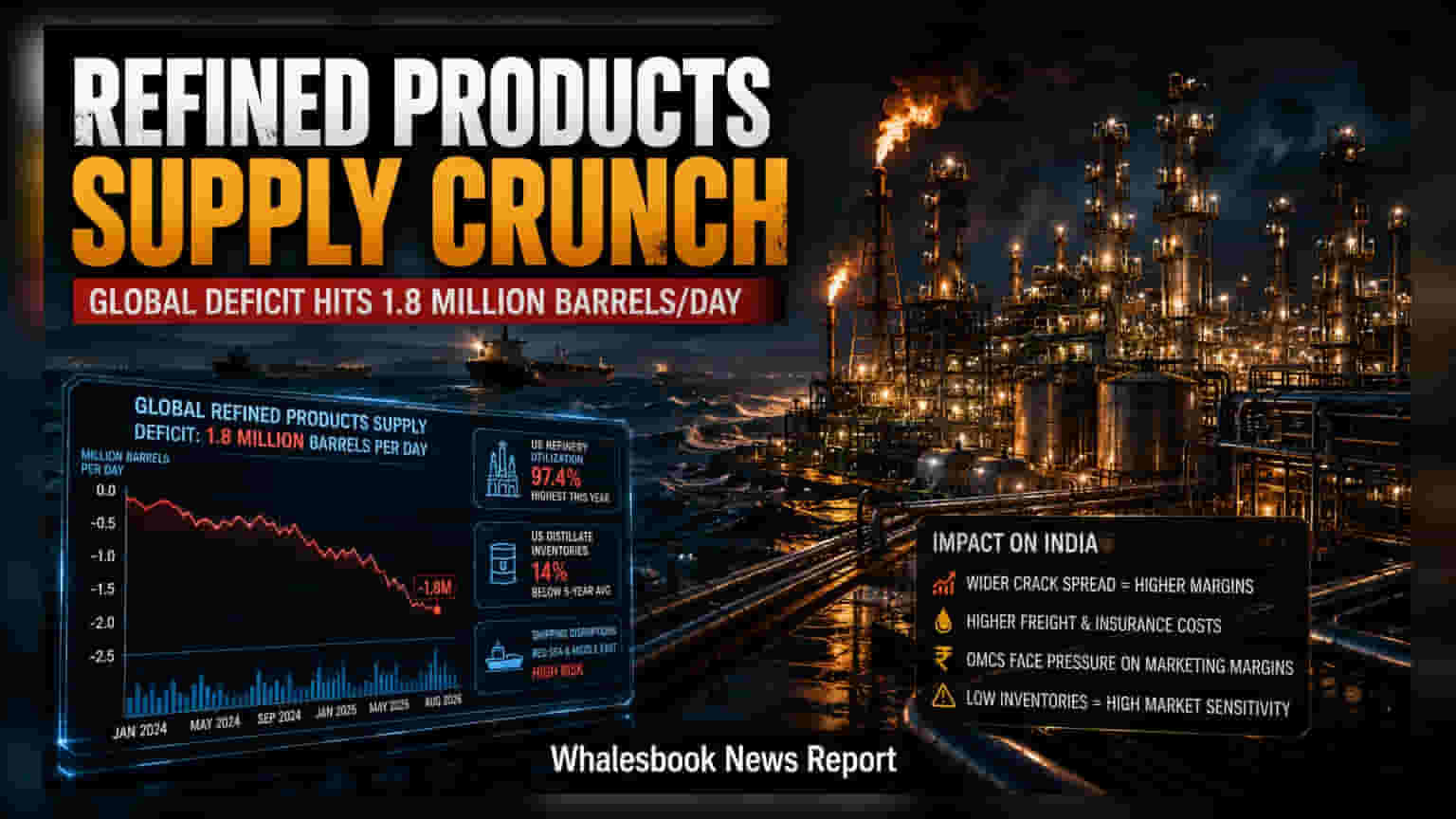
A global deficit of 1.8 million barrels per day in refined products like diesel and gasoline is keeping prices volatile. With US refineries running at record-high 97.4% capacity and supply chains in the Middle East and Russia disrupted, Indian refiners and OMCs face a complex environment of high product margins but rising logistical risks.
Global energy markets are currently witnessing a distinct disconnect. While crude oil prices remain range-bound, the market for refined products—such as diesel, gasoline, and jet fuel—is facing a severe supply crunch. As of late August 2026, global markets are dealing with an estimated deficit of 1.8 million barrels per day, leaving little room for error as autumn demand approaches.
The root cause of this imbalance is a combination of infrastructure damage and regional conflicts. Systemic strikes on Russian refining facilities have reduced their throughput, while persistent shipping disruptions in the Middle East have complicated the movement of products to global markets. To compensate for these gaps, US refineries have pushed utilization rates to 97.4%, the highest level seen this year. However, these record-high operating rates have failed to fully bridge the shortage, leaving distillate inventories in the US roughly 14% below their five-year average.
Impact on Indian Refiners and OMCs
For Indian investors, the performance of the refining and marketing sector is deeply connected to these global trends. Companies like Reliance Industries, Indian Oil Corp, BPCL, HPCL, and Chennai Petroleum are the primary entities that track these developments. Historically, a tight global market for refined products leads to higher Gross Refining Margins, which can boost profitability for refiners.
However, the environment is not without complications. When refineries globally operate at near-maximum capacity, the risk of mechanical failures and unplanned shutdowns increases. For Indian refiners, while export margins may look attractive during periods of global shortage, they must also contend with the costs of importing crude oil. Higher shipping insurance premiums in the Red Sea and potential logistics delays can quickly erode the benefits of wider refining margins.
Risks and Market Monitorables
Investors should closely track the crack spread, which represents the difference between the price of crude oil and the refined products produced from it. If this spread remains wide, it typically favors the profitability of refiners. However, the situation for Indian Oil Marketing Companies is nuanced. These companies face pressure on their retail marketing margins if global product prices remain elevated, as domestic fuel pricing is often managed to control local inflation.
Looking ahead, the primary risks include further escalations in Middle Eastern logistics, which could raise shipping costs, and any sign of a demand slowdown in major economies. The current low inventory levels suggest that the market remains highly sensitive to any new supply shocks. The key monitorable for shareholders in the coming months will be whether refineries can maintain such high utilization rates without facing operational stress, and how crack spreads trend as the world enters the winter heating season.