

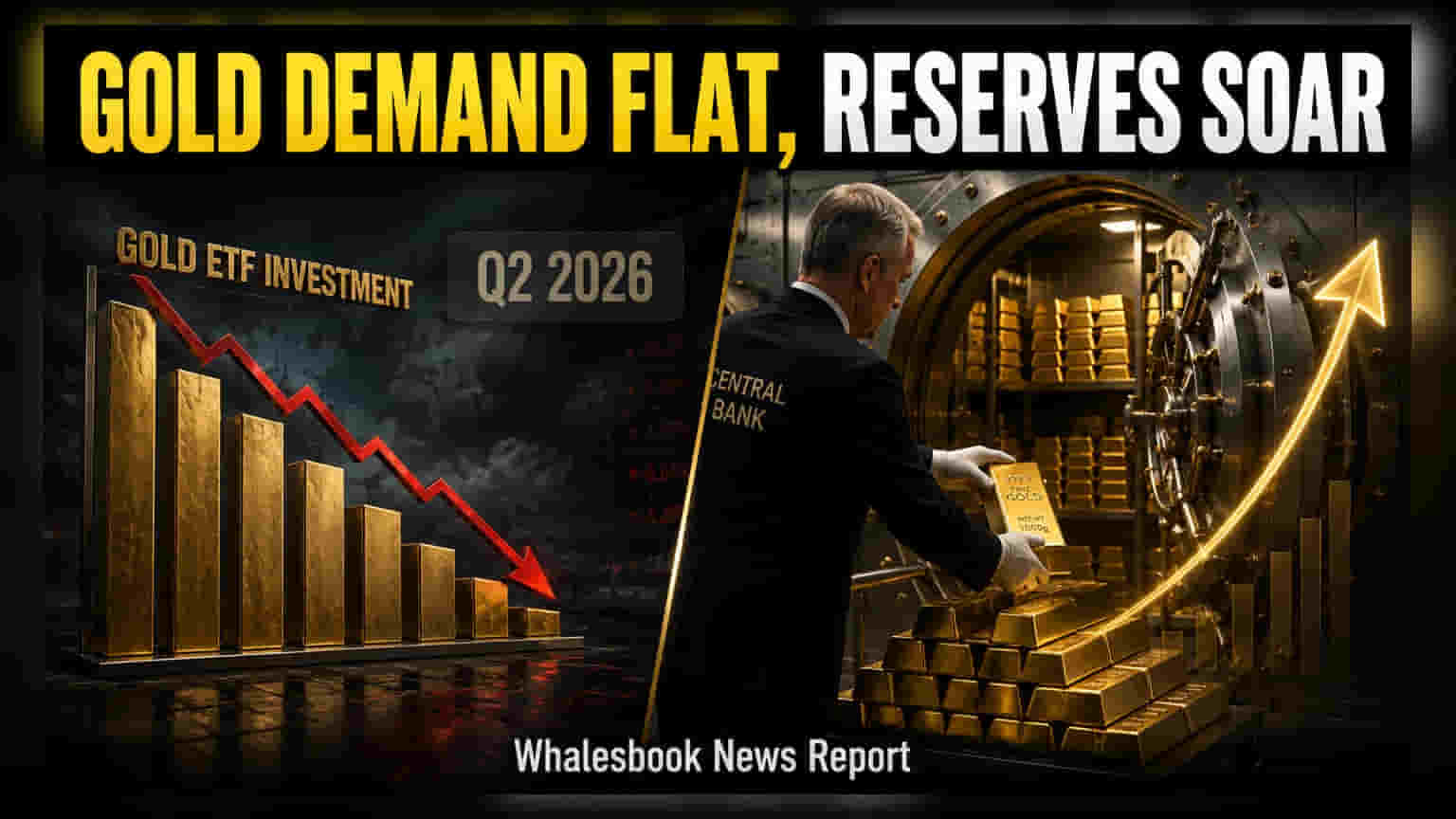
Global gold demand remained steady at 1,269 tonnes in the second quarter of 2026. While high prices reduced demand for jewellery and ETFs, central bank purchases rose significantly by 62% year-on-year, helping stabilize the market.
Global gold demand reached 1,269 tonnes in the April-June 2026 quarter, matching the levels seen during the same period last year. According to the latest Gold Demand Trends report from the World Gold Council, the market showed a split performance as price moderation failed to fully offset the impact of earlier high costs on consumer segments.
Central Bank Buying and Jewellery Trends
Central banks served as a primary pillar of demand during the quarter, adding a net 289 tonnes to their official reserves. This marks a 62% increase compared to the same period in 2025. Major institutional buying was reported from Poland, China, and the Czech Republic, while the Reserve Bank of India also added 200 kg to its holdings. In contrast, the consumer jewellery market faced significant headwinds. Global jewellery demand dropped by 17% in volume terms as buyers shifted toward lighter-weight products in response to elevated prices. However, in value terms, the sector remained strong, with demand reaching $86 billion for the first half of the year.
Investment Shifts and Supply Dynamics
Investment demand saw diverging trends across different categories. Gold-backed exchange-traded funds (ETFs) recorded outflows of 262 tonnes during the quarter, as investors adjusted their positions following the metal's price movements. Meanwhile, demand for physical bars and coins proved more durable, slipping only 3% year-on-year. On the supply side, total availability remained stable at 1,269 tonnes. Mine production saw a 2% rise to 966 tonnes, supported by increased output from mining projects in Canada and Chile. Interestingly, despite high price levels, the volume of recycled gold entering the market fell by 6% compared to the previous year, suggesting that existing owners may be choosing to hold onto their assets rather than liquidate them.
Future Market Outlook
Looking ahead, the market’s performance in the second half of 2026 will likely depend on a mix of monetary policy and investor sentiment. While analysts expect continued interest from central banks, the pace of these acquisitions may moderate from the intense levels seen in recent years. For retail investors and the jewellery industry, the challenge of high pricing is expected to persist, potentially keeping volume growth under pressure. Future activity in the gold market will be driven by over-the-counter trades and evolving demand from Asian markets. Investors monitoring the sector should track changes in real interest rates and US monetary policy, as these factors typically influence Western demand for gold-backed ETFs.