

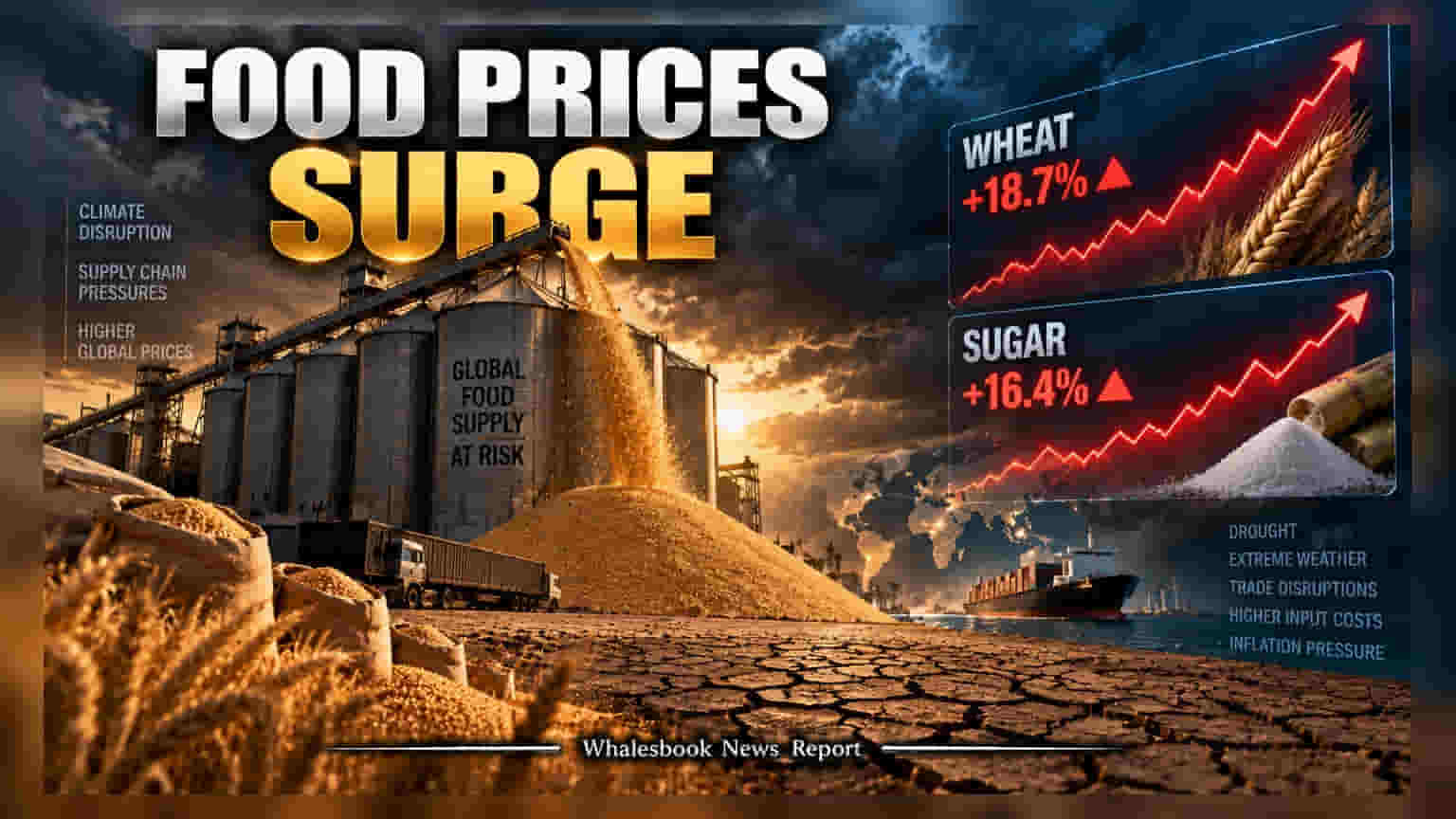
The UN FAO Food Price Index climbed to 133.3 in August 2026, marking the highest level since late 2022. Driven by climate and geopolitical supply issues, the rise poses risks to inflation and corporate profit margins. Investors should watch for further updates on commodity costs and central bank policy reactions to food-driven inflation.
The United Nations Food and Agriculture Organization (FAO) reports that its global food price index reached 133.3 points in August 2026. This level is the highest recorded since November 2022, confirming that the cost of essential agricultural staples is rising on a global scale. For Indian investors, this trend is a key monitorable because it carries implications for domestic inflation and the profitability of consumer-facing companies.
The price surge is driven by a combination of climate instability and geopolitical trade hurdles. Severe heat waves and drought conditions across Europe have impacted the yields of crops like maize and sugar beet, while the ongoing El Niño weather pattern continues to create uncertainty for vegetable oil and sugar production. Beyond these climate factors, geopolitical tensions remain a major problem. Conflicts in the Black Sea region continue to restrict vital shipping lanes, while international tensions in the Middle East have disrupted the global supply chain for fertilizers. These constraints have led the FAO to reduce its 2026 global cereal production forecast to 2.98 billion tonnes, a 2% decline from the previous year.
For the corporate sector, these rising commodity prices present a direct challenge to profit margins. Companies in the food and beverage industry often rely on stable prices for raw materials like grains, oils, and sugar. When the cost of these inputs climbs rapidly, profit margins may come under pressure if companies are unable to pass the extra costs to consumers immediately. This environment can lead to uneven financial results for businesses that cannot easily offset higher raw material expenses through price hikes or operational efficiency.
From a macroeconomic perspective, sustained food inflation is a factor that central banks watch closely. If global food prices remain high, it may limit the ability of policymakers to ease interest rates, as higher costs for food items can filter into broader inflation metrics. Investors should monitor future reports on global weather patterns, trade shipping updates in key corridors, and management commentary from food processing and consumer goods companies regarding their input cost management. These factors will determine whether the current price rise is a short-term volatility event or a longer-term trend that could affect sector-wide earnings.